Australian-Made Bed Linen for a More Sustainable Bedroom
A sustainable bedroom begins with the materials closest to the body. Sheets, pillowcases, quilt covers and blankets occupy a large visual and tactile area, yet they are often bought according to colour or thread count before fibre, manufacturing and longevity enter the conversation. Choosing Australian-made bed linen can bring those questions into focus, especially when local production, natural textiles and responsible care are considered together.
Australia has a strong design culture built around climate-responsive materials, thoughtful craftsmanship and practical domestic objects. From Perth studios working with relaxed European flax linen to small textile makers producing limited runs, the local market rewards buyers who look beyond mass-produced bedding. The most convincing options are not necessarily the loudest or most expensive; they are pieces with clear provenance, useful construction and a finish that improves with time.
For broader perspectives on Australian interiors, architecture and objects, Contemporary offers a useful view of the people and projects shaping the local design landscape. That same attention to material honesty can guide the way a bed is dressed.
What Australian-Made Really Means
The phrase “Australian-made” is often used loosely in homewares. A brand may be Australian-owned, designed in Melbourne, packed locally or manufactured entirely in Australia, and these are different claims. A responsible purchase starts by checking the product page or label for the specific stage completed here. If the information is vague, contact the maker and ask where the fabric was woven, where it was dyed and where the final sewing took place.
Locally made bedding is not automatically the lowest-impact option. Flax, cotton and wool may travel through several countries before arriving in an Australian workshop, while a well-made imported product may have a transparent supply chain and a longer service life. The strongest choice balances local labour with fibre quality, repairability, certification and durability. Look for makers who explain their mills, sewing rooms, dyes and packaging rather than relying on a national identity alone.
Small-batch production has a practical environmental benefit. It can reduce overstock, allow more accurate sizing and support quality control at the point of manufacture. It may also mean fewer colourways and longer lead times, which are reasonable trade-offs for bedding made in response to demand rather than produced in vast seasonal volumes.
Choosing Fibres That Age Well
European flax linen remains a popular choice for a sustainable bedroom because the fibre is durable, breathable and naturally textured. It releases heat in warm weather, offers insulation during cooler nights and becomes softer through washing. Good linen does not need a glossy finish to feel luxurious. A slightly irregular weave can be evidence of a natural fibre rather than a flaw.
Organic cotton is another dependable option, particularly for sleepers who prefer a smoother hand. Certifications such as GOTS address more than the crop itself, covering processing and chemical restrictions across the supply chain. Cotton percale feels crisp and cool, while cotton sateen has a denser, silkier surface. Choose based on climate and sleeping preference rather than thread count, which can be inflated through multi-ply yarns and does not guarantee performance.
Australian wool is especially useful in blankets, mattress toppers and lightweight quilts. It is renewable, breathable and effective at regulating temperature, although animal welfare and processing standards should be part of the buying decision. Hemp and lyocell can also be considered, but their sustainability depends on cultivation, chemical recovery, blending and manufacturing practices. A fabric name is only the beginning of the assessment.
Local Makers and Distinctive Collections
Australian bedding labels range from established companies with national distribution to independent studios making modest quantities. Investigate businesses that publish their manufacturing location clearly and distinguish Australian-made pieces from imported ranges. The Linen Press, Morrow Soft Goods and smaller Melbourne, Sydney, Adelaide and regional workshops are useful starting points for research, while Australian-founded brands such as Cultiver, Hale Mercantile Co and Bed Threads demonstrate how local design can connect with international textile production.
This distinction matters because Australian design and Australian manufacture are both valuable, but they support different outcomes. A locally designed linen set made in Lithuania may offer excellent construction and traceable European production. A cotton quilt cover sewn in Australia may support domestic textile workers while using an imported cloth. Neither description should be hidden or confused with the other.
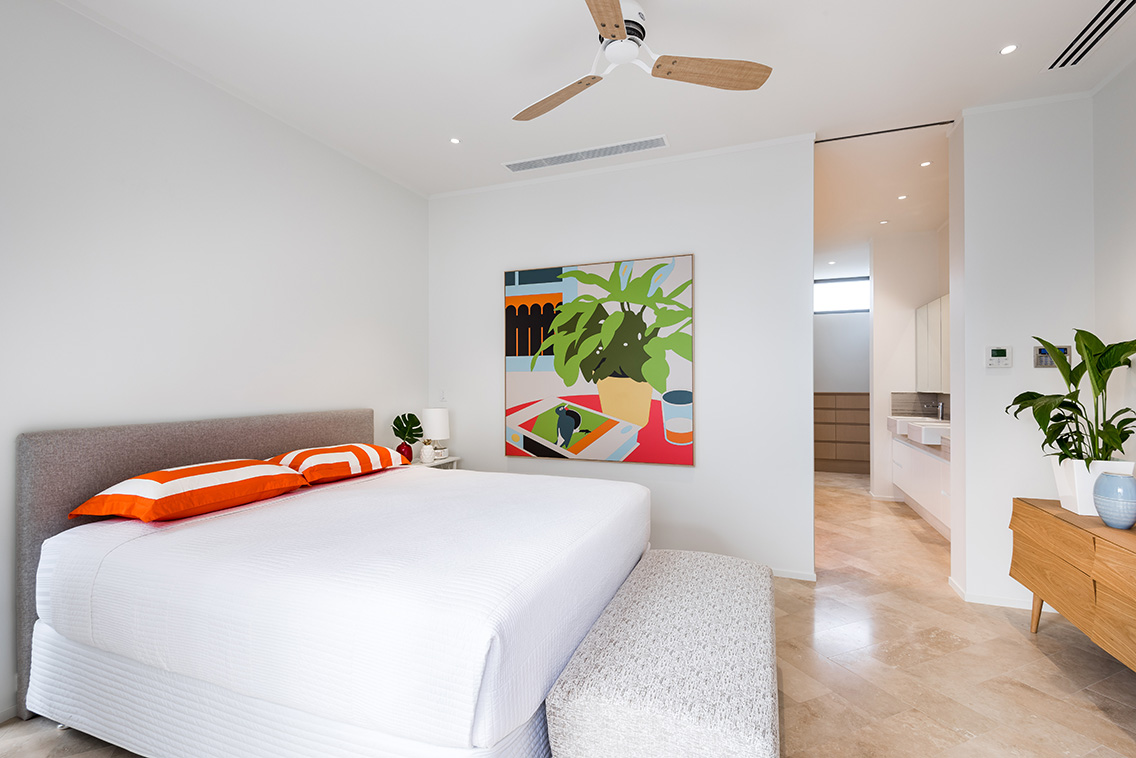
Colour and pattern are also part of sustainability. Neutral flax, clay, eucalyptus, mineral blue and warm white can move between interiors and seasons, reducing the temptation to replace bedding when a room is restyled. Yet colour does not have to mean blandness. A reversible quilt, narrow stripe or hand-finished border can add character without creating a short-lived trend. The best bedding works with timber, stone, painted joinery and woven furniture instead of demanding that every other element change around it.
| Bed linen element | Useful material choices | What to check | Why it supports a considered bedroom |
|---|---|---|---|
| Everyday sheets | Flax linen, organic cotton percale | Fibre origin, weave density, shrinkage guidance | Breathable, washable and durable for frequent use |
| Quilt cover | Linen, hemp blend or certified cotton | Seam strength, closures and colourfastness | Large visual impact with a long replacement cycle |
| Pillowcases | Linen or cotton | Envelope depth, edge finishing and fabric weight | Small, replaceable pieces that can refresh a scheme |
| Winter blanket | Australian wool or recycled wool blend | Wool source, fill weight and care method | Warmth without relying solely on synthetic fibres |
| Mattress layer | Natural wool, cotton or latex | Certifications, breathability and fitted dimensions | Extends comfort and may protect the mattress |
| Decorative throw | Wool, linen or recycled fibre | Repairability and fibre composition | Adds texture without requiring a full bedding change |
Designing for Perth’s Climate
Perth bedrooms benefit from bedding that responds to hot, dry summers and cooler winter nights. A linen sheet paired with a light cotton quilt can provide flexibility through much of the year, while a wool blanket can be added when temperatures fall. Layering is more efficient than buying one heavy, synthetic-filled quilt that remains unused for long periods.
Ventilation matters as much as fabric. Allow air to move around the bed, avoid trapping dampness beneath dense mattress protectors and wash bedding according to actual use rather than an inflexible schedule. Pale fabrics can help a room feel cooler visually, but thermal comfort comes from the textile structure, the room’s shading and the sleeper’s preference.
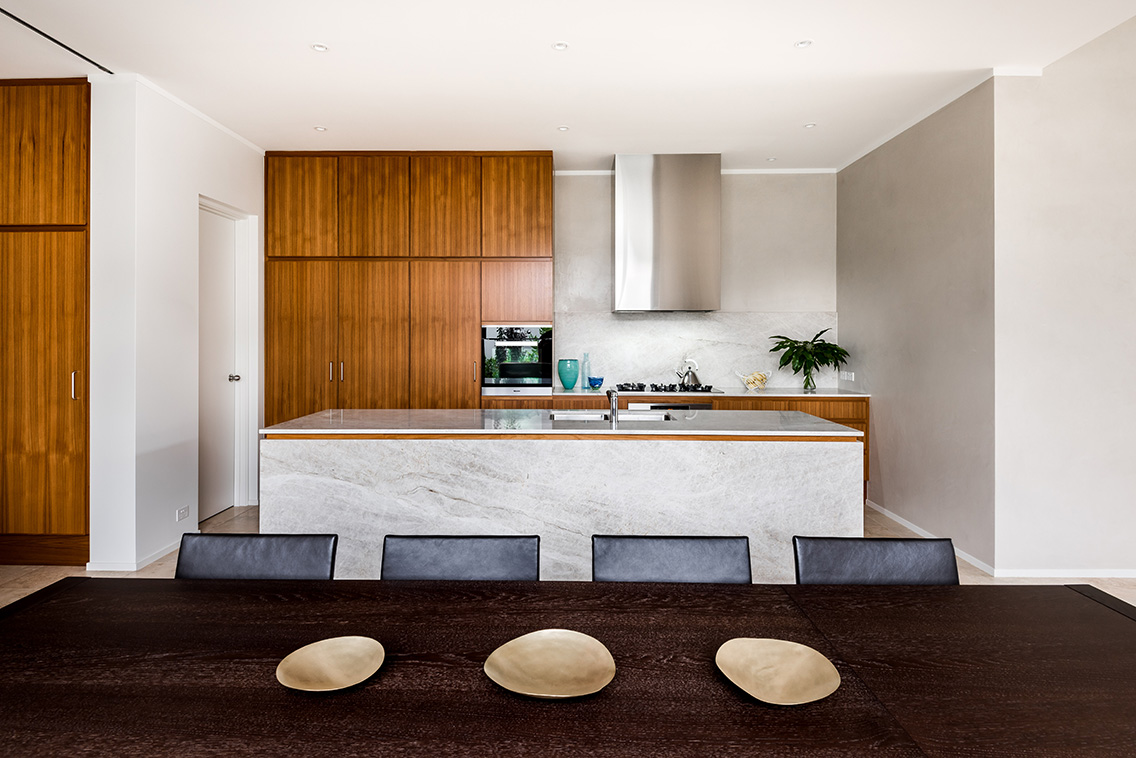
Material transitions within a home can also be handled with restraint. A recent travertine finish from a Western Australian marble company, for example, suggests how local material language can inform an interior without turning every surface into a statement. Bedding in washed flax, raw cotton or soft wool can provide a similarly grounded counterpoint to stone, timber and plaster.
Care That Extends a Linen Set’s Life
The lowest-impact sheet is the one that remains useful for years. Wash linen and cotton at the temperature required for hygiene, use a measured amount of gentle detergent and avoid routine tumble-drying on high heat. Line drying reduces energy use and can preserve fibres, while a brief low-temperature tumble can soften linen without overdrying it.
Rotate two or three sets rather than relying on one until it fails. This reduces abrasion and gives each set time to rest between washes. Repair small pulls, replace worn buttons and keep spare pillowcases for pieces that have begun to thin at the centre. When a quilt cover is no longer suitable for the bed, it may become a curtain panel, laundry bag, cushion cover or cleaning cloth.
Thoughtful reuse extends beyond textiles. The principles explored in repurposing door hardware apply to bedroom details too: retain useful components, adapt what already exists and value patina rather than treating every sign of age as failure. A faded linen cover can gain a new role through simple cutting and sewing.
A Practical Buying Checklist
Before ordering Australian-made bed linen, assess the product as an object intended for repeated use rather than a seasonal accessory.
- Confirm whether “Australian-made” refers to the fabric, sewing, finishing or the entire product.
- Choose durable natural fibres suited to Perth’s climate and your sleeping temperature.
- Check dimensions, shrinkage allowances, closure construction and care instructions.
- Prefer transparent information about mills, dyes, labour, packaging and certifications.
- Buy coordinated pieces slowly, beginning with sheets and one adaptable quilt cover.
A measured approach also protects the budget. Start with the components that receive the most wear, then add blankets, pillowcases or seasonal colours as the need arises. A well-made fitted sheet may contribute more to a sustainable bedroom than an entire new collection purchased at once.
Australian-made bed linen is at its best when it combines local workmanship with honest material information and a design language that can endure. Choose one carefully documented set, care for it properly and let its texture settle into the room over time. Explore Australian designers and makers through Contemporary, then build a bedroom where comfort, provenance and longevity are visible in every layer.