A New Travertine Finish Draws on Western Australia’s Quiet Landscape
A Western Australian marble company has introduced a new travertine finish that brings the region’s sun-washed colours, mineral textures and coastal restraint into contemporary interiors. Developed for architects, designers and fabricators, the finish is positioned as a tactile alternative to highly polished stone, with a surface intended to feel calm, natural and materially expressive.
The launch arrives at a time when Australian interiors are moving towards softer palettes and more nuanced finishes. Travertine has become increasingly visible in kitchens, bathrooms, hospitality spaces and furniture, yet the new treatment avoids a generic interpretation of the material. Its character comes from the way it responds to light, reveals its pores and holds subtle shifts in tone across each slab.
For Perth’s design community, the release also reflects a broader interest in local material identity. Western Australian projects often balance strong sunlight, expansive views and robust construction with a refined sense of detail. This new surface is suited to that conversation: durable enough for practical applications, but distinctive enough to shape the atmosphere of a room.
A finish grounded in place
The company’s new travertine treatment is defined by a softly honed appearance rather than a mirror-like polish. Fine variations remain visible across the surface, including open pores, gentle veining and tonal movement that ranges from warm ivory through sand, almond and muted clay. The result is a stone that feels composed without appearing overly uniform.
That quality is especially relevant to Australian residential design, where natural materials are often used to connect interiors with gardens, courtyards and broad skies. Travertine can carry that relationship through a restrained material language. Its warm base works with timber, linen, brushed metal and painted plaster, while its granular surface adds depth to otherwise minimal rooms.
The launch also speaks to the changing role of stone. Marble and related materials are no longer reserved for dramatic feature walls or formal entertaining areas. Designers are using them across shelves, plinths, vanities, side tables, fireplace surrounds and threshold details, allowing a small amount of stone to provide a strong sensory anchor.
Reading the surface in changing light
Travertine is often appreciated for its colour, but its surface is just as important. Under direct sunlight, the new finish reveals small pits and mineral traces that create a fine pattern of shadow. In softer morning or evening light, those details recede and the slab reads as a broad, quiet field of colour.
This shifting appearance gives the material a useful architectural quality. It can sit comfortably within a pared-back interior while continuing to change throughout the day. In a Perth home, where bright conditions can make highly reflective surfaces feel harsh, a low-sheen finish offers a more moderated visual response.
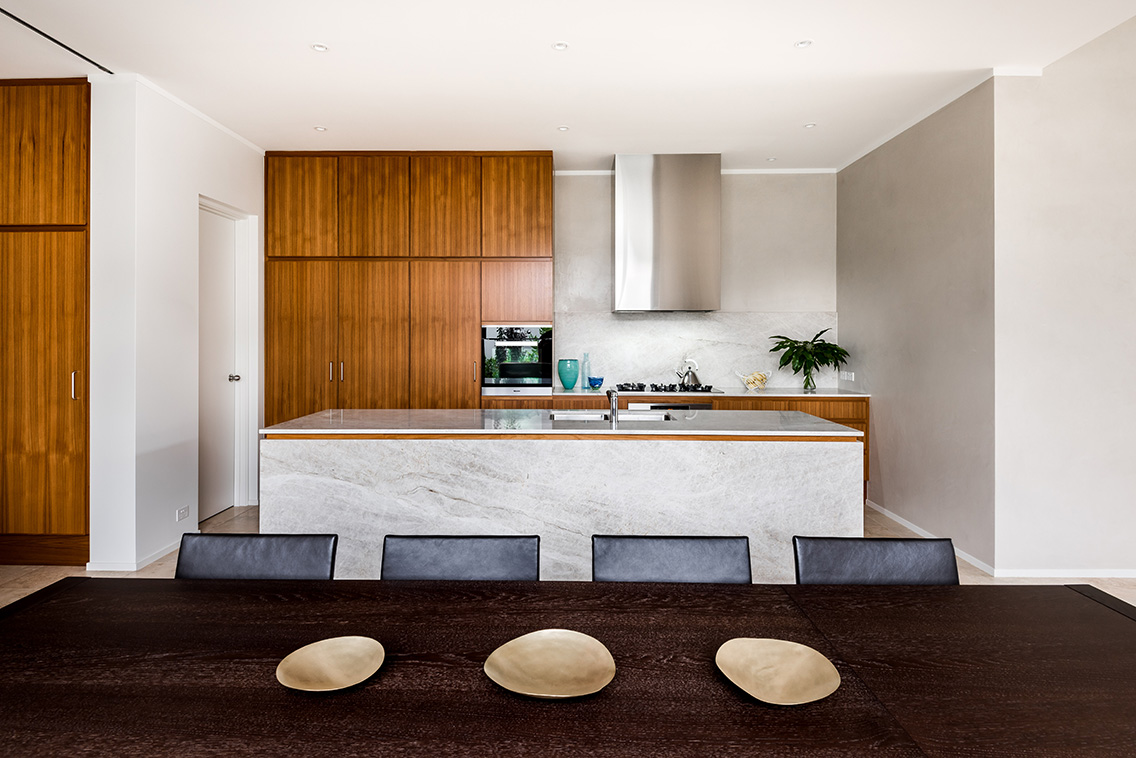
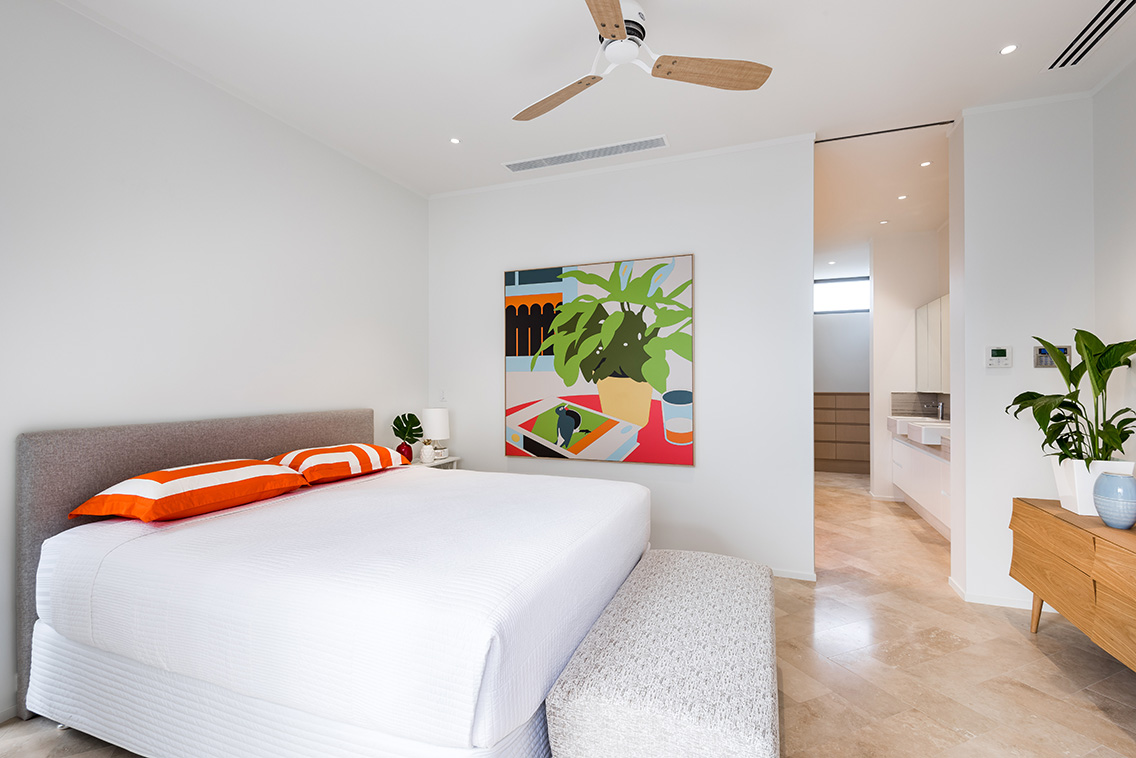
The relationship between stone and daylight is well demonstrated by projects that use restrained material palettes to amplify spatial qualities. In a recent light-filled Perth home, carefully considered surfaces help carry light through a compact plan rather than competing with it. The new travertine finish could support a similar approach, particularly on horizontal planes and softly lit walls.
How it compares with familiar stone treatments
The finish sits between raw and highly refined stone. It retains enough texture to communicate geological character, while its smoother touch makes it appropriate for areas that need a more considered and comfortable feel. That balance distinguishes it from rough-filled travertine, which can appear more rustic, and from polished marble, which places greater emphasis on reflection and veining.
For designers, the practical choice will depend on the intended mood, location and level of use. A honed travertine surface can bring warmth to a bathroom or kitchen without creating visual noise. A more textured treatment may be better suited to a low-touch wall application, while a filled and sealed version may be preferable where cleaning and maintenance are primary concerns.
| Finish | Visual character | Best suited to | Design effect |
|---|---|---|---|
| New softly honed travertine | Warm, matte and lightly textured | Benchtops, vanities, shelves and feature surfaces | Quiet depth with natural variation |
| Polished marble | Reflective, smooth and vein-led | Statement foyers, counters and sculptural details | Formal, luminous and dramatic |
| Rough or brushed travertine | Open, tactile and visibly porous | Walls, courtyards and low-touch applications | Rustic, earthy and strongly material |
| Honed limestone | Even, powdery and understated | Floors, joinery surrounds and bathrooms | Soft continuity with subtle movement |
The comparison is less about selecting a universally superior material than identifying the right degree of expression. The new finish is likely to appeal to projects that need stone to feel present but not dominant. It can establish a sense of permanence while keeping the overall composition relaxed.
Applications across residential interiors
In residential work, the finish has potential beyond the conventional kitchen island. A full-height splashback could draw attention to the natural pattern of a slab, while a narrow vanity top could introduce the material without overwhelming a small bathroom. Used on a fireplace hearth or low console, it would create a tactile point of contact within a room built from timber, plaster and fabric.
Its softer colouring also makes it adaptable to different interior directions. With pale oak and chalky walls, it can support a quiet coastal palette. Paired with dark timber, aged brass or deep green cabinetry, it becomes warmer and more grounded. With stainless steel and crisp joinery, it can take on a more contemporary, gallery-like character.
Furniture makers may find an equally productive use for the finish. Travertine lends weight and visual stability to coffee tables, bedside tables and occasional plinths, while the new treatment keeps those pieces from feeling excessively formal. Small-format applications can also make the stone more accessible in projects where a complete slab is unnecessary.
A useful material for hospitality and commercial spaces
Hospitality interiors require surfaces that can create an immediate impression and withstand repeated use. Travertine’s association with courtyards, bathhouses and Mediterranean architecture gives it a recognisable cultural language, but the new finish allows that reference to be interpreted in a distinctly Australian way.
In a Perth restaurant, it could appear across a service counter, banquette base or entry threshold, complemented by local timber and low, warm lighting. In a boutique hotel, it might form the backdrop to a reception desk or be used in guest bathrooms, where the material’s soft tonal range can make a compact space feel more generous.
Commercial applications also benefit from the finish’s ability to photograph well without relying on gloss. Its pores and mineral shifts provide detail in editorial images, while the restrained colour gives branding, furniture and artwork room to sit alongside it. That makes the stone relevant to workplaces, retail environments and cultural spaces seeking a durable material with a strong sense of place.
Fabrication, care and specification
As with any natural stone, the final result depends on selection, fabrication and installation. Slabs should be reviewed for tonal consistency, pore distribution and the direction of visible movement. A designer may choose to bookmatch larger pieces for a more composed reading, or embrace variation by placing separate slabs across adjacent surfaces.
The finish should be discussed alongside the intended use rather than specified as a purely aesthetic decision. Kitchens, bathrooms and hospitality counters may require sealing and regular care, particularly where the stone will encounter oils, acidic products or standing water. Edges can also alter the perception of the material: a fine arris maintains a contemporary profile, while a softened edge makes a substantial slab feel more generous and tactile.
Clear communication between designer, supplier, stonemason and client is essential. Sample pieces should be viewed in the project’s actual lighting, since artificial illumination can shift the appearance of warm travertine significantly. It is also worth assessing how the finish feels to the hand, especially on furniture, vanity tops and other surfaces encountered at close range.
Why the launch matters to Australian design
The debut is significant because it adds another local voice to the conversation around natural stone. Western Australian design is often associated with strong connections to landscape, but those connections are expressed through more than broad windows and outdoor rooms. They also appear in the selection of materials that carry colour, texture and geological memory into daily life.
A regionally focused finish can contribute to that identity without becoming literal or themed. Its warm mineral palette may recall limestone cliffs, dry riverbeds and coastal sand, yet it remains versatile enough for highly contemporary architecture. This balance is important for designers working across Australia, where local references are increasingly being translated through subtle, durable materials rather than overt decoration.
The launch also reinforces the value of surface development within the stone industry. A new finish can extend the possibilities of an existing material, giving architects more control over reflectivity, tactility and mood. For a material as established as travertine, that adjustment is enough to make it feel newly relevant.
Considerations for specifying the finish
- Request physical samples and view them in both natural and artificial light.
- Confirm sealing, cleaning and maintenance requirements for the intended application.
- Review full slabs for colour variation, pores and veining before fabrication.
- Coordinate edge profiles and junctions with the broader architectural language.
- Pair the stone with complementary materials rather than matching every surface.
For designers, the new Western Australian travertine finish offers a measured way to bring geological character into contemporary work. Its strength lies in the details: a low sheen, a warm tonal range, a shifting response to light and enough natural irregularity to prevent a space from feeling over-resolved.
As the finish enters residential, hospitality and commercial projects, its most compelling use will likely come through restraint. A single vanity, threshold, table or wall can give an interior a sense of weight and continuity. Explore the new surface through local suppliers, request a sample for your next project and consider how its quiet texture could shape the way a space is experienced.