The art of secondhand luxury in a Perth Airbnb
A high-end short-stay apartment does not need a catalogue of matching furniture to feel polished. In Perth, one designer has shown how vintage finds, refurbished pieces and carefully selected contemporary objects can create a richer interior than a fully specified package ever could. The result is a coastal Airbnb with the ease of a private home and the visual discipline expected from a boutique hotel.
The approach depends on editing rather than accumulation. Every chair, side table and artwork has a role, whether it introduces patina, softens a new surface or gives guests something memorable to photograph. Secondhand furniture becomes a design resource, connecting the property to Perth’s practical, sunlit lifestyle while keeping the rooms commercially durable.
| Approach | Visual character | Guest experience | Practical consideration |
|---|---|---|---|
| Fully new furniture package | Consistent and polished | Predictable, hotel-like | Easy to source but can feel generic |
| Mostly secondhand furnishings | Layered and individual | Homely and memorable | Requires careful inspection and repair |
| Curated mix of old and new | Refined with personality | Comfortable and distinctive | Best balance of style, durability and budget |
| Statement vintage pieces only | Dramatic and editorial | Strong visual impact | Higher risk of damage or maintenance issues |
Starting with the property rather than the shopping list
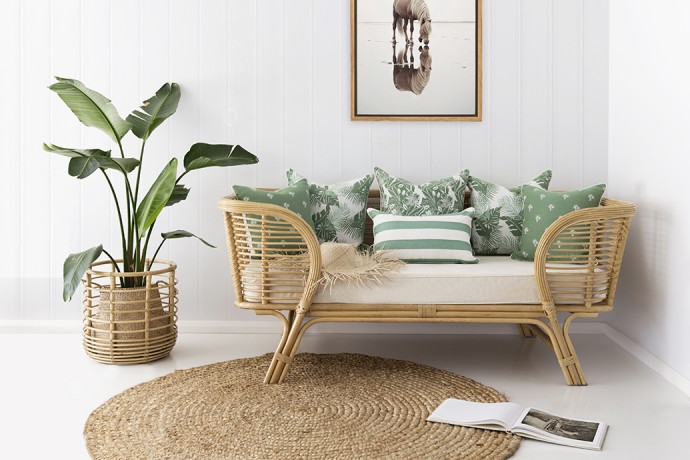
The designer began by reading the apartment’s architecture: its proportions, natural light and relationship to Perth’s coastline. Rather than filling the rooms with decorative objects, they identified the pieces that would make the space feel settled. A generous vintage lounge became the anchor for the living area, while smaller timber tables established a relaxed rhythm around it.
This restraint is important in a short-stay property. Guests need clear circulation, accessible power points and surfaces that can be cleaned quickly between bookings. A beautiful but awkward chair has little value if it blocks a balcony door or cannot withstand luggage being placed beside it. The furniture plan therefore combined aesthetic judgement with the operational requirements of Airbnb accommodation.
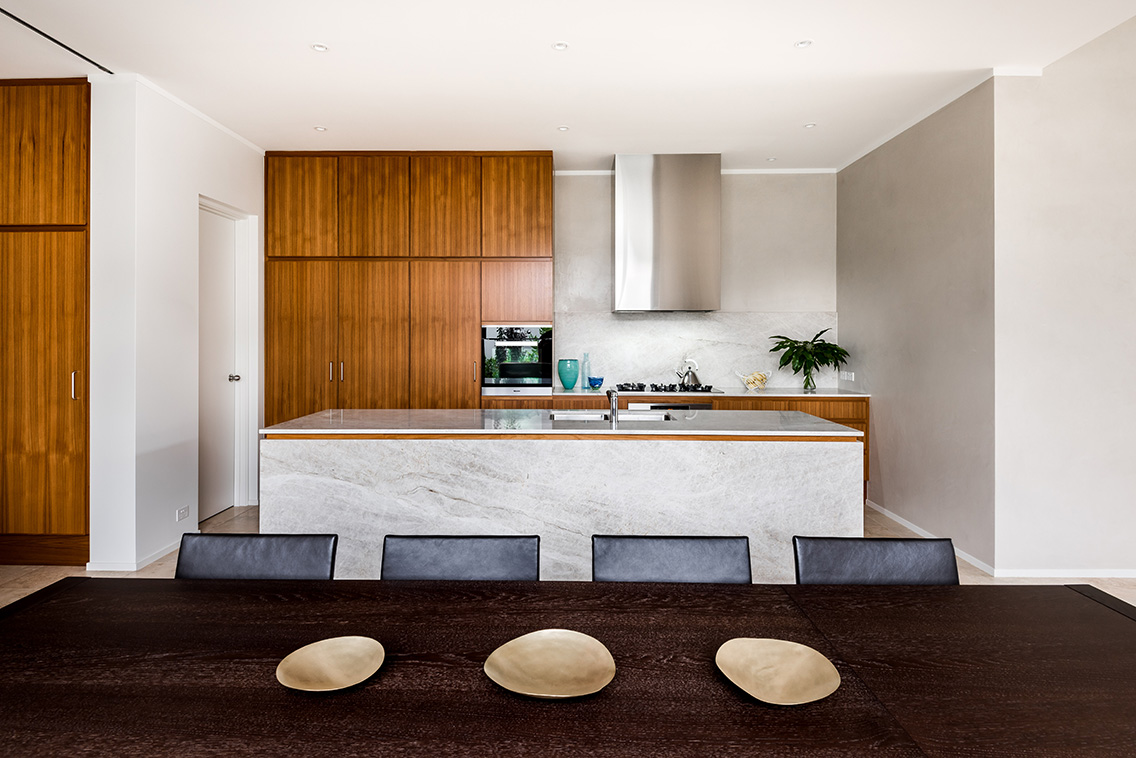
Perth’s strong daylight also shaped the palette. Cream, ochre, tobacco, olive and faded blue were used in place of stark white, allowing the interior to hold its own during bright summer afternoons. Natural timber and woven materials added warmth without competing with views or architectural finishes.
Finding quality in Perth’s secondhand market
The search moved across suburban op-shops, vintage dealers, online marketplaces, auctions and estate clearances. Perth’s relatively spread-out geography makes this kind of sourcing more time-consuming than a quick visit to a dense city-centre showroom, but it can also uncover unusual pieces at approachable prices. A designer who is willing to inspect several suburbs may find a solid jarrah cabinet, an old bentwood chair or a well-made Australian sofa hidden among ordinary household goods.
The most valuable finds were assessed for construction before appearance. Drawers were opened, joints were tested and upholstery was checked for odour, sagging and pest damage. A secondhand dining table with a few marks could be refinished; a warped frame or failing foam was a different proposition. This distinction prevented the project from confusing age with quality.
The designer also allowed time for transport and restoration. In Western Australia, distances between sellers can make delivery costs significant, particularly for large sofas and dining tables. A purchase was considered successful only after its price, freight, cleaning and repair work were calculated together.
Making old pieces feel high-end
Luxury came from proportion and finish rather than brand names. A modest vintage armchair looked considered once it was reupholstered in a hard-wearing boucle, while a scratched sideboard gained new relevance after its timber surface was cleaned and oiled. The original signs of use were not erased completely; they were controlled so the pieces retained their character without appearing neglected.
The designer paired these finds with a limited number of new elements. Fresh linen curtains, sculptural lighting and a quality mattress gave guests the comfort they expect from premium accommodation. New rugs helped define seating areas, while contemporary cushions introduced texture and could be replaced more easily than a whole sofa.
This mix avoided the staged quality associated with uniform furniture packages. A vintage occasional table beside a new stone bench, for example, created a small tension between eras. That tension made the interior feel collected over time, even though every decision had been made for the project.
Designing for turnover, cleaning and wear
A high-end Airbnb must be photographed beautifully and remain functional after repeated occupation. The designer therefore treated durability as part of the visual brief. Performance fabrics were selected for high-contact seating, removable covers were preferred where possible, and delicate objects were kept away from the busiest paths through the apartment.
The cleaning routine influenced the choice of materials. Smooth timber, sealed surfaces and washable cottons were easier for a local housekeeping team to maintain than heavily fringed textiles or porous untreated stone. Furniture was lifted on stable legs where practical, giving cleaners access to floors and reducing the dust that can collect beneath bulky pieces.
Safety and compliance were also considered alongside styling. In Australia, smoke alarms, emergency information and electrical safety are essential responsibilities for short-stay accommodation, while apartment owners must follow strata rules governing renovations, noise and common property. A designer working in Perth cannot treat the Airbnb interior as a purely visual exercise; the building’s by-laws and the host’s insurance conditions can affect what is installed.
Building a coastal identity without clichés
The apartment’s coastal setting was expressed through material and light rather than obvious nautical decoration. There were no rope accessories or themed signs. Instead, pale timber, textured ceramics, brushed metal and washed textiles suggested the nearby Indian Ocean in a quieter way.
That approach reflects the way many Western Australians use their homes. A Perth interior needs to transition between indoor living, a balcony or courtyard and the practical mess of beach towels, sandals and sandy feet. Loose covers, woven baskets and an entry bench made those habits part of the brief. Guests could arrive from Cottesloe, Scarborough or Sorrento without feeling they had to preserve a showroom.
The designer’s material thinking also connected to local building culture, where heat, glare and salt air affect long-term performance. The discussion around sacrificial zinc cladding offers a useful parallel: good design anticipates weathering rather than pretending materials will remain untouched.
Using art and objects to tell the story
Secondhand furniture established the foundation, but smaller objects gave the Airbnb its sense of place. The designer selected Australian ceramics, framed prints and sculptural pieces with enough presence to be noticed but not so much that the apartment felt like a gallery. A locally made vessel on a restored cabinet could carry more atmosphere than a shelf crowded with generic accessories.
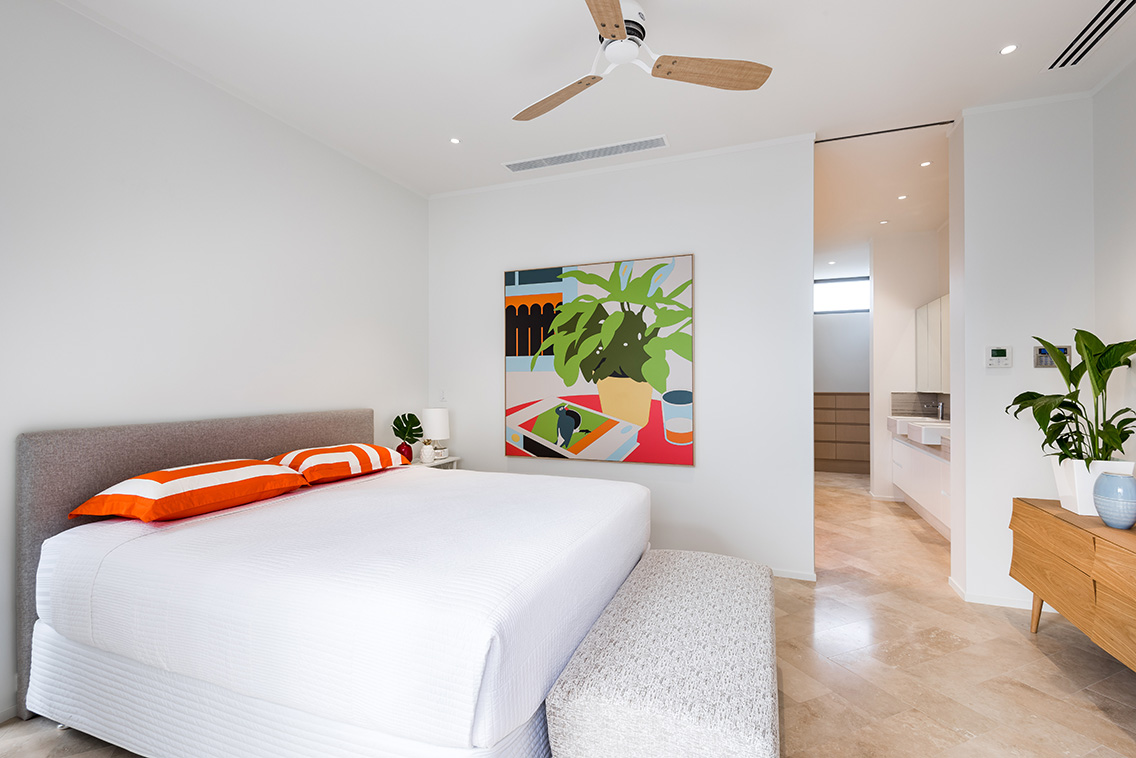
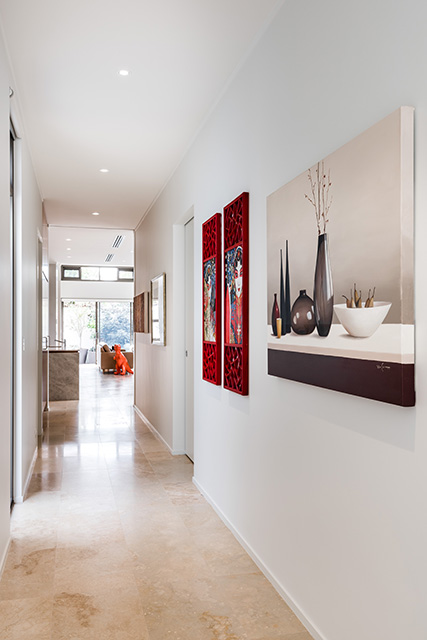
The art strategy was deliberately flexible. Larger works were hung where they could be seen from the entrance, creating an immediate impression in listing photographs. Smaller works were grouped with breathing room, helping guests read the collection as intentional rather than decorative filler.
This is also where the property connected with Perth’s broader design community. Events such as Contemporary Wine In Design show how architecture, interiors, makers and hospitality overlap in the city. For a designer, that network can lead to emerging artists, independent fabricators and objects with a genuine local connection.
Photographing a layered interior
The finished rooms were composed for real use and for the camera. The living room offered a strong first frame, with the vintage sofa aligned to the view and a low table keeping the sightline open. In bedrooms, the designer avoided excessive styling so the bed remained inviting rather than theatrical.
Natural light was used whenever possible, particularly in the morning when Perth’s sun gave timber and woven surfaces a gentle glow. Photographs showed enough detail to communicate quality: joinery, upholstery texture, a ceramic edge or the patina of a cabinet. At the same time, the images retained practical clues such as reading lamps, luggage space and dining chairs that could genuinely be used.
The strategy matters because online guests often make decisions in seconds. A room filled with expensive but anonymous furniture may look interchangeable with dozens of listings. A restrained collection of secondhand pieces gives the property a recognisable visual language, making it easier for guests to remember and recommend.
A model for more thoughtful short stays
The project demonstrates that reuse can support a premium hospitality offer when it is guided by expertise. Secondhand does not mean accidental, cheap or unfinished. It can mean selecting a better-shaped chair, repairing a well-built table and spending the saved budget on lighting, upholstery or a mattress guests will notice immediately.
There is also a sustainability benefit, although the designer did not use environmental language as a substitute for good design. Extending the life of furniture reduces the demand for disposable fit-outs and keeps useful materials in circulation. For hosts, it can also make future replacement more manageable: a damaged occasional table is easier to repair or source again than a custom item with a long overseas lead time.
For those developing a Perth holiday rental, the lesson is to buy slowly and edit firmly. Begin with the building, understand how guests will move through it, and seek pieces with sound construction and a clear visual role. The city’s independent makers and design businesses can be explored through the Wine in Design exhibitors, offering a starting point for sourcing objects that give a property a more authentic local voice.
A successful Airbnb interior should feel generous without being precious, distinctive without becoming difficult, and polished without losing the evidence of human life. By combining restored furniture, contemporary comforts and a close reading of Perth’s climate and habits, this designer turned a short-stay apartment into a place with memory, texture and commercial appeal. For hosts and designers alike, the project makes a persuasive case for looking twice at what is already in circulation.