Why a Coastal Home in Sorrento Chose Sacrificial Zinc Cladding
On Perth’s northern coast, a house has to negotiate more than sun, wind and shifting temperatures. Salt carried inland by sea breezes can settle on exposed surfaces, while intense ultraviolet light and winter rain place additional pressure on a building envelope. In Sorrento, these conditions make material selection an architectural decision as much as a technical one.
The coastal home examined here uses zinc cladding as a deliberately replaceable outer layer. Described as sacrificial, the material is intended to receive the first impact of the environment, protecting the structure and more permanent finishes behind it. Its value lies in accepting weathering as part of the building’s life rather than attempting to keep every surface pristine.
That approach creates a useful tension between resilience and appearance. The zinc gives the house a muted, changing skin, while its detailing supports ventilation, drainage and future maintenance. In a suburb shaped by beach culture and established gardens, the result is a home that feels grounded in its setting without relying on a literal coastal aesthetic.
Reading Sorrento’s coastal conditions
Sorrento’s proximity to the Indian Ocean affects a building in ways that are easy to underestimate. Salt particles can accumulate on metalwork, window frames, fixings and painted surfaces. Wind-driven rain can find small weaknesses around junctions, and repeated cycles of heating and cooling cause materials to expand and contract at different rates.
A durable coastal envelope therefore depends on a complete system rather than a single robust product. Cladding, flashings, membranes, cavity drainage, fasteners and sealants must work together. Zinc is particularly useful in this context because it can form a continuous outer shield when its laps, folds and junctions are carefully resolved.
The house’s material palette responds to this exposure with restraint. Instead of treating the ocean as a visual theme, the design acknowledges the local climate through performance. Deep reveals, protected openings and a considered roof form can reduce the amount of weather reaching vulnerable edges, allowing the cladding to operate as part of a layered defence.
Why zinc can be sacrificial
Sacrificial cladding is an outer building layer that is expected to weather, mark or eventually require replacement before the primary structure does. This does not mean the material is disposable or poorly selected. It means maintenance is anticipated from the beginning, with access and replacement built into the design rather than left as a future problem.
Zinc suits this role because its surface develops a protective patina. Exposed to air and moisture, the metal forms a stable layer that can slow further corrosion. The appearance changes gradually, often moving through soft grey, blue-grey or charcoal tones depending on orientation, rainfall and surrounding conditions.
The term also changes the way age is understood. A scratched or uneven surface does not automatically represent failure; it may record the house’s exposure to salt air, dust and rain. On a coastal residence, that visible history can be more appropriate than a coating that has to be renewed repeatedly to preserve an unchanged colour.
This strategy depends on correct detailing. Zinc should be separated from incompatible materials where galvanic corrosion may occur, and water must be prevented from sitting in concealed folds. Stainless steel or suitable coated fixings, ventilated cavities and properly designed drainage paths help ensure that the cladding’s weathering remains controlled rather than becoming a source of damage.
A skin that supports the architecture
The Sorrento home uses the cladding to clarify its massing. Zinc can read as a folded, continuous surface across walls, roof edges and smaller architectural elements, giving the building a quieter profile than a collection of individually finished planes. Its fine seams add scale without overwhelming the geometry.
That continuity is especially effective in a suburban coastal setting. The house can appear solid from the street while opening more generously towards light, garden and outdoor living areas. Where timber, masonry and glazing establish warmth and openness, the zinc provides a cooler counterpoint that holds the composition together.
The material’s low visual contrast also allows landscape to play a larger role. Native planting, pale paving and mature vegetation can sit alongside the weathered metal without competing patterns. Rather than imitating driftwood or beach stone, the cladding creates a contemporary interpretation of coastal character through tone, texture and shadow.
Photography of projects like this often reveals details that a street view conceals: the thickness of a folded edge, the darkness of a ventilated gap, or the way a seam aligns with a window. The Contemporary program offers a useful window into the wider design culture in which this type of material-led thinking is discussed and shared.
Comparing coastal envelope choices
No cladding system is universally appropriate. The right decision depends on orientation, budget, detailing, maintenance access and the atmosphere a project needs to create. Zinc is compelling for this home because its weathering behaviour is part of the intended architectural expression.
| Material | Coastal strengths | Common vulnerabilities | Maintenance character | Visual effect |
|---|---|---|---|---|
| Sacrificial zinc | Protective patina, lightweight construction, replaceable outer skin | Poor detailing, incompatible fixings, trapped moisture | Periodic inspection and local replacement | Soft, evolving grey tones |
| Painted steel | Broad colour range, economical fabrication, crisp profiles | Coating damage, edge corrosion, salt accumulation | Repainting and touch-up over time | Consistent colour when well maintained |
| Fibre cement | Stable sheets, simple installation, matte finish | Sealant failure, impact damage, moisture at joints | Recoating and joint maintenance | Calm, planar and understated |
| Timber | Renewable character, tactile warmth, repairable boards | UV greying, swelling, salt and moisture exposure | Oiling, staining or accepted weathering | Textured and naturally aged |
| Masonry | Robust mass, thermal stability, low routine upkeep | Salt staining, cracking, difficult alteration | Cleaning and local repairs | Permanent, heavy and grounded |
The comparison highlights why “durability” should not be reduced to a product warranty. A material may last for decades but still demand frequent refinishing, while another may show weathering early yet remain functional and easy to repair. For a house intended to age visibly, the second condition can be more honest and more economical across its life.
Zinc also offers a useful balance between weight and protection. It can be installed over a framed wall build-up, allowing insulation and services to sit within a deeper envelope. This separation helps the exterior shed water while keeping the home’s internal conditions stable, provided that junctions are designed with care.
Maintenance becomes part of the design
The strongest argument for sacrificial zinc is that it makes maintenance legible. Owners can inspect laps, flashings, gutters and penetrations at regular intervals, identify areas of unusual wear and replace limited sections when necessary. This is very different from treating the façade as a sealed image that should remain untouched.
A coastal maintenance schedule should include rinsing where salt deposits are persistent, checking for blocked drainage and inspecting fasteners for corrosion. Particular attention is needed around air-conditioning units, external lights, plumbing penetrations and locations where different metals meet. Small deposits or stains are easier to address before they become trapped moisture or deep corrosion.
The design can support these tasks through accessible roof edges, straightforward panel dimensions and carefully positioned joints. Replaceability is most convincing when a future tradesperson can remove a damaged piece without dismantling an entire elevation. In that sense, sacrificial cladding is also a practical expression of circular thinking: repair the affected layer, retain the structure and avoid unnecessary demolition.
This attitude reflects a broader shift in Australian architecture towards buildings that are designed for change. As material costs, climate pressures and construction waste receive closer attention, long-term value increasingly depends on adaptability. A weathering façade can contribute to that value when its life cycle is planned rather than assumed.
Coastal restraint rather than coastal cliché
The home avoids the familiar language of beach houses built from bright white walls, nautical details and expansive decks alone. Its relationship with the coast is quieter. The muted zinc, shadowed openings and robust surfaces suggest exposure without turning the building into a themed object.
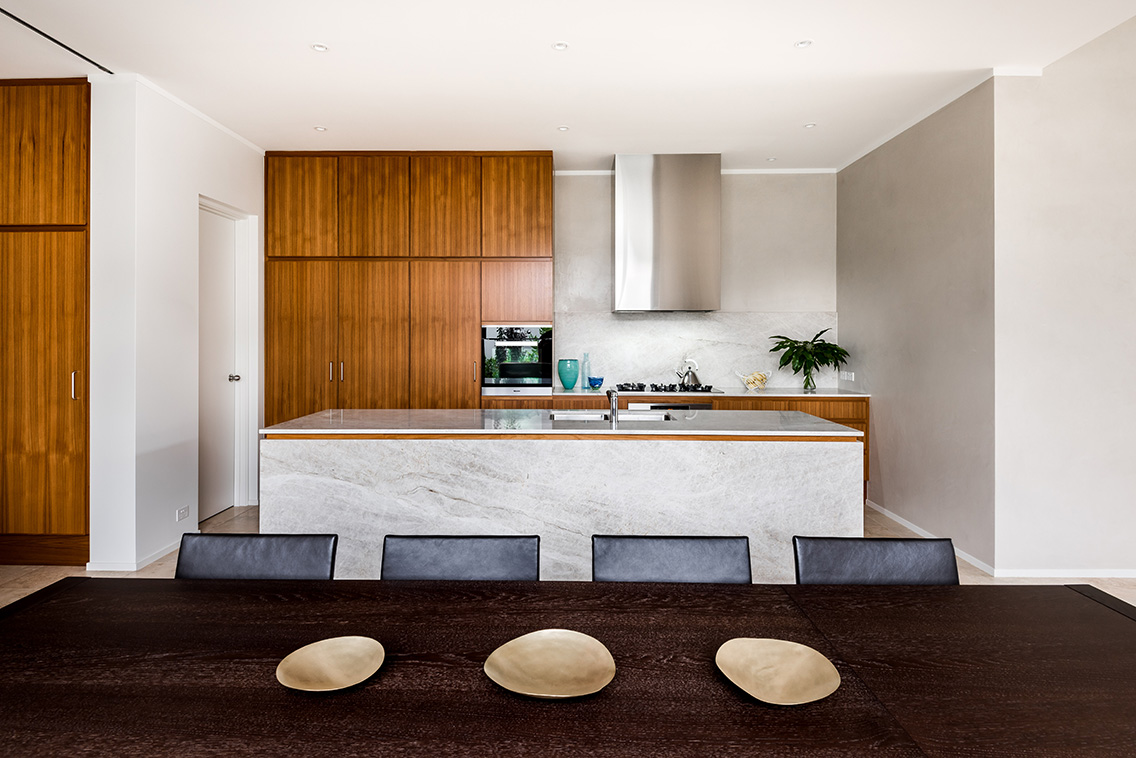
That restraint allows domestic life to remain central. Inside, daylight can be filtered through carefully placed glazing, while solid areas provide privacy from the street and shelter from prevailing weather. The material palette can then move between interior and exterior, with timber, stone or plaster bringing tactile warmth against the coolness of the metal envelope.
There is also a social dimension to this kind of work. Residential projects become part of a shared design conversation when they demonstrate how technical decisions can produce an expressive result. Profiles such as a young architect’s profile show how Australian practices are connecting design with everyday public life, an attitude that also informs thoughtful housing.
The Sorrento house makes its environmental response visible without overstating it. Its façade will continue to change, and that change is part of the architectural proposition. The home does not promise to resist the coast indefinitely; it establishes a measured way to meet it.
Practical principles for a longer life
The project offers several lessons for architects, builders and homeowners considering metal cladding near the sea:
- Treat the outer skin as part of a complete moisture-management system, not as a standalone finish.
- Specify compatible fixings, flashings and adjacent metals to reduce galvanic corrosion.
- Design accessible joints and panel sizes so damaged areas can be replaced locally.
- Allow the patina to develop, while scheduling inspections and gentle cleaning for salt accumulation.
- Use orientation, overhangs, landscape and openings to reduce exposure before selecting materials.
These principles are transferable beyond Sorrento. They apply to houses along Perth’s coast, commercial buildings near harbours and public projects exposed to wind-driven rain. The strongest results come when environmental performance, maintenance and visual character are considered together from the earliest sketch.
For the design community, the appeal of sacrificial zinc lies in this alignment. It is a material choice that acknowledges weather, accepts gradual change and gives future care a clear place in the building’s story. Explore more architecture and design reporting through Contemporary, and follow the material intelligence of coastal projects as they continue to shape Australia’s built landscape.