Low-light indoor plants for considered Australian interiors
Indoor greenery can soften a room, frame an architectural view and bring a quieter rhythm to hard surfaces. Yet many Australian homes and workplaces have fewer usable light sources than their bright photography suggests. Deep floor plans, shaded windows, tinted glass, winter sun and air-conditioned interiors can all leave plants working with limited daylight.
The most successful choices are not simply the toughest plants in the nursery. They are species with a strong silhouette, dependable foliage and a tolerance for the particular conditions of Australian interiors. A good plant should live comfortably in its position while contributing to the visual language of the room.
Nursery growers and retail specialists generally begin with one important distinction: low light does not mean no light. Every plant needs some daylight to photosynthesise, even if it arrives indirectly. The aim is to match a plant’s natural tolerance with the room, then use scale, potting and placement to make the greenery feel intentional rather than incidental.
What low light means inside an Australian home
A room with a south-facing window, a shaded courtyard outlook or a deep recess may receive gentle ambient light without direct sun. In Perth, strong exterior brightness can also be misleading: a plant positioned several metres from a window may be in relatively dim conditions once glazing, blinds and walls interrupt the light.
The easiest test is to observe the room during the brightest part of the day. If you can comfortably read without switching on a lamp, there is likely enough indirect light for a tolerant houseplant. If the space remains gloomy, choose a plant that can cope with the position, rotate it periodically, or add a discreet grow light.
Low-light plants still need a balance between moisture, airflow and temperature. In a darker corner, soil dries more slowly, so a watering routine based on the calendar can quickly lead to root rot. Nursery advice is usually practical: check the soil with a finger, lift the pot to judge its weight and allow excess water to drain fully before returning the plant to its cover pot.
Reliable foliage with architectural presence
The ZZ plant, or Zamioculcas zamiifolia, remains one of the strongest options for a low-light interior. Its upright stems and polished leaflets suit restrained residential schemes, hospitality spaces and offices where a plant must look composed between visits. It stores water in underground rhizomes, making it forgiving when watering is occasionally delayed.
Snake plants offer a similarly sculptural profile, with vertical leaves that can introduce height without occupying much floor area. Dark green varieties are generally more tolerant of dim rooms than highly variegated forms, which need brighter indirect light to maintain their markings. A tall cylindrical planter can turn a snake plant into an architectural punctuation mark beside a console or doorway.
For softer foliage, consider the cast iron plant, Aspidistra elatior. Its broad leaves create a calm, layered effect and tolerate lower light, moderate neglect and fluctuating indoor conditions. It grows slowly, which is useful when the intention is a stable composition rather than rapid coverage.
Plants that add colour and texture
Pothos, also known as devil’s ivy, is a dependable trailing plant for shelves, joinery and high ledges. Green cultivars handle lower light well, while varieties with cream or yellow variegation usually need more brightness to prevent their leaves becoming predominantly green. Let the stems fall naturally rather than training every vine into a perfect line; the relaxed movement can balance linear cabinetry.
Aglaonema, or Chinese evergreen, brings patterned foliage in shades of green, silver, cream and sometimes pink. It is particularly useful when a room needs colour without flowering plants or strong visual contrast. In a low-light location, choose a form with more green in the leaf, as heavily variegated cultivars may lose their pattern when light levels are insufficient.
The peace lily, Spathiphyllum, is another popular recommendation from nurseries because it communicates its needs clearly. Its leaves droop when it is thirsty and recover after watering, although repeated wilting will eventually stress the plant. It can flower in indirect light, but its white spathes are an occasional bonus rather than a reliable low-light feature.
Fern lovers can look to the bird’s nest fern, Asplenium nidus, for a fuller tropical shape. Its broad, undivided fronds work well in bathrooms, shaded living rooms and timber-rich schemes. Avoid pouring water into the central crown; water the soil around the plant and provide gentle airflow to reduce the risk of rot.
Choosing a plant by room and visual role
The best selection depends as much on proportion as on light. A compact aglaonema may be ideal on a sideboard, while a kentia palm can occupy an empty corner without feeling dense. Kentia palms prefer bright, indirect light, but established specimens can adapt to moderate interior light if watering and airflow are carefully managed.
The following guide compares several useful choices for low-light Australian interiors. Availability, cultivar performance and exact care requirements can vary, so a local nursery remains the best place to assess the plant in person.
| Plant | Best visual role | Low-light tolerance | Watering approach | Useful placement |
|---|---|---|---|---|
| ZZ plant | Upright, polished form | High | Allow soil to dry well between watering | Entry, office, living room |
| Snake plant | Vertical sculptural accent | High | Water sparingly once soil is dry | Hallway, bedroom, narrow corner |
| Cast iron plant | Broad, calm foliage | High | Keep lightly and evenly moist, never saturated | Shaded living area |
| Pothos | Trailing or climbing texture | Moderate to high | Water when the upper soil feels dry | Shelf, bookcase, joinery |
| Aglaonema | Patterned colour and density | Moderate to high | Maintain light moisture with drainage | Sideboard, workspace |
| Peace lily | Soft foliage and occasional flowers | Moderate | Water when leaves begin to relax | Bathroom, living room |
| Bird’s nest fern | Full tropical texture | Moderate | Keep soil lightly moist and crown dry | Humid, sheltered room |
In a highly designed interior, repeating one species can be more effective than collecting several unrelated plants. Three matching ZZ plants in different heights may create a stronger composition than a crowded assortment. Conversely, a single trailing pothos can provide enough movement in a room already rich in pattern, artwork or textured materials.
Styling greenery with materials and architecture
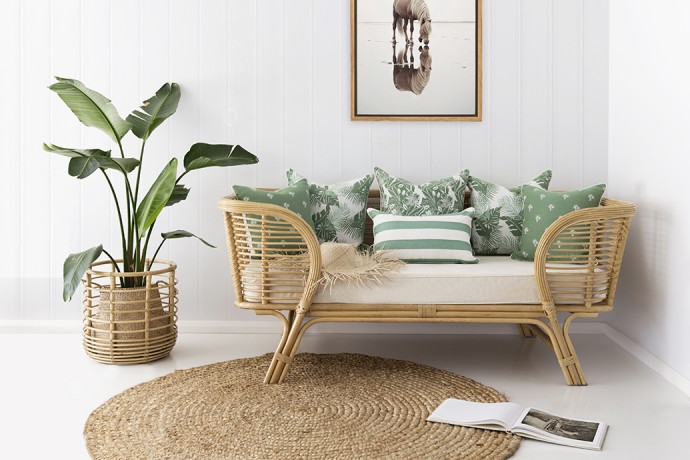
Plant containers deserve the same consideration as furniture and lighting. Unglazed terracotta introduces warmth and porosity, while stone, concrete and dark ceramic can reinforce a more grounded palette. For a coastal interior, pale vessels and broad-leafed plants can echo the softness of sand, timber and linen without resorting to a themed look.
A useful reference for this approach is the way layered textures can give a room depth. Plants work best when they participate in that layering: a glossy leaf beside matte plaster, a fine stem against timber grain or a broad frond interrupting a field of woven texture.
Scale also matters. A plant that is too small for its pot tends to look temporary, while an oversized specimen can block circulation and views. Leave enough clearance around leaves for cleaning and airflow, and keep plants away from direct contact with delicate upholstery, artwork and timber surfaces that may be marked by moisture.
Care routines that suit indoor life
Most low-light plants fail through excess water rather than lack of attention. Check the top few centimetres of soil before watering, then soak thoroughly until water exits the drainage holes. Empty the saucer or cover pot afterwards. In cooler months or darker rooms, the interval between waterings may be significantly longer than expected.
Dust is another overlooked issue. A layer of dust reduces the leaf’s ability to receive light and can make an otherwise healthy plant appear dull. Wipe broad leaves with a soft, damp cloth, or rinse suitable plants gently in the shower. Avoid leaf-shine products, which can interfere with the natural surface of foliage and attract residue.
Rotate plants every few weeks so they do not lean permanently towards the window. Trim yellow leaves close to the base, inspect new purchases for pests and quarantine unfamiliar plants briefly when bringing them into a collection. Spider mites, mealybugs and scale are easier to manage when detected early.
A considered shortlist for local interiors
Before buying, take a photograph of the proposed position and note its distance from the nearest window, exposure to heating or cooling and the amount of maintenance the household can provide. Nursery staff can then recommend a plant based on actual conditions rather than appearance alone.
For design projects, offices and hospitality settings, select varieties that can tolerate irregular care while retaining a clear visual identity:
- Choose a ZZ plant or snake plant for a durable, sculptural accent in a dim corner.
- Select cast iron plant or green-leafed aglaonema where broad foliage and quiet colour are needed.
- Use pothos to introduce movement above shelving, cabinetry or a reception counter.
- Place a peace lily or bird’s nest fern in a brighter, more humid interior zone.
- Keep highly variegated plants close to filtered daylight so their markings remain distinct.
The most useful plant is the one that makes the room feel more resolved over time. It should support the proportions, materials and daily patterns of the space rather than compete with them. For broader Australian design coverage, project stories and industry perspectives, explore Contemporary as a continuing source of ideas.
A local nursery visit can turn that research into a practical planting scheme. Bring measurements, reference images and an honest description of the room’s light, then choose containers and specimens together. For designers building connections with growers, makers and suppliers, the industry exhibitor network offers another way to discover the people shaping Australia’s interiors.