How to choose the right scale for a pendulum light over a dining table
A dining table is often the visual centre of an Australian home, so the light suspended above it has a demanding role. It needs to provide useful illumination, establish intimacy, and contribute to the room’s composition without competing with the table, chairs, artwork, or architectural details around it.
The right pendant light scale is less about choosing the largest fitting that will fit and more about creating a deliberate relationship between the fixture, the tabletop, the ceiling height, and the people seated below. A shade can be dramatic without feeling oversized, while a modest fitting can disappear if the proportions are wrong.
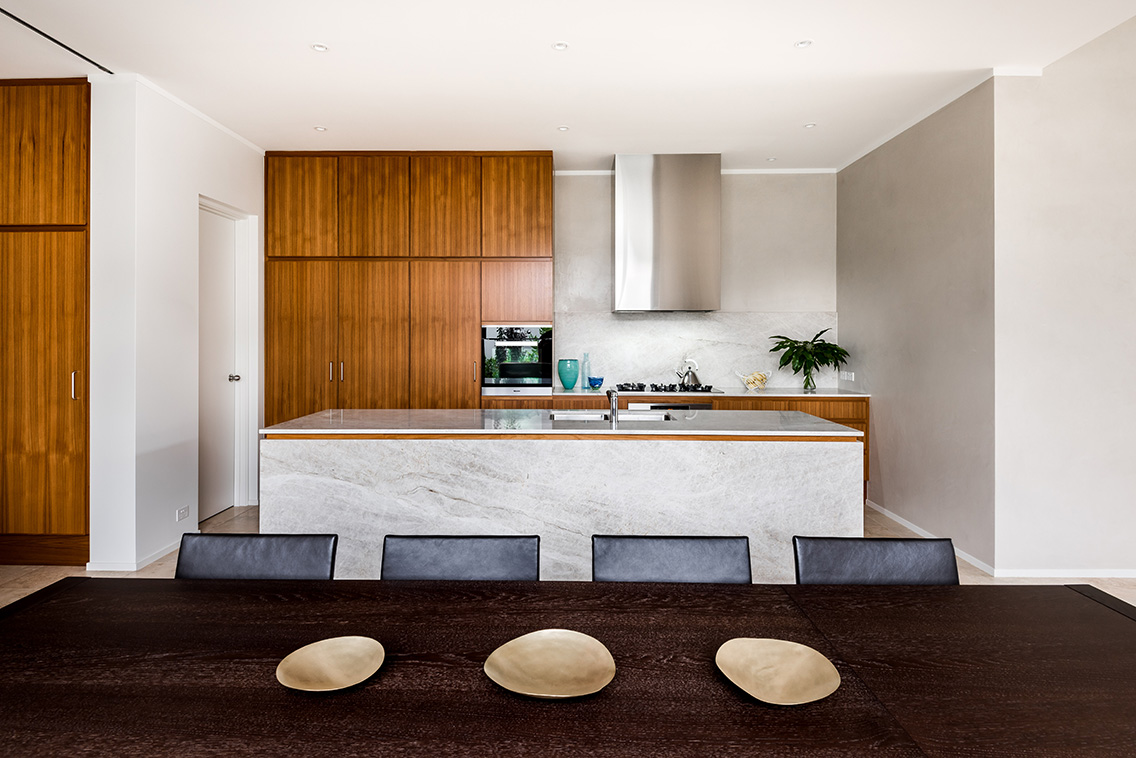
In Perth homes, where open-plan living, generous glazing, and indoor-outdoor connections are common, this balance becomes especially important. A dining pendant may be viewed from the kitchen, living area, hallway, and garden, so its silhouette should work from several directions and distances.
Begin with the table’s dimensions
The table is the most reliable starting point. Measure its length and width before considering the light’s diameter, overall span, or number of shades. A fixture that relates clearly to the tabletop will usually feel more settled in the room than one selected in isolation.
For a single pendant above a rectangular table, a useful starting point is to choose a fitting around one-half to two-thirds of the table’s length. For example, a 1800-millimetre table may suit a pendant between 900 and 1200 millimetres wide, depending on the design. This does not mean the light must be physically long; a broad, low shade can create a different effect from a narrow linear fitting of the same width.
The table’s width matters as well. A very wide pendant over a slim tabletop can feel visually heavy, while a small central fitting may leave the ends of a long table poorly lit. For a round dining table, diameter is the key measurement. A pendant measuring roughly half to two-thirds of the tabletop diameter often creates a comfortable visual anchor without overwhelming the circular form.
Consider the table’s visual weight, not simply its measurements. A thick timber slab, sculptural stone top, or dark base may need a more substantial pendant than a delicate glass or slim metal table. Scale is partly physical and partly perceived.
Match the fitting to the room’s volume
Ceiling height changes how large a pendant appears. In a room with a standard 2400-millimetre ceiling, a very broad shade can feel dominant, particularly if it hangs low. Higher ceilings can accommodate more generous forms, longer drops, and larger clusters because there is more vertical space for the fitting to occupy.
A useful proportion for the bottom of a dining pendant is approximately 750 to 900 millimetres above the tabletop. This range keeps the light close enough to create a defined dining zone while preserving sightlines across the table. The ideal height may shift according to the shade’s opacity, the height of the occupants, and whether the fitting is intended to illuminate the table directly or act mainly as an ambient feature.
Low ceilings often benefit from shallow shades, flush-mounted pendants, or fittings with a wide horizontal profile. Tall ceilings can support elongated drops, multiple suspension points, and more sculptural silhouettes. A large pendant does not automatically make a high-ceilinged room feel considered; the fixture still needs enough visual substance to hold its position within the architecture.
When the dining area opens into a double-height space, use the surrounding volume as part of the calculation. A compact pendant may look lost beneath the ceiling, even if it is correctly sized for the tabletop. In these rooms, a larger single shade or an arrangement of several pendants can provide the necessary presence.
Decide between one shade and several
The number of pendants changes the perceived scale of the installation. A single large shade creates a clear focal point and often suits a round table or a restrained interior. It can also bring calm to a room containing several competing elements, such as patterned upholstery, joinery, artwork, and busy views.
Multiple smaller pendants offer flexibility over a long rectangular table. Two or three fittings can distribute light more evenly and create rhythm along the table’s length. They should be spaced with enough breathing room to read as a considered group rather than a collection of objects suspended at random.
As a general guide, two pendants may work well over a table between 1800 and 2400 millimetres long, while three can suit a longer surface or a larger room. The overall composition should remain narrower than, or approximately equal to, the table length. Allowing the shades to extend dramatically beyond the tabletop can make the dining setting feel visually unstable.
Clustered pendants are another option, especially where the ceiling is high. Small globes at varied heights can occupy vertical space without requiring one oversized shade. The cluster should be treated as a single composition, with consistent spacing, a controlled colour palette, and a clear centre relative to the table.
| Dining table format | Starting pendant arrangement | Useful scale direction | Design detail to check |
|---|---|---|---|
| Small round table | One central pendant | About half to two-thirds of the table diameter | Keep the shade clear of seated sightlines |
| Large round table | One broad pendant or compact cluster | Use a stronger visual presence without covering the entire top | Centre the canopy and light source carefully |
| Short rectangular table | One linear or generous central shade | Around half to two-thirds of the table length | Avoid a shade that feels wider than the room’s circulation zone |
| Long rectangular table | Two or three pendants | Create an even rhythm across the tabletop | Align spacing with the table rather than the ceiling alone |
| Narrow table or breakfast bench | Slim linear pendant | Keep the profile proportionate to the tabletop width | Check that the fitting does not obstruct movement |
Account for light quality and shade material
Size cannot be separated from light output. An opaque metal pendant may cast a focused pool of light, while opal glass spreads a softer glow through the room. A woven fibre shade can filter illumination and add texture, but its open weave may create patterned shadows on walls and surfaces.
If the fitting has a narrow opening, increasing its diameter may not significantly improve light distribution. Conversely, a translucent or open shade can feel visually larger because its glow expands beyond its physical edges. Always examine the diffuser, globe position, and underside of the shade rather than judging scale from the silhouette alone.
Dimmability is particularly valuable over a dining table. Bright light supports cleaning, working, and serving, while a lower setting creates a more intimate atmosphere for meals. Warm-white lamps, generally around 2700K to 3000K, tend to complement timber, stone, textiles, and warm metal finishes.
Material also affects how the pendant relates to the room. Black steel can provide a crisp architectural line, brass can introduce warmth, and ceramic or plaster may soften a more robust interior. For a broader view of how finishes operate within a considered Australian scheme, this feature on Australian brass tapware offers a useful reminder that small material choices can influence the character of an entire space.
Consider sightlines and movement
A pendant must be scaled for the room when it is empty and for the people using it. The fitting should not obstruct conversation across the table, interfere with serving dishes, or create a persistent glare in the eyes of seated diners. This is particularly important with clear glass shades and exposed globes.
Before installation, mark the proposed pendant position with masking tape on the ceiling or suspend a temporary object from the intended height. Sit at each side of the table and view the marker from normal eye level. This simple test can reveal whether the shade is too low, too wide, or off-centre in relation to the room.
Circulation paths also affect placement. Leave comfortable clearance between the edge of the table and nearby walls, cabinets, or doorways. A pendant may be correctly proportioned above the tabletop yet feel too large once the wider movement zone is considered.
Take sightlines beyond the dining area into account. A fixture seen from a living room sofa may need a more sculptural profile, while one viewed directly from a kitchen island should have a tidy canopy and carefully managed cords. In open-plan interiors, the pendant becomes part of the architecture’s visual sequence rather than a standalone decoration.
Use the architecture and interior palette
The best dining pendants respond to the building’s character. In a heritage home, a contemporary fitting can create a productive contrast, but its scale should acknowledge the room’s cornices, ceiling roses, timber floors, and existing proportions. In a newly built home, a bold light may reinforce a strong ceiling plane or add warmth to a minimal interior.
Look for relationships rather than exact matches. A linear pendant might echo the geometry of a long kitchen island, while a rounded shade can soften a room filled with rectilinear joinery. Repetition of colour, texture, or finish can help the fitting feel integrated without making the room overly coordinated.
Natural light is another factor. In bright Perth interiors, a pale or translucent shade may almost disappear during the day and become luminous at night. Darker pendants create a stronger daytime outline and can visually ground a pale ceiling. Rooms with abundant planting, textured walls, or patterned rugs may benefit from a quieter fixture. Guidance on low-light indoor plants also points to a broader interior principle: every element should be selected for the actual conditions of the room, rather than for appearance alone.
Before choosing a final size, view the pendant alongside the chairs. High-back dining chairs, upholstered seats, and sculptural frames all alter the visual density below the light. A delicate fitting above substantial chairs may feel underpowered, while a heavy shade above slender seating can flatten the composition.
Practical checks before installation
Measurements made on paper are valuable, but several installation details can change the result. Check the pendant’s total weight, the ceiling structure, the canopy size, and the length of the suspension cord. A large fitting may require additional support, especially when mounted to a plasterboard ceiling or a location that does not align with a joist.
The electrical point should be centred over the table, not necessarily in the middle of the room. In open-plan spaces, builders and electricians may position the point according to the room’s geometry before the furniture is selected. Confirm the table location early, particularly if it is an extendable design or likely to move.
Use a dimmer compatible with the chosen driver or lamp, and consider how the light will be cleaned and maintained. Pendants over dining tables collect dust and cooking residue more quickly than fittings in less active areas. Shades that can be removed easily or wiped without disassembly are often better suited to everyday Australian living.
A considered selection usually emerges from several modest decisions: the table’s proportions, the ceiling’s height, the shade’s opacity, the desired light level, and the relationship to nearby materials. Keep these checks close at hand:
A proportion checklist for the final choice
- Measure the table, ceiling, nearby walls, and circulation paths before selecting the pendant.
- Aim for a fixture that relates to the table length or diameter without extending awkwardly beyond it.
- Position the bottom of the shade approximately 750 to 900 millimetres above the tabletop, then test the view from seated height.
- Use multiple pendants to distribute light along a long table, keeping their spacing deliberate and their combined width visually balanced.
- Check the shade material, glare, dimming capacity, maintenance needs, and compatibility with the ceiling structure.
A dining pendant succeeds when it feels inevitable in the room: large enough to establish focus, restrained enough to preserve conversation, and bright enough to support daily life. Sketch the arrangement, test the hanging height with a temporary marker, and view the proposed fitting from every approach to the dining area before committing. With those checks in place, the final light can provide both practical illumination and a clear architectural gesture.