How terrazzo gave a Mount Hawthorn bistro a stronger sense of place
In Mount Hawthorn, where neighbourhood hospitality is closely tied to a sense of familiarity, a bistro interior has to do more than accommodate tables and chairs. It needs to establish a mood quickly, withstand the intensity of daily service and give guests a reason to linger. Terrazzo became the central design decision in one local venue because it could satisfy these demands while giving the room a distinctive visual identity.
The material appears across the bistro as a continuous language rather than a decorative afterthought. Its aggregate, colour and polished surface connect the floor, counter and smaller details, allowing the interior to feel composed without becoming overly formal. This approach demonstrates how a resilient commercial finish can also carry warmth, character and a clear connection to contemporary Australian design.
The result is an interior shaped by restraint. Rather than relying on a crowded collection of finishes, the project uses terrazzo as an anchor and builds around it with timber, upholstered seating, considered lighting and carefully framed views. The balance creates a setting that feels both energetic and settled, reflecting the social rhythm of a modern Perth bistro.
A material with atmosphere and endurance
Terrazzo is often associated with public buildings, mid-century interiors and hard-wearing civic surfaces. In a hospitality setting, however, its appeal extends beyond durability. Chips of marble, stone or recycled aggregate create a granular pattern that changes subtly across each slab or poured section, giving the material a visual depth that a flat tile or uniform resin floor cannot easily provide.
For the Mount Hawthorn bistro, that variation helps soften the precision of the fit-out. The surface has enough movement to catch the eye, yet it remains quiet enough to support the menu, artwork and activity around it. Under warm lighting, the aggregate reads as a collection of small tonal accents rather than a repetitive pattern.
Its practical performance is equally important. A busy restaurant floor must cope with spilled drinks, dragged furniture, high foot traffic and constant cleaning. Terrazzo can be sealed and maintained as a robust, long-term surface, making it suitable for the threshold between front-of-house hospitality and the more demanding conditions of service.
Building the interior around a terrazzo spine
The strongest feature of the scheme is the way terrazzo establishes continuity. Instead of appearing in one isolated zone, it is used to connect different parts of the venue. A terrazzo floor can lead guests from the entry towards the dining room, while a matching or closely related counter surface gives the bar and ordering area a visual weight of their own.
This continuity improves wayfinding without resorting to signs or partitions. Visitors intuitively understand where to enter, order, sit and move through the room because the material reinforces the plan. In a compact bistro, where every square metre has a role, this kind of visual organisation is especially valuable.
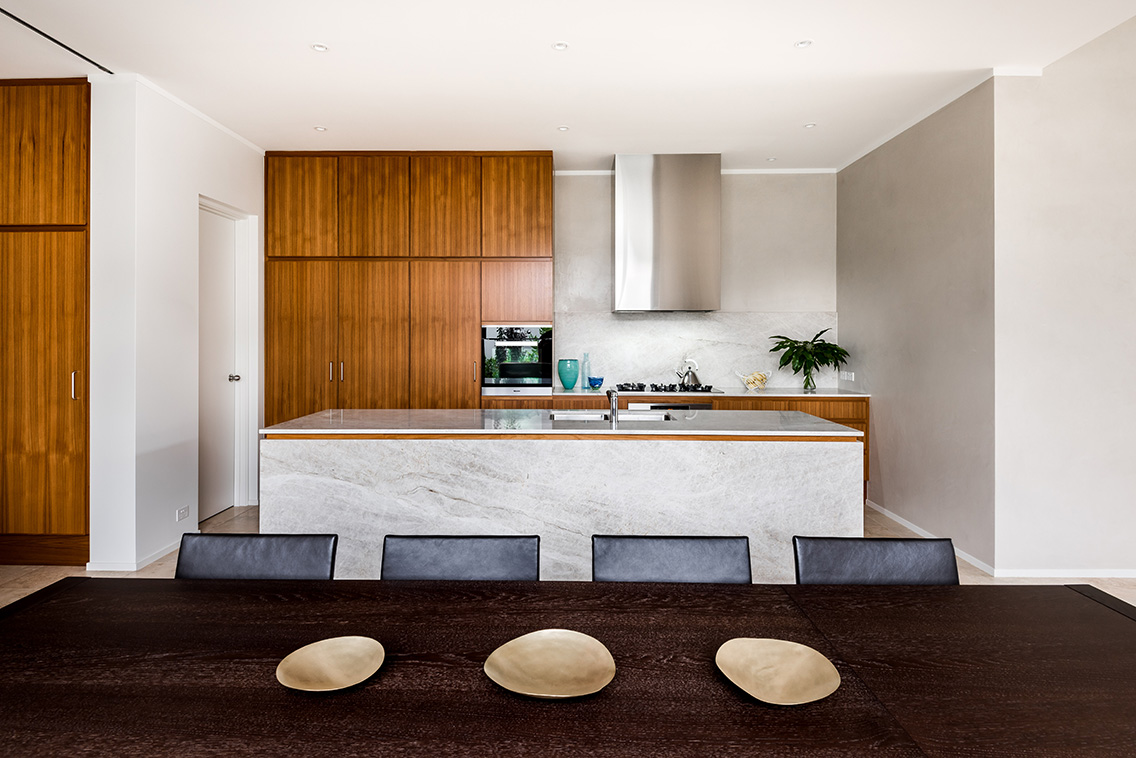
The counter becomes a focal point through proportion and craftsmanship rather than excessive decoration. Its terrazzo face or worktop can catch daylight and pendant light, revealing the aggregate at different times of day. Around it, timber joinery and upholstered furniture provide a warmer counterpoint, ensuring the stone-based finish does not make the room feel cold.
Colour, grain and the softer side of stone
The choice of terrazzo mix determines much of the bistro’s emotional character. A pale base with muted chips can make a narrow dining room appear brighter and more open, while darker aggregate can introduce depth and tie the interior to richer timber tones. Small flecks of ochre, rust, green or charcoal may also echo the colours of food, planting and nearby streetscape.
This is where terrazzo becomes more than a technical specification. The aggregate works like a built-in palette, allowing designers to select adjacent materials with confidence. Upholstery can draw from a subtle chip colour; timber can repeat a warmer undertone; metalwork can pick up the darker fragments without creating a busy finish schedule.
The bistro’s atmosphere depends on this controlled contrast. The terrazzo provides visual texture, but soft seating and tactile fabrics make the space comfortable. Rounded furniture edges can counter the material’s mineral hardness, while timber joinery introduces a sense of craft. Together, these decisions make the room feel approachable rather than institutional.
Comparing finishes for a neighbourhood bistro
The choice of surface affects much more than appearance. It influences acoustics, cleaning routines, ageing, repair and the way guests perceive the venue. Terrazzo performs strongly because it combines a substantial visual presence with the practical qualities demanded by a hospitality environment.
| Finish | Visual character | Maintenance profile | Best contribution to the bistro |
|---|---|---|---|
| Terrazzo | Tactile, granular and individual | Regular sealing and cleaning; damage can often be repaired locally | A durable identity across floors, counters and thresholds |
| Porcelain tile | Consistent, graphic or stone-like | Easy to clean; grout lines require attention | Flexible patterns and efficient installation |
| Polished concrete | Minimal, tonal and architectural | Requires sealing; can show staining or cracking | A restrained base for expressive furniture and lighting |
| Natural stone | Rich, varied and premium | Ongoing care varies by stone type | A focused statement at the bar or service counter |
| Timber flooring | Warm, familiar and tactile | More sensitive to moisture, impact and wear | Comfort and softness in lower-intensity dining zones |
Terrazzo’s particular advantage is its ability to handle repetition without appearing generic. A tile system can create a strong rhythm, but repeated modules may make a small venue feel overly fixed. A continuous terrazzo surface offers a calmer field, allowing tables, plants, menus and people to create the moment-to-moment variation.
That quality supports longevity. A successful bistro interior should remain recognisable after the opening photography has faded from view. Terrazzo develops small signs of use while retaining its overall composition, which can help the venue acquire patina rather than simply looking worn.
Light and the visual rhythm of the room
Natural light changes how terrazzo is experienced. At one time of day, a pale cement base may appear cool and crisp; later, it can absorb warmer tones from the setting sun or interior lighting. The aggregate gives these shifts something to work against, preventing the surface from becoming visually flat.
Large areas of glazing can bring welcome brightness to a hospitality interior, although they need careful control to avoid glare and overheating. The bistro’s material palette benefits from an integrated approach to daylight, and this wider discussion of window treatments shows why solar control should be considered alongside finishes, furniture and energy performance.
Artificial lighting extends the material strategy into the evening. Low-glare pendants, concealed strip lighting and carefully positioned wall lights can reveal the texture of terrazzo without turning it into a reflective spectacle. The aim is to create layers: a softly lit counter, a comfortable table surface and enough ambient light for movement through the room.
This layered approach also affects photography and brand recognition. Terrazzo offers a repeatable visual signature, but its appearance is never entirely static. It can look crisp in a daytime image, moody in an evening scene and richly tactile in a close-up detail, giving the venue a versatile visual identity across editorial and social media.
A Perth palette with a contemporary edge
The project’s material language sits comfortably within Western Australia’s design culture, where local landscape, climate and craft frequently inform interiors without being represented literally. Terrazzo can suggest coastal stone, mineral deposits or sun-washed ground through colour and texture, while still belonging to a distinctly contemporary setting.
That local connection becomes stronger when terrazzo is paired with Australian timbers and considered detailing. Designers across the state are exploring the character of existing materials, including the renewed appeal of reclaimed jarrah for feature walls and joinery. In a bistro, jarrah’s deep grain could provide an expressive counterpoint to a lighter terrazzo mix.
The contrast works because both materials carry evidence of making. Terrazzo records the arrangement of its aggregate, while jarrah reveals grain, knots and tonal shifts. Together they create a balance between composite and natural surfaces, precision and irregularity, polished finish and tactile depth.
This combination also avoids a predictable hospitality aesthetic. The room does not need to imitate a European café or rely on industrial references to feel established. Its identity comes from how materials are selected and assembled in response to the site, the neighbourhood and the practical life of the business.
Designing for service, comfort and return visits
A bistro interior must support several types of occupation at once. Some guests arrive for a quick coffee, others settle in for a long meal, and staff need clear routes between the kitchen, counter and tables. Terrazzo contributes to this operational clarity because it can define high-use zones without introducing visual clutter.
Acoustic comfort remains essential. Hard surfaces can amplify conversation, cutlery and background music if they dominate the room, so the terrazzo needs to be balanced with upholstered seating, curtains, acoustic panels, timber and other absorbent materials. The most successful composition treats sound as part of the interior palette.
Edge detailing is another important consideration. Junctions between terrazzo, timber and walls should be resolved cleanly, particularly around corners, thresholds and service areas. A carefully finished edge can make a modest material feel premium, while a poorly considered transition can interrupt the sense of continuity that gives the project its strength.
For operators, longevity is measured through everyday reliability. A material that photographs well but is difficult to clean or repair quickly can become a liability. Terrazzo earns its place when its visual contribution is matched by sensible sealing, maintenance access and a specification suited to the intensity of the venue.
Lessons for future hospitality interiors
The Mount Hawthorn bistro shows that one strong material can organise an interior without dictating every detail. Terrazzo gives the venue a recognisable foundation, then allows lighting, furniture, planting and local timber to shape the atmosphere around it. This is a useful model for hospitality projects seeking distinction without visual excess.
Key principles include:
- Select the terrazzo aggregate as carefully as the base colour, since small chips can guide the entire palette.
- Use the material to clarify movement between entry, counter, dining and service zones.
- Pair mineral finishes with upholstery, timber and acoustic treatments to maintain comfort.
- Coordinate daylight control and artificial lighting so the surface performs throughout the day.
- Specify sealing, edge details and repair methods early, rather than treating maintenance as an afterthought.
For designers, the project also offers a reminder that commercial interiors are judged through repeated experience. Guests may first notice the terrazzo’s pattern, but they return for the way the room feels: the ease of circulation, the quality of light, the comfort of the seating and the sense that the venue belongs in its neighbourhood.
Contemporary’s coverage of Australian architecture and interiors provides an ongoing view of the people, materials and ideas shaping this environment. Explore the local design community through Wine in Design exhibitors, then visit the Mount Hawthorn bistro with a closer eye for the details that make a durable material feel welcoming, specific and alive.