Why Reclaimed Jarrah Is Defining Western Australian Interiors
Across Western Australia, timber feature walls are taking on a stronger sense of place. Rather than relying on imported finishes or flawless new boards, designers are looking to reclaimed jarrah for its deep colour, visible grain, and connection to the state’s built and natural history. The material brings warmth to contemporary interiors while carrying the marks of an earlier life.
Jarrah has long been part of Western Australian architecture. Its rich red-brown tone appears in floors, staircases, doors, furniture, and public buildings across Perth and regional towns. When salvaged and given a new role as wall panelling, old timber becomes a tactile design element that links current projects with local craftsmanship and material culture.
This renewed interest reflects a broader movement towards circular design. Architects, interior designers, and makers are choosing materials that can reduce waste, support local supply chains, and offer a more individual finish than mass-produced products. Reclaimed jarrah answers those priorities with character that cannot be convincingly replicated by a printed veneer.
A Material With A Western Australian Story
Jarrah, or Eucalyptus marginata, is native to the south-west of Western Australia, where it grows in forests stretching from the Perth region towards the south coast. Its durability made it a practical choice for early construction, railway sleepers, bridges, wharves, flooring, and heavy-duty joinery. Salvaged boards may have come from houses, warehouses, schools, workshops, or infrastructure that has since been altered or demolished.
That history gives a feature wall a depth beyond colour and texture. Saw marks, nail holes, oxidised edges, filled joints, and changes in tone reveal the timber’s former use. A designer can preserve those traces to create a more expressive surface, or carefully grade and finish the boards for a refined interior with quieter references to age.
For a Perth practice working across residential and commercial spaces, the local identity of jarrah can be especially valuable. It allows a project to feel grounded without resorting to obvious visual symbols. The material communicates place through its grain, density, and provenance.
Why Designers Are Choosing Reclaimed Boards
The appeal begins with visual variation. New timber can be selected for consistency, while reclaimed jarrah offers a naturally layered palette ranging from russet and chestnut to umber, honey, and near-black brown. Light changes across each board as the grain catches the sun, giving a wall movement that paint and uniform laminate rarely achieve.
Texture is equally important. A reclaimed timber wall can soften the hard surfaces found in kitchens, hospitality venues, galleries, offices, and apartment interiors. It introduces a tactile counterpoint to concrete, stone, glass, and powder-coated metal. In residential projects, that contrast can make an open-plan living area feel more settled; in commercial settings, it can create a memorable backdrop for reception desks, dining spaces, or meeting rooms.
Designers are also using jarrah to establish rhythm. Boards may be installed vertically to emphasise ceiling height, horizontally to extend a narrow room, or in mixed-width arrangements that highlight the irregularity of the material. Herringbone, chevron, and framed panel layouts offer more formal interpretations, while staggered boards create a relaxed, workshop-inspired finish.
The result is adaptable. Reclaimed jarrah can suit a warm minimalist home, a sophisticated bar, a heritage renovation, or a contemporary workplace. Its strength lies in the ability to carry both rustic and polished design languages.
Circular Design With A Sense Of Place
Reusing existing timber helps keep a valuable material in circulation. Instead of sending old boards to landfill or reducing them to lower-grade applications, a project can retain their embodied energy and extend their useful life. This matters in an industry increasingly focused on responsible specification, material passports, adaptive reuse, and waste reduction.
The environmental value still depends on sourcing and processing. Salvaged timber should be assessed for its origin, condition, treatment history, and transport requirements. Designers and clients need to distinguish genuinely reclaimed boards from new timber that has simply been distressed to look old. Clear documentation from suppliers can support a more credible sustainability story.
| Design consideration | Reclaimed jarrah advantage | Practical detail |
|---|---|---|
| Appearance | Deep colour and varied grain | Sample boards in the project’s actual light |
| Durability | Dense, hard-wearing timber | Check for movement, splits, and previous damage |
| Sustainability | Extends the life of existing material | Confirm provenance and processing methods |
| Installation | Suitable for panels, screens, and cladding | Allow for substrate preparation and fixing systems |
| Maintenance | Can be refinished over time | Select a coating that suits traffic and touch |
| Budget | Premium character without new custom milling | Price sorting, preparation, wastage, and installation |
Western Australian designers are also attentive to the cultural and ecological questions surrounding native hardwoods. Reclaimed material offers a way to work with jarrah while reducing the demand for newly harvested stock, provided its source is transparent and its use is considered carefully. The strongest projects treat sustainability as part of the design narrative rather than a decorative label.
Detailing The Wall For Long-Term Performance
A feature wall may appear simple, but its success depends on decisions made before the first board is fixed. Reclaimed timber can vary in thickness, moisture content, length, and stability. The substrate must be level, dry, and capable of supporting the chosen fixing method. In some projects, a concealed batten system or backing panel helps manage irregular boards and allows services to remain accessible.
Moisture is a key consideration in Perth’s changing climate and in interiors such as kitchens, bathrooms, restaurants, and coastal homes. Timber should be acclimatised to the conditions of the site, with appropriate expansion gaps and ventilation where required. Direct exposure to water or intense afternoon sun may call for a more resilient coating and a carefully resolved junction.
Finishing choices shape the final character. A clear matte oil can deepen the natural colour while preserving a low-sheen, tactile appearance. A water-based coating may keep the palette lighter and offer easier maintenance in some applications. Some designers leave saw marks and filled holes visible; others use a restrained finish to bring the boards closer to architectural millwork.
Details at the edges deserve equal attention. A dark reveal can separate the timber from an adjacent wall, while a stone, brass, or blackened steel trim can give the installation a precise endpoint. Electrical outlets, doors, shelving, and skirting should be integrated into the layout rather than cut into the wall as afterthoughts.
Balancing Heritage And Contemporary Form
Reclaimed jarrah works best when its historical character is balanced with clear contemporary decisions. Covering every surface in heavily distressed timber can make an interior feel themed rather than connected to place. A single wall, niche, ceiling plane, or built-in element often provides enough material presence to anchor the room.
The surrounding palette has a strong influence. Pale plaster, limestone, terrazzo, and soft textiles can bring out the warmer notes in the timber. Charcoal surfaces and metalwork create a moodier, more dramatic composition. Green, clay, and muted blue tones reference the Western Australian landscape without competing with the grain.
Scale also matters. Wide boards can create a calmer, more architectural surface, while narrow pieces bring energy and a stronger sense of craft. Repeated board lengths may feel ordered and tailored; varied lengths can preserve the irregularity of salvage. The right approach depends on whether the wall is intended to recede as a warm background or operate as the room’s principal visual statement.
These decisions are part of a wider Australian design conversation, where local materials are being reinterpreted through contemporary construction and detailing. Platforms that connect practitioners, makers, and audiences help bring those conversations into view. Designers can find a broader community through Contemporary’s ambassadors, whose work reflects the range of architectural and creative practice shaping the country.
Where Reclaimed Jarrah Is Making An Impact
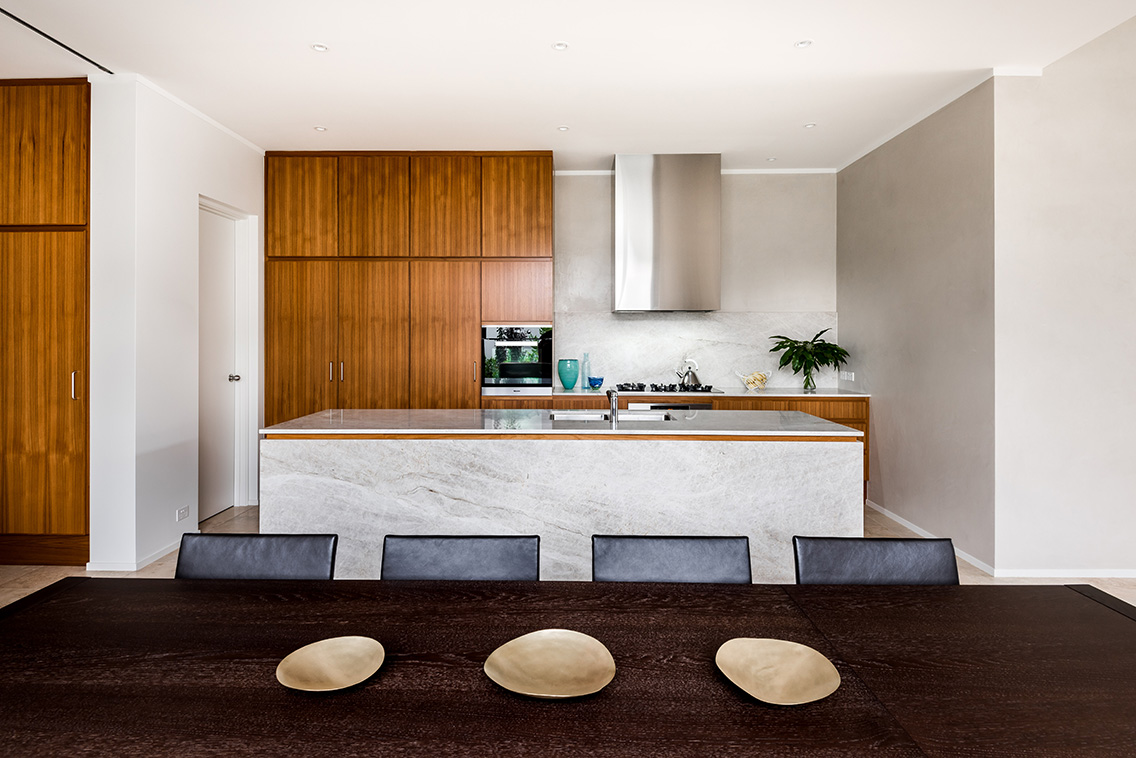
Residential projects remain a natural setting for jarrah panelling. It can frame a fireplace, define a dining area, line a stairwell, or form the backdrop to a kitchen and living zone. In smaller homes, one carefully positioned wall may add warmth without making the interior feel visually crowded. Built-in storage faced in reclaimed boards can connect separate rooms and make practical joinery feel more substantial.
Commercial interiors are using the material with a different emphasis. Restaurants and wine bars often pair it with stone, leather, and low lighting to create an intimate atmosphere. Offices use it to soften reception areas and collaborative spaces. Retailers and galleries may choose a more restrained installation, allowing the timber to support products and artwork without competing for attention.
Public and cultural projects can draw on jarrah’s civic and industrial associations. A salvaged timber screen, bench, or wall lining can acknowledge the region’s construction history while meeting current requirements for access, durability, and maintenance. In these contexts, the material becomes part of the public experience rather than a purely ornamental finish.
Its growing presence also reflects a desire for design stories that are specific to Western Australia. A jarrah wall can say something about climate, forestry, labour, repair, and continuity. Those associations become most convincing when they are supported by careful sourcing and considered detailing rather than used as surface decoration.
Making A More Considered Material Choice
For clients and designers assessing reclaimed jarrah, the first step is to establish the desired mood and performance requirements. A rustic wall with visible weathering will need a different selection process from a finely graded installation for a premium hospitality interior. Agreeing on the acceptable range of colour, knots, holes, and board dimensions prevents uncertainty later.
Useful decisions to make early include:
- Confirm the timber’s provenance, previous use, and treatment history.
- Request representative samples showing the full range of colour and texture.
- Allow for sorting, cleaning, machining, wastage, and acclimatisation in the budget.
- Coordinate lighting, power points, joinery, and edge details before installation.
- Select a finish and maintenance schedule suited to the room’s moisture and traffic levels.
Photography can document the material’s transformation from salvage to finished interior, while detailed project storytelling can explain why certain imperfections were retained. This gives the wall a stronger place within the overall design and helps audiences understand the value of reuse.
For practitioners, students, and clients interested in the people shaping Western Australian design, industry gatherings provide a useful extension of that research. Registration for Contemporary Wine In Design offers an opportunity to meet local architects, designers, makers, and collaborators in a setting focused on exchange and visibility.
Reclaimed jarrah has earned its place in current interiors because it offers several kinds of richness at once: a recognisable local identity, a durable surface, a record of previous use, and a flexible response to contemporary architecture. When sourced responsibly and detailed with care, it transforms a wall into more than a backdrop. It becomes a material statement about place, continuity, and the value of giving existing resources another life.
Explore the Western Australian projects, practitioners, and material ideas shaping the next generation of Australian design through Contemporary’s editorial coverage and community events.