Return of curved sofas: how they work in rectangular WA living spaces
The return of curved sofas is not simply a swing toward retro forms. In Perth and across Western Australia, renewed interest in rounded seating answers a familiar architectural condition: living rooms are usually shaped by straight walls, square windows, linear joinery and long, rectilinear floor plans. A well-proportioned curve can bring movement, warmth and a clearer social centre to these rooms without fighting the architecture.
The most successful examples feel generous rather than oversized. They preserve the route from front door to kitchen, support television viewing from several seats and complement the strong relationship many WA homes have with patios, gardens and cross-ventilation. Scale, placement, upholstery, local materials and practical household habits all determine whether the shape works in the room as it appears in a showroom.
Soft curves against straight architecture
Curves alter the eye’s movement through a rectangle. A straight sofa tends to echo the walls, while a kidney-shaped seat, deep half-round or sculptural chaise interrupts that predictability and creates a focal point. The effect is especially useful in Perth’s grid-based suburbs, where boxy open-plan rooms are common. Rounded edges soften the joinery and help the seating area feel intentional rather than added at the end.
Shape should follow the room’s purpose. A low, wide curve can anchor a long lounge wall; a compact arc suits a narrow apartment; a modular rounded sectional can gather a family around one table. Buy the geometry that matches the dominant activity. If the sofa mainly faces television, retain direct sightlines. If conversation is the priority, let the seats turn toward the coffee table and leave enough space between them for knees and reaching.
A curved sofa also changes circulation. People naturally slow near a rounded edge, which can make the edge a useful place for a side table, floor lamp or throw. Avoid creating a pinch point beside it. In a Fremantle terrace, where living rooms can be narrow and the front-to-back route is compact, a shallow curve or two linked modules often works better than a deep statement piece.
Measure scale and daily circulation
Measure the room, the openings and the intended furniture before ordering. Record the sofa’s full width and depth, then compare it with doorways, stairs, lifts, hallways and the space needed behind the seat. A common mistake is to focus only on the front elevation. Curved backs can project further into the room than they appear on a product page, while a tight turning angle can make a large sofa impossible to manoeuvre into place.
Allow practical clearances around daily routes. Around 900 millimetres is a useful reference for a comfortable main passage, while the zone between sofa and coffee table should suit the depth of the people using it. If the sofa faces a television, check glare and the position of windows. WA’s bright summer sun and low winter sun can shift across a room, so upholstery colour should be judged under changing daylight, not only showroom lighting.
Natural light also influences where a curve feels best. Low backs preserve outlooks to a courtyard or garden; high backs create privacy in a street-facing room. That balance of enclosure and openness is visible in Perth’s biophilic design culture, where planting and natural materials make architecture feel connected to landscape. A rounded sofa can echo the same ease, especially beside indoor-outdoor rooms.
Build a WA-ready material palette
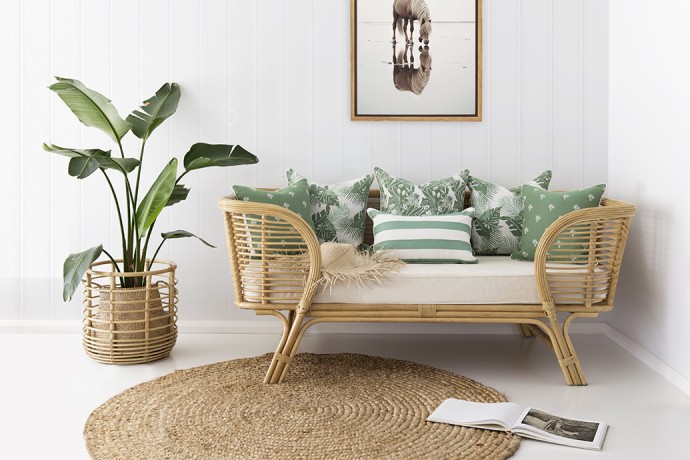
A restrained palette lets the silhouette lead without making the room theatrical. Warm white, oatmeal, taupe and charcoal work well with timber floors and pale walls, while olive, rust, ochre or deep blue add character. In many Australian homes, a pale bouclé sofa creates softness, but a darker velvet or leather can give the same curved form more weight and make it read as a permanent piece rather than a seasonal accent.
Choose performance fabric for real household conditions. Look for abrasion ratings, stain resistance and cleanability, particularly in open-plan family rooms where food, drinks, pets and children share the same zone. Synthetic blends can withstand busy use and handle WA sunlight well; wool or cotton blends bring natural texture but need more considered care. Always test a swatch and check the cleaning code before committing.
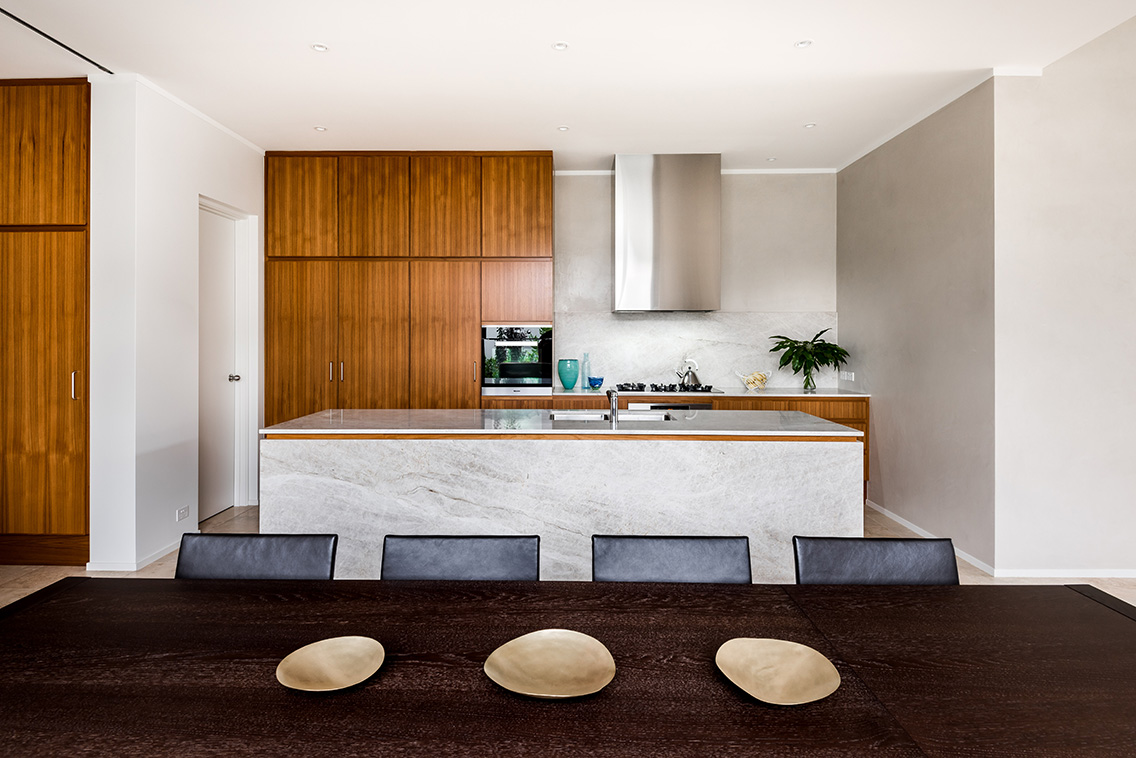
WA materials can give the curves a stronger local identity. Jarrah, marri and spotted veneer add grain and warmth beside a smooth upholstered back. Contemporary’s report on Perth’s local timber approach shows how a contemporary interior can be grounded in regional craft without becoming rustic. The timber can sit in a low table or cabinet, while the sofa supplies the room’s softer counterpoint.
Design for Australian living habits
Australian living rooms often carry several roles at once: television lounge, homework space, guest room and weekend gathering place. A modular curved sofa can adapt as those needs change, especially in new Perth townhouses and suburban open-plan houses. Individual pieces can be repositioned, separated for a larger dining area or added to as the family grows. That flexibility is more useful than forcing every need into a fixed silhouette.
Consider who sits where. Deep seats invite lounging, while firmer cushions suit long meals and everyday work. A curve works well for shared conversation because angled seats can face one another without turning the whole body away from the room. For households that watch sport together, check that the raised or reclined position of every seat does not obscure the screen. For children, rounded corners reduce sharp edges but do not replace safe furniture design.
The Australian market offers familiar choices as well as more sculptural options. National brands such as Formby and King Living sit alongside Perth custom upholstery workshops, interior designers and second-hand specialists; each provides a different route to a curved configuration. Buy locally made where possible to simplify communication about dimensions, replacement covers and repairs. A good local supplier should be comfortable discussing the floor plan, not merely the finish.
Plan delivery repair and longevity
Delivery is part of the design decision. Large curved frames may arrive in separate modules, but the pieces still need to turn through every entrance. Ask for exact carton dimensions, assembly requirements and a delivery path that includes balconies, stair turns and lift dimensions. Photograph access points before the sofa arrives and make sure the landing space is clear. New apartment developments may have wide communal corridors but surprisingly tight front doors.
Longevity comes from a sound base and a repairable body. A kiln-dried timber or steel frame, supportive foam and replaceable covers can preserve comfort long after a trend passes. Modular components are useful because one damaged section may be renewed rather than the entire sofa replaced. Check warranty terms, cushion compression and how the covers can be removed, particularly if pets, allergies or frequent gatherings make easy cleaning a priority.
Materials deserve the same scrutiny. Ask about frame provenance, foam recycled content, timber certification and the maker’s take-back or repair options. A curved form can use more fabric than a straight model, so compare total material rather than metreage alone. Independent suppliers such as Freedom provide another Australian-market reference point, while specialist makers can tailor depth and curvature to a difficult room without wasting excess volume.
Bring the curve home with confidence
Start with a floor plan, not a mood image. Mark the sofa on masking tape, then draw the route to the kitchen, television and outdoor area. Test the footprint at different times of day and sit in every position. A curved sofa should make the room easier to use, with the main seats reached naturally and no corner becoming an obstacle. This simple exercise can reveal quickly whether the curve is helping the architecture.
Style around it with restraint. A round or oval coffee table repeats the shape without duplicating it; a rectangular table can provide useful contrast. Anchor the sofa with a rug large enough to hold the front legs, then add one or two lamps and sculptural objects rather than filling every surface. Curtains, artwork and planting should continue the room’s vertical and horizontal lines, giving the rounded seat room to stand out.
Before buying, compare full-size models in person, review the fabric against the room’s strongest light and secure written dimensions and delivery terms. For fresh WA project stories, product knowledge and a broader view of the local design scene, explore Contemporary’s design coverage. Then visit the next Contemporary Wine In Design showcase with your plan in hand, speak with makers and bring the curve home only when it supports the way your household lives.