Why Round Dining Tables Are Shaping New Perth Apartment Plans
The dining table has become a surprisingly influential piece of furniture in Perth’s apartment market. As new homes become more compact and open-plan living areas carry several functions, the familiar rectangular table is giving way to a softer, more adaptable form. Circular dining settings are appearing in display suites, interior schedules and developer-led schemes because they fit the way many Australians now eat, work and gather at home.
This shift is about more than fashion. A round table can release circulation space, improve sightlines and make a small kitchen-living area feel less prescribed. In Perth, where apartment living is expanding across precincts such as East Perth, Scarborough, Subiaco and Fremantle, the shape responds to a local appetite for relaxed entertaining while meeting the practical demands of higher-density housing.
Space Efficiency In Compact Apartment Layouts
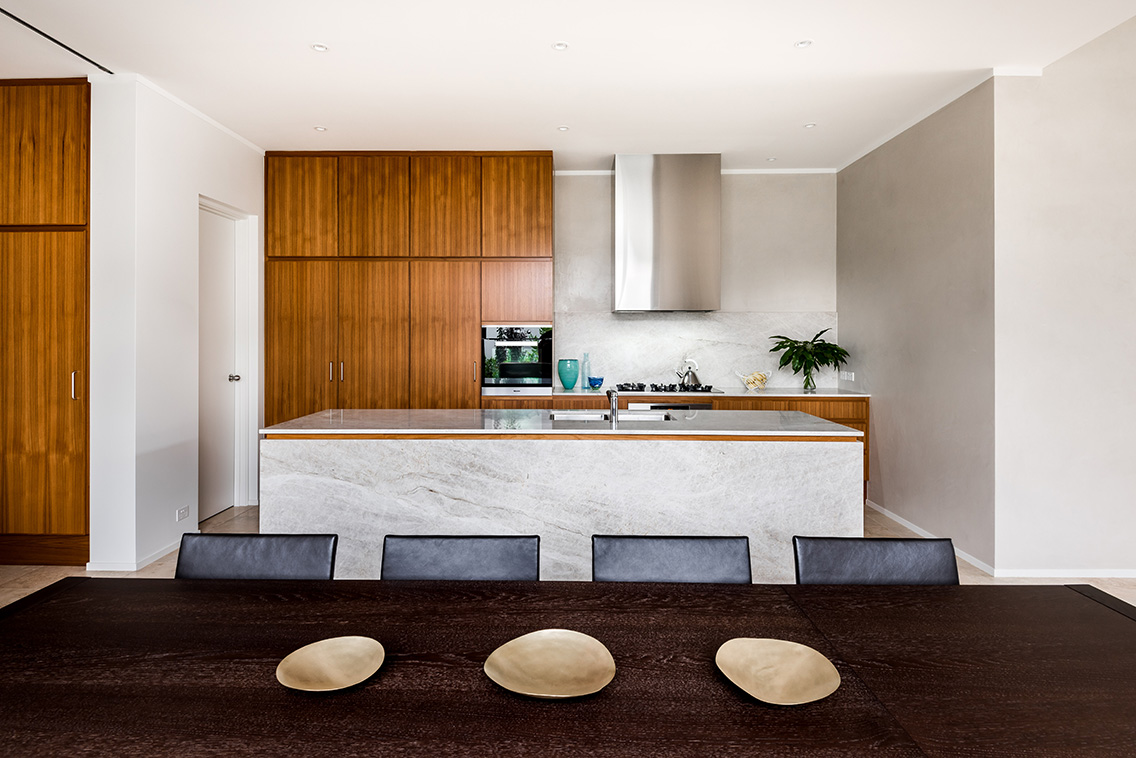
Rectangular dining tables need a clear direction. Their length usually runs parallel to a kitchen island or living room wall, which can create a narrow passage between chairs, cabinetry and balcony doors. In a compact apartment, that arrangement often makes the dining zone feel like a corridor rather than a place to linger.
A round table works differently. Its footprint is concentrated at the centre, with no corners projecting into circulation routes. Residents can move around it more naturally, and chairs can be pulled out from different angles. This is especially useful in Perth apartments where a single open-plan room may need to accommodate a kitchen, dining area, sofa, television, desk and access to a balcony.
Designers are also using circular tables to make irregular floor plans feel intentional. A curved edge can sit comfortably beside a curved wall, a chamfered corner or a kitchen island with softened ends. Rather than forcing furniture into a rigid grid, the plan can create a central social point that absorbs small changes in dimension.
The result is valuable to both buyers and developers. A room that accommodates a 1,100-millimetre round table may appear more generous than one that struggles with a similarly sized rectangular setting. Floor area is unchanged, but the experience of moving through it is improved.
A Better Fit For The Way Australians Gather
Dining in Australia tends to be informal and fluid. A meal may begin at the table, move to the balcony and finish around the kitchen bench. Guests often arrive with children, share plates across the centre and pull extra chairs from another room. A circular arrangement supports this loose choreography because everyone remains part of the same conversation.
The shape also suits the social habits of Perth apartments. Balmy evenings encourage residents to open sliding doors to balconies or terraces, while weekend lunches often combine indoor dining with outdoor entertaining. A round table positioned near the threshold can connect these zones without presenting a hard barrier between them.
There is a practical advantage during larger gatherings. At a rectangular table, people at opposite ends can become separated into small conversational groups. A circular table keeps faces turned towards the centre, helping a small dinner party feel cohesive. For households that host family at Christmas or friends after a Saturday beach visit, this sense of connection matters as much as the table’s dimensions.
The appeal extends beyond private homes. Round communal tables are increasingly used in apartment resident lounges, co-working spaces and shared rooftop kitchens. They encourage people to sit together rather than occupy isolated positions, reinforcing the idea that amenity spaces should support casual encounters as well as formal events.
Softer Geometry For Open-Plan Interiors
The popularity of curved furniture reflects a wider movement in residential interiors. Arched joinery, fluted surfaces, rounded sofas and sculptural lighting are replacing some of the sharp, rectilinear language that dominated new-build apartments for years. A circular dining table brings this softer geometry into the centre of the home without requiring major architectural changes.
This matters because many contemporary Perth apartments rely on long, linear sightlines. Kitchens, living areas and balconies are often arranged along a single axis to maximise daylight and views. A circular table interrupts that visual repetition, giving the room a clear focal point while preserving openness around it.
Materials can strengthen the effect. Pale oak creates a quiet, coastal character suited to Perth’s light, while dark timber or smoked glass gives a more urban expression in a city apartment. Travertine, terrazzo and stone-look surfaces add weight, although designers need to consider the load limits and access constraints that come with apartment buildings. Compact pedestal bases are particularly useful because they leave more room for feet and chairs than four substantial legs.
The design language also aligns with a growing interest in locally made furniture. Perth makers and Australian brands are producing dining tables in Australian timbers, recycled materials and custom finishes, allowing buyers to choose a piece that feels less generic than standard developer furniture. In a small home, one well-resolved table can carry much of the room’s visual identity.
Floor Plans Designed Around Flexibility
The strongest apartment layouts no longer assign every square metre to a single activity. A dining area might support a morning coffee, a laptop during the workday, children’s homework in the afternoon and a shared dinner at night. Round tables are well suited to this flexibility because they do not dictate a fixed orientation.
A compact circular table can sit between the kitchen and living zone without making either space feel subordinate. When work is required, a laptop can be placed at one side while another person moves around the perimeter. When guests arrive, chairs can be added without extending into a long, predetermined axis.
This flexibility is relevant to Perth’s changing household mix. New apartments attract first-home buyers, professional couples, downsizers and people relocating from larger homes. Each group may use the dining area differently, so a plan that supports several patterns of occupation has broader appeal. A downsizer may want room for family gatherings, while an owner-occupier working from home may value a compact surface near natural light.
It also supports staging and marketing. Developers can show the same floor plan as an elegant entertaining space, a practical work-from-home setting or a relaxed family interior. In a competitive market, that visual adaptability helps buyers imagine the apartment as a long-term home rather than a fixed display.
Sydney and Melbourne have already normalised small-space dining solutions, but Perth’s apartment sector is developing its own interpretation. The emphasis tends to remain on daylight, outdoor connection and a less compressed feeling, even when the internal footprint is modest.
The New Social Centre Of The Home
The dining table is becoming a central design decision rather than a leftover piece placed after the kitchen and sofa have been resolved. In many new plans, its location determines the rhythm of the entire living space. It can align with a pendant light, frame a city view or establish a transition between cooking and relaxing.
That central role makes proportion essential. A table that is too large will undermine the circulation benefits that made the shape attractive in the first place. A 900 to 1,000-millimetre diameter may suit a compact two-bedroom apartment, while a larger home can accommodate a 1,200-millimetre table for four to six people. The surrounding clearances should allow chairs to move without colliding with islands, joinery or sliding doors.
Lighting is equally important. A single pendant or clustered fitting above the centre reinforces the table as a social anchor. Low-glare illumination works well in the evening, especially where the dining space is visible from the living room. Designers may also use a rug to define the zone, although the rug should extend far enough beyond the table for chairs to remain stable when pulled back.
This attention to shared experience reflects the broader design culture around Perth’s architecture community. Events such as Wine in Design bring architects, designers, makers and suppliers together around the value of conversation, materiality and connection. The same principles are being translated into residential interiors, where the dining setting becomes a place for gathering rather than a purely functional surface.
Why The Trend Is Likely To Continue
Round dining tables answer several pressures at once: smaller floor plans, open-plan living, flexible work patterns and a desire for warmer interiors. Their popularity is therefore less dependent on a passing colour or material trend. Even if curved furniture becomes less prominent in showrooms, the spatial advantages of a circular dining setting will remain relevant.
There is also a psychological benefit. A round table has no head, which can make everyday meals feel less formal and more inclusive. In apartments where kitchen, living and dining functions overlap, that informality helps the room feel generous. The table becomes a shared centre rather than a boundary between host and guest.
Perth’s expanding apartment landscape gives the idea plenty of room to develop. In established inner suburbs, it can help older residents transition from detached houses without losing the pleasure of entertaining. In new coastal and mixed-use precincts, it supports a relaxed lifestyle built around balconies, cafés, shared amenities and proximity to public transport. For investors, it can make a furnished apartment look more spacious and considered; for residents, it can make daily life easier.
Recent industry conversations have reinforced how closely residential design is tied to social behaviour. A recap of Contemporary Wine In Design captures the value placed on gathering within Western Australia’s creative community. That same spirit is visible in the humble dining plan: better circulation, closer conversation and a room designed around people rather than furniture categories.
As architects and interior designers refine apartment layouts for the next stage of Perth’s growth, the round table offers a persuasive combination of economy and atmosphere. It makes efficient use of limited space, softens the visual language of new homes and gives residents a natural place to connect. For many buyers, that may be enough to turn a practical floor-plan decision into one of the most memorable features of the apartment.
Explore Perth’s latest residential interiors and design conversations through Contemporary, and follow the local projects, makers and events shaping how Australians live.