A handleless kitchen range in matte marine-grade laminate
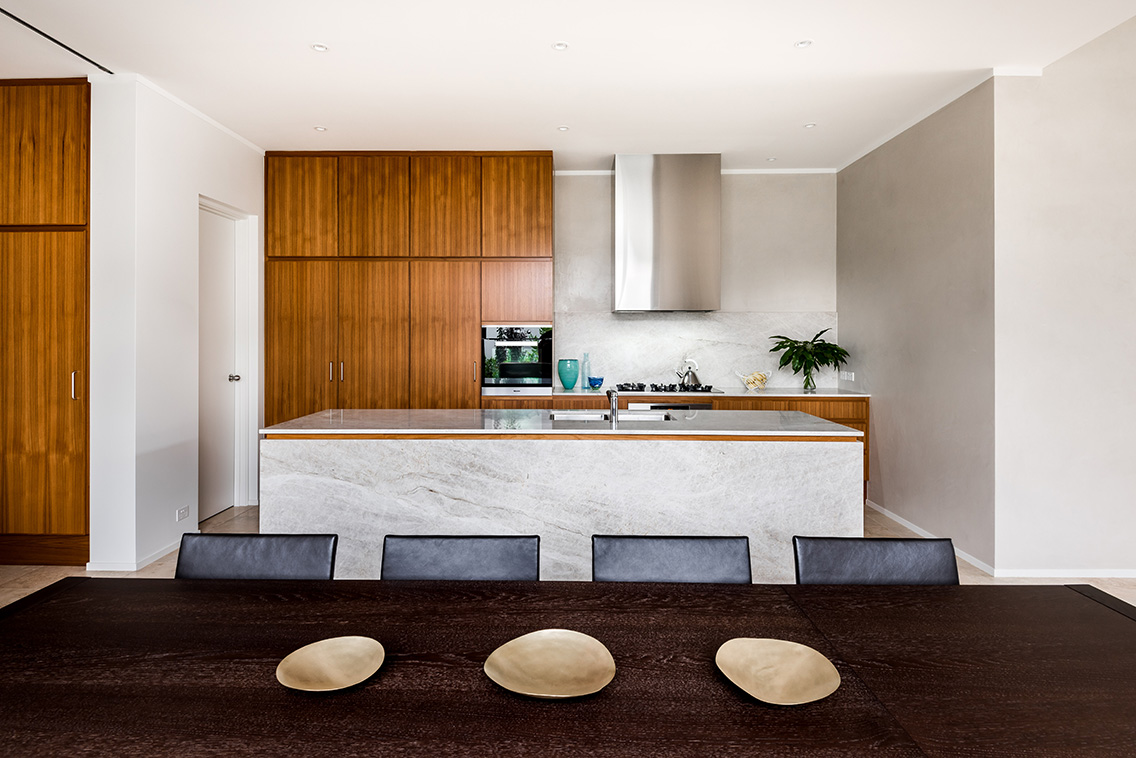
A newly launched handleless cabinetry collection puts a resilient matte surface within reach of a familiar architectural detail. The uninterrupted fronts conceal a continuous finger-pull channel, while the low-sheen finish is designed to handle humidity, hard knocks and frequent cleaning without the reflective glare of a high-gloss door.
For Perth households, this is more than an aesthetic launch. The city’s intense southern and western light can expose weak finishes, coastal homes encounter salt-laden air, and kitchens increasingly open to alfresco areas during long, dry summers. Northern Australia adds humidity and tropical conditions, while buyers in Sydney and Melbourne commonly want cabinetry that works across apartments, freestanding houses and rental properties.
The range also reflects how Australian kitchens are being used: as bright social centres rather than enclosed workrooms. It offers designers a calm, monolithic option beside stone, timber and stainless-steel benches, and gives homeowners fewer visible joints and handles to maintain. Its key proposition is that visual simplicity can be supported by a more considered surface and construction specification.
A seamless look with practical differences
Handleless cabinetry works because it removes small interruptions. With no projecting pulls, door faces read as larger planes and can make an open-plan room feel more ordered. The trade-off is precision: the profile must feel comfortable under repeated use, the gaps must remain consistent, and the surface has to tolerate fingerprints, abrasion and cleaning without becoming visibly tired.
The specification differences are easy to compare:
| Feature | Handleless marine-grade range | Standard laminate cabinetry | Painted MDF cabinetry |
|---|---|---|---|
| Front finish | Low-sheen marine-grade laminate in matte tones | Matte, satin or gloss decorative laminate | Sprayed, lacquered or painted finish |
| Moisture approach | Stable core, protected edges and sealed surfaces specified for humid use | Performance varies with the core, edge band and sealant | Depends heavily on paint quality and edge sealing |
| Visual effect | Quiet, continuous planes with minimal glare | Clean and versatile, with sheen determined by the chosen laminate | Flexible colour matching, although brush marks or repairs can show |
| Everyday care | Mild detergent and a soft cloth; abrasive pads are not recommended | Usually straightforward to wipe clean | Also easy to maintain, but touch-ups may be needed |
| Strongest use | High-traffic kitchens seeking durability and a seamless look | Value-focused installations with simpler finish requirements | Bespoke colour schemes where precise painting matters |
The recessed grip gives the fronts their continuity, but it should not be treated as a place to hammer or lean. A well-proportioned channel allows a hand to find the door without making the opening look like a slot. Full-height units and deep drawers can amplify that effect, so planners need to coordinate door widths, appliance surrounds and internal storage with equal care.
Built for heat, humidity and daily use
The phrase marine-grade can sound like a claim reserved for boat fittings, yet its relevance indoors comes from a layered approach to durability. In this range, that approach combines a resilient matte laminate with a moisture-resistant engineered board and a protected edge profile. It is a more demanding cabinet specification than simply placing a standard decorative sheet over a generic panel.
That distinction matters around Perth sinks and dishwashers, where incidental water and humidity are routine. The matte finish also softens reflected glare in rooms filled with hard daylight. Ultraviolet performance, however, should be confirmed from technical data rather than inferred from the colour or the product name. Likewise, splash protection still belongs behind the bench, and no interior cabinetry should be treated as suitable for permanent outdoor exposure.
Material decisions become easier when specification is connected to the local design network. For anyone attending Contemporary Wine In Design, the Contemporary exhibitor list provides a practical way to identify relevant suppliers, compare finishes and arrange a closer look at samples. That face-to-face step is valuable because cabinet surfaces can look quite different under showroom lighting than they do in a west-facing kitchen.
Colour that responds to Australian light
The strongest colour story is less about a single coastal trend than about how neutrals behave in bright rooms. Pale shell and soft grey tones can draw daylight across a kitchen, while deeper charcoal, olive or marine-blue fronts add weight to an otherwise open interior. Matte finishes make these darker shades approachable because they absorb light rather than producing hard reflections.
Material balance is equally important. A fully tonal scheme can be serene beside warm timber, honed stone and brushed metal, but a timber bench, a ribbed splashback or a single sculptural pendant can stop it feeling too controlled. Australian homes often already carry timber through adjoining living spaces, so repeating that grain in a stool, shelf or dining table creates continuity without making the kitchen look like a showroom set.
Finish samples should be judged in the room, not only in a workshop. Daylight can make a pale grey look almost white, while evening light may reveal warm undertones that clash with cool taps. Designers should ask suppliers for large-format samples or a door offcut, then place them beside the proposed bench and splashback materials. Matte reduces glare, but fingerprints can still register on some smooth, dark finishes, so handling and cleaning should be tested too.
Fitting the range into Australian homes
The range suits both new builds and renovations, but the planning strategy changes. In a new Australian home, cabinetry can be coordinated with wardrobes, joinery and external doors from the outset. During a renovation, the main gains often come from replacing visible handles, simplifying wall units and aligning tall pantry doors with existing appliance openings, rather than attempting to remake the entire room.
Western Australia’s culture of adaptive reuse and experimental residential work is echoed in a Perth emerging architects exhibition, where new ways of using constrained sites and old structures are being tested. Those projects offer a useful lesson for kitchen design: durable longevity is not only about resisting wear, but also about making future changes without starting again.
Installation is where many Australian projects lose time, so the scope needs to be clear. Quotes should distinguish cabinet supply from measuring, delivery, installation, hardware, splashbacks and electrical work. A local cabinet-maker or joinery workshop can tailor unusual fillers and appliance housings, yet the client should still see the edge details, drawer runners and grip profile before production begins. For rental properties and apartments, impact resistance and repairability can be as valuable as the finish itself.
Specify with confidence and see it in person
Before ordering, treat the range as a material and service decision rather than a visual trend. The following checks help protect the clean appearance and make daily use easier:
- View a physical finish sample beside the proposed stone, tile, timber and tapware, ideally in both daylight and artificial light.
- Request written details on the board core, edge construction, cleaning method, expected colour batch and warranty before signing off.
- Test the recessed finger pull on a full-size door or mock-up, particularly if the kitchen includes full-height units or frequently opened drawers.
- Balance continuous fronts with practical storage so the absence of handles does not come at the expense of access or organisation.
- Plan layered lighting, including preparation, task and ambient light, because matte colour still changes with reflection and shadow.
- Compare installation-ready and supply-only quotations, with delivery, site access, appliance coordination and possible future adjustments listed clearly.
The most useful showroom consultation combines finish selection with a review of the kitchen’s actual working patterns. It can reveal whether the finger pull suits the household, whether darker cabinetry needs more task lighting and whether appliance housings will interrupt the desired rhythm of the doors. Recording those decisions early helps prevent small alignment or access problems from becoming expensive changes later.
To experience the handleless kitchen cabinetry range in context, request a Perth material consultation, showroom visit or supplier appointment through Contemporary. Designers can assemble samples for client meetings, coordinate technical details and meet relevant makers, while homeowners can compare layouts, colours and maintenance expectations before committing. Explore the new collection with Contemporary and take the next step toward a kitchen that is calm in appearance, durable in use and well suited to Australian conditions.