Where mid-century lines meet contemporary calm in a Perth dining room
Perth's dining rooms have a quiet confidence that makes them fertile ground for cross-era experiments. The West Australian light — that strong, dry coastal glare pouring through west-facing windows in Cottesloe and Claremont homes — exaggerates form. Anything sculptural reads sharper here, anything muted drifts toward neutral. That intensity gives mid-century pieces a vivid stage, while contemporary objects with cleaner geometry feel crisp rather than austere.
The mid-century revival shows no sign of slowing among Australian homeowners. Vintage Featherston loungers and G-Plan sideboards have become the inheritance furniture of choice for downsizers in Subiaco and Mount Lawley, picked up at estate sales or traded through local Facebook groups. Yet few want a room that looks like a 1966 catalogue shoot. The contemporary layer is what prevents nostalgia from tipping into pastiche.
A dining room is uniquely able to absorb two design languages without either being compromised. Unlike a lounge, which has to commit to comfort and conversation, the dining room is a more formal affair — a place for gathering, hosting, and the occasional long Sunday lunch. That formality gives permission to be a little more deliberate with curation, treating the table, the lighting, and the storage pieces as a composed still life rather than a lived-in scramble.
The trick is to avoid letting either era dominate. A room crammed with mid-century references starts to feel like a museum reconstruction, while too many slick contemporary objects make the same period pieces look orphaned. The aim is conversation between decades — pieces that acknowledge each other without competing for attention.
Start with a neutral backbone
Before any furniture decision, the room itself needs a backdrop that does not pick sides. Perth interiors are increasingly leaning toward warm whites, chalky taupe, and the kind of putty tones that soften the bright Western light rather than reflect it harshly. A simple limewashed wall, a wide-plank timber floor in either Marri or Tasmanian Oak, and unadorned skirtings create the kind of neutral container that lets both eras coexist.
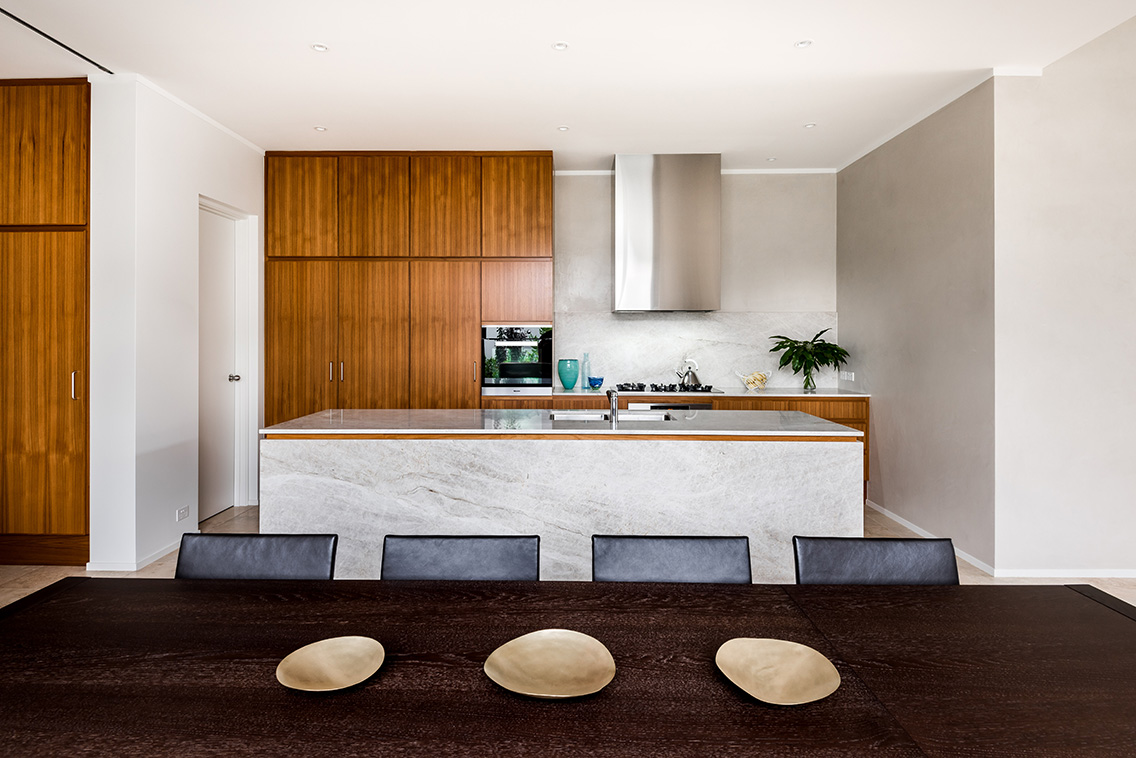
Built-in joinery in the same warm neutral — say, a low sideboard that runs the length of the room — is the unsung hero of this kind of room. It anchors the space in the present, gives contemporary credibility, and then allows a single statement mid-century piece to sit against it without feeling like it has wandered in from another house. Some Perth joiners use spotted gum detailing at the edges of otherwise simple cabinetry, giving the joinery a quietly Australian accent.
Window treatments matter more than people expect. Heavy contemporary drapes in a soft linen will feel jarring next to a credenza with tapered legs. Keep window dressing simple — a plain roller blind in a mushroom tone, or a sheer linen curtain that diffuses the harsh afternoon sun pouring in from the Indian Ocean side of the house.
Choose your mid-century hero pieces
The mid-century side of the room should not be a collection. It should be a series of deliberate moments. A single Australian mid-century sideboard — perhaps a Featherston, or a less-documented piece from one of the Adelaide or Melbourne makers of the 1950s and 60s — will do more work than three smaller retro pieces clustered together.
In a dining room specifically, the chairs carry most of the visual weight. Six original mid-century dining chairs in the same timber, sourced over time from estate clearances around the western suburbs, will give the room a thread that contemporary pieces can orbit around. Perth's secondhand market is small but persistent — locals reckon a weekend trip to the Salvos in Myaree or the Vinnies in Osborne Park often turns up a single chair that completes a set.
Lighting is another safe place to invest in period authenticity. A single 1960s pendant — a five-arm atomic fixture, or an original Poul Henningsen PH series if you are lucky — anchors the room visually and signals to contemporary additions that they are guests in someone else's era. The contemporary pieces then need to behave, which usually means simpler silhouettes and softer materials.
Layer in contemporary lighting and sculptural forms
Contemporary lighting has become the easiest place to introduce the new alongside the old. A flat, disc-shaped pendant in brushed brass reads as resolutely twenty-first century, yet its geometry rhymes with the clean lines of mid-century pieces in a way that a traditional chandelier never could. Perth designers are pairing slim brass pendants over dining tables with original G-Plan credenzas against the wall behind, and the effect is quietly current.
Sculptural objects on the sideboard do similar work. A handmade ceramic vessel from a Perth studio potter, a curved timber bowl turned on a local lathe, or a single piece of contemporary art in muted tones can sit comfortably against a vintage bar trolley without either item feeling out of place. The shared element is restraint — neither piece should shout louder than the other.
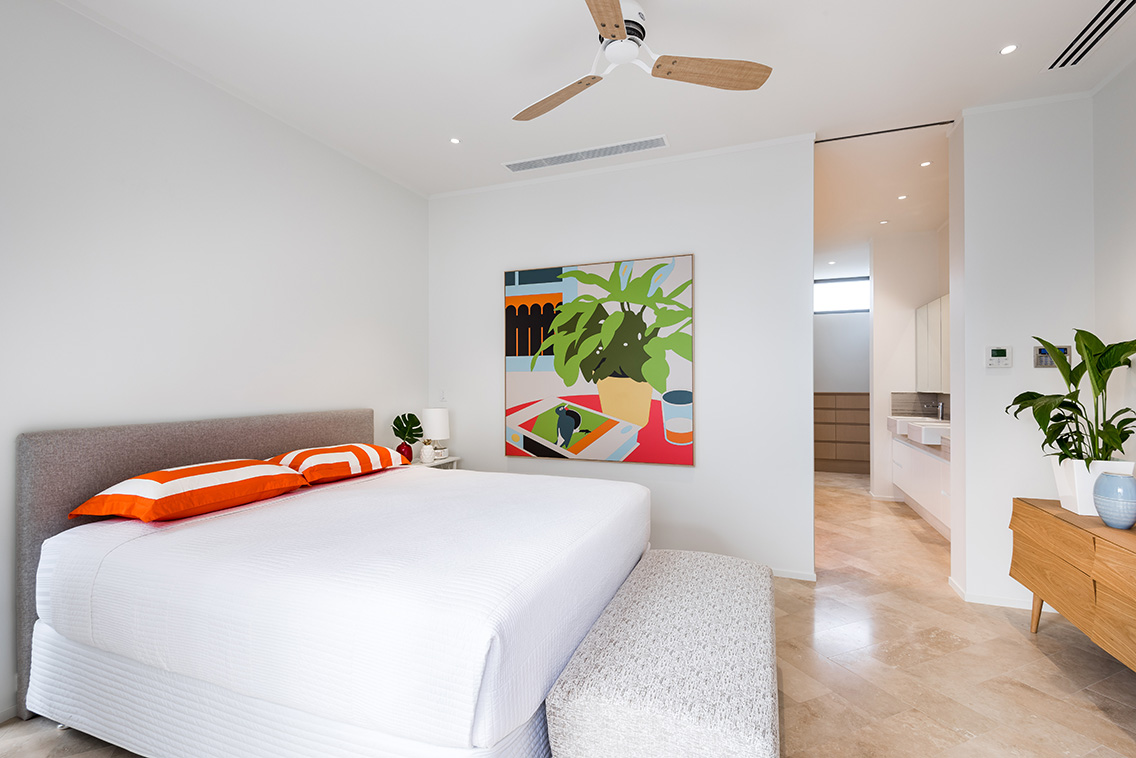
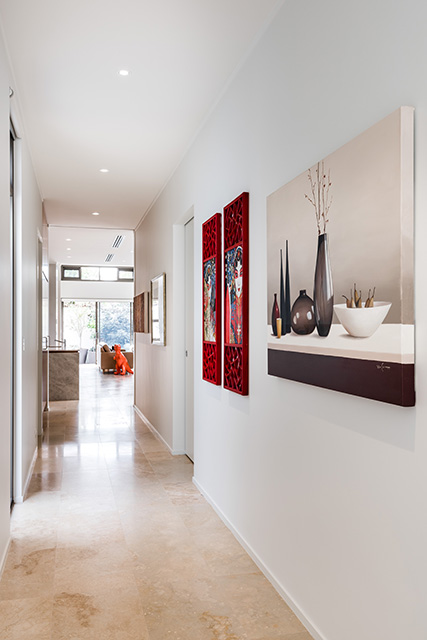
On the walls, contemporary art gives the room permission to feel like the present. A large abstract work in a palette drawn from the room's neutral scheme — perhaps a soft ochre, a dusty blue, a chalky white — will tie a 1960s chair to a 2020s side table. Perth's small galleries in Northbridge and the artist-run spaces along High Street in Fremantle often have work at accessible price points that suits a mixed-era room.
Let materials do the blending
Timber is where the two eras speak most fluently to each other. Mid-century furniture leans heavily on teak, walnut, and rosewood. Contemporary Australian joinery tends toward lighter timbers — Tasmanian Oak, Vic Ash, and increasingly Marri and Jarrah from WA's own forests. Rather than treating these as opposing choices, lean into the contrast. A teak sideboard sitting against a Marri dining table creates a layered timber conversation rather than a matchy-matchy moment.
Metal finishes are another quiet bridge. Mid-century pieces often feature brass detailing, sometimes chrome, while contemporary design leans toward blackened steel, brushed brass, and occasionally powder-coated finishes in muted colours. A single warm metal running through the room — brass legs on a contemporary chair, brass pulls on a built-in sideboard, brass accents on a mid-century pendant — keeps the palette coherent. Mixing too many metals is where the room starts to feel unresolved.
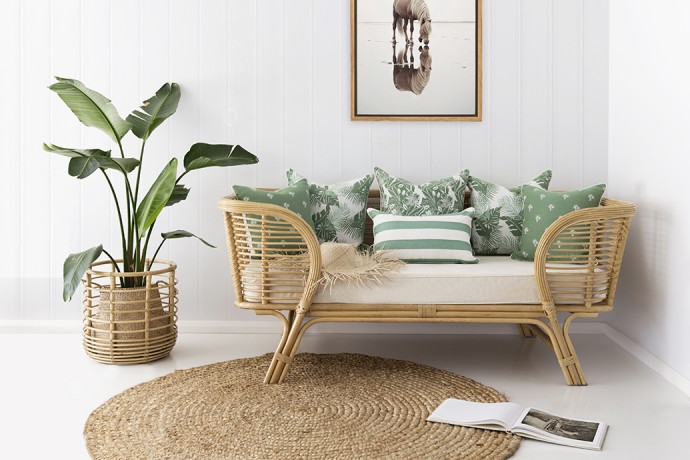
Textiles soften the whole enterprise. A contemporary wool rug in a low pile underfoot, a few mid-century-inspired cushions on dining chairs, and linen napkins in earthy tones bridge the eras without adding visual noise. The trick is to avoid overly patterned fabrics that lock the room into one decade. Perth homes often pull from a coastal palette — sand, oyster, seafoam — that flatters both eras.
Build a palette that belongs to both decades
Colour is where mixed-era rooms most often fall apart. A 1960s avocado green wall will fight every contemporary piece in the room, while a stark white contemporary interior makes mid-century timber look brown and dated. The middle ground is a tonal palette of warm neutrals with one or two considered accents.
Colours that bridge mid-century and contemporary dining rooms
- Warm white walls in tones of chalk, putty, or mushroom
- Timber tones in walnut, teak, Marri, or spotted gum
- A single accent in burnt orange, ochre, deep teal, or eucalyptus green
- Soft metallics in brass or aged bronze for hardware and lighting
That single accent colour is important. Burnt orange — pulled directly from the original 1960s palette — sits comfortably next to a contemporary brass pendant because both reference warmth without trying to recreate a period. Eucalyptus, a colour with strong Western Australian associations, does similar work while feeling rooted in place.
Source locally and think in layers
Sourcing is where most Perth renovators reckon they hit a wall. The city has fewer vintage dealers than Sydney or Melbourne, which means patience is part of the process. Most serious collectors build a dining room set one piece at a time, sometimes over years, layering in contemporary pieces from local makers as they become affordable.
The local maker scene has grown significantly in the past decade. Perth-based furniture designers working in small studios are increasingly producing contemporary pieces that sit beautifully alongside mid-century finds — pieces with honest joinery, considered proportions, and timbers sourced from WA sawmills. Look for makers exhibiting at DesignFreo, those with studios in Osborne Park or Balcatta, and small labels sold through local homewares stores in Subiaco and along Beaufort Street.
Plenty of Perth locals reckon the local design calendar offers several moments where contemporary Australian work is shown alongside period pieces. The annual Wine In Design exhibitor showcase brings together Perth makers and designers in one room, and is a useful place to meet the people behind the pieces you might end up living with for decades.
Where to source mixed-era dining pieces in and around Perth
- Estate clearances and deceased estates in the western suburbs
- Long-running vintage dealers along Beaufort Street in Mount Lawley
- Local maker studios in Osborne Park, Balcatta, and O'Connor
- Pop-up vintage fairs around Fremantle and Northbridge
The decisions made around a dining table shape the rest of the home. If you are still working out which mid-century pieces to commit to and which contemporary makers to commission, the most useful thing you can do is see the work in person, talk to the makers, and feel the materials. Book a spot with a free pass to Contemporary Wine In Design, the annual Perth gathering of architects, designers, and makers, and spend an afternoon learning how the local design community is mixing eras in its own work.