How to Curate a Gallery-Style Hallway with West Australian Art
A hallway can do far more than connect bedrooms, living areas and the front door. With the right arrangement, it becomes a considered exhibition space: a sequence of images, objects, materials and shadows that introduces the character of a home. In Perth, where many houses combine generous floor plans with strong indoor–outdoor connections, the corridor is an ideal place to build a visual narrative.
Local West Australian art gives that narrative a distinct sense of place. A photograph of the Swan River, a ceramic vessel from Fremantle, an abstract painting informed by the Pilbara or a finely made timber object from the South West can bring regional texture into everyday life. The aim is not to make the hallway feel like a commercial gallery, but to curate it with the same care given to a small exhibition.
Read The Hallway As Architecture
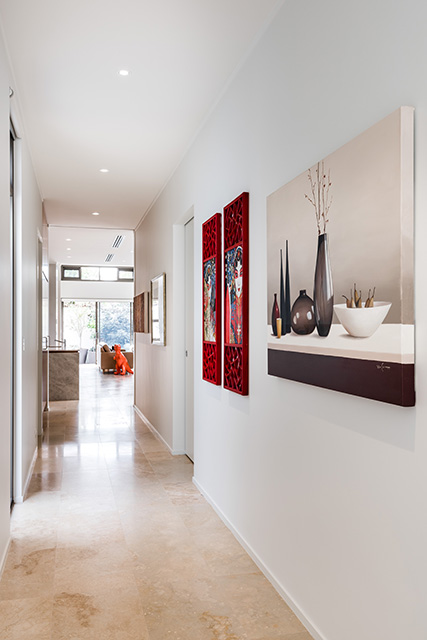
Begin by studying the corridor before choosing individual works. Note its length, ceiling height, natural light, flooring and sightlines from adjoining rooms. A narrow passage in a Perth apartment may suit a disciplined single row, while a broad Federation or mid-century home can accommodate a salon-style arrangement with varied formats.
The architecture should guide the rhythm of the display. Long, uninterrupted walls create opportunities for a sequential arrangement, while doorways and changes in floor level naturally divide the space into visual chapters. Keep circulation clear, particularly where school bags, shopping baskets and guests pass through the home. A gallery wall should feel generous rather than obstructive.
Consider the relationship between the hallway and the rooms it serves. If the living room contains bold colour, the corridor might provide a quieter transition through monochrome photography or pale-toned ceramics. If the surrounding interiors are restrained, a small concentration of saturated works can give the passage energy without overwhelming the wider scheme.
Build A West Australian Art Story
A strong collection has a point of view, even when the works are made by different artists. You might focus on landscape, material, light, domestic life or the changing identity of Perth. Another approach is to select works connected by a palette, such as ochre, eucalyptus green, salt white and deep indigo, then allow each artist’s technique to remain distinct.
West Australia offers an expansive visual vocabulary. Coastal photographs from Rottnest Island or Esperance can sit alongside paintings shaped by the red earth of the interior. Works from Fremantle may carry a more urban, maritime character, while pieces from Margaret River, Albany or the Kimberley can introduce different approaches to colour, craft and place. Select artists based on the quality and relevance of the work rather than treating locality as a decorative theme.
Cultural context matters, particularly when displaying Aboriginal art. Buy through an artist, gallery, art centre or reputable dealer that can explain the work’s provenance and permissions. A story about Country should be presented accurately and respectfully, without reducing a complex cultural practice to a colour scheme. A small information card kept in a nearby drawer or a properly documented catalogue can help preserve that context without turning a private hallway into an educational display.
Plan Scale Spacing And Light
The most successful arrangements are usually planned on paper before anything is hung. Measure the usable wall area, including the gaps between doors and corners, then mark each artwork to scale on butcher’s paper. Low-tack tape can be used to test the arrangement without leaving marks, an especially useful step in rental properties or homes with delicate plaster.
As a general guide, keep the centre of the overall grouping around 145 to 155 centimetres from the floor, adjusting for household height and furniture nearby. A single large work may sit slightly lower so it feels anchored, while a collection should have a consistent visual centre rather than every frame lining up rigidly. Leave enough breathing room between pieces for each work to register.
Lighting is critical in Australian homes. Perth’s bright sun can cause fading, glare and heat damage, especially on west-facing walls. UV-filtering glazing, blinds and curtains help protect works, while adjustable LED track lights can provide a softer and more controllable alternative to direct afternoon sun. The following guide helps match the arrangement to a typical hallway.
| Hallway condition | Suitable arrangement | Framing and lighting approach |
|---|---|---|
| Narrow corridor with limited wall depth | One vertical row or a pair of aligned works | Slim frames, consistent spacing and low-glare picture lights |
| Long wall with high ceiling | Mix of large and small works in a measured salon layout | Use a strong horizontal datum and adjustable LED spots |
| Dark interior passage | Light-toned works with one or two reflective objects | Warm-neutral LEDs, avoiding harsh cool white bulbs |
| Bright west-facing hallway | Fewer works with generous spacing | UV-filtering glazing, window treatments and indirect lighting |
| Hallway opening to living areas | A focused statement piece at the sightline | Frame it as a destination rather than filling every wall |
Mix Frames Materials And Objects
Frames create cohesion, but they do not need to match exactly. A collection can combine natural oak, painted timber, anodised aluminium and simple white profiles if there is a clear relationship between them. For a relaxed coastal or South West feeling, timber frames can echo jarrah floors or pale limestone. In a contemporary apartment, fine black or brushed metal frames may provide a sharper architectural line.
Use matting to give smaller works presence. A generous white or warm-neutral border can make a print feel more substantial and prevent the hallway from becoming visually crowded. Avoid placing glass directly against works on paper, and ask a framer about archival backing and conservation mounting for pieces that matter to you.
Three-dimensional works can interrupt a continuous run of pictures. A shallow ceramic platter, carved timber panel or small textile can sit on a picture ledge, provided it is securely fixed and does not reduce the passage width. West Australian makers offer many opportunities to introduce local craft in a practical way. For instance, a story about a Booragoon potter can prompt ideas for using handmade tiles, vessels or tactile surfaces within a broader art display.
Source Work With A Local Eye
Buying locally can make the collection more personal and more sustainable. Perth galleries, artist-run spaces, open studios, design markets and university graduate exhibitions provide access to emerging and established practitioners. The annual art calendar also creates opportunities to meet artists directly, understand a work’s materials and learn how it should be cared for.
The local market rewards patience. Original paintings, limited-edition prints and small sculptures exist across a wide range of prices, so a hallway can develop gradually rather than being completed in one expensive purchase. Set aside part of the budget for professional framing, delivery and suitable hanging hardware. For remote purchases or works travelling from regional WA, ask about insurance and climate-safe packaging.
Look beyond conventional wall art. A series of handmade tiles, a woven wall piece, a small-scale photograph or a sculptural light can expand the collection’s texture. Custom commissions are particularly useful when a hallway has an awkward dimension or a strong architectural feature. A maker may be able to adjust a work’s scale, palette or mounting system while retaining its character.
Arrange The Display With Intention
Once the works are selected, make one final floor plan that records their position, hanging height and lighting point. Photograph the proposed arrangement in daylight and after dark; colours and reflections can change significantly under artificial light. This small amount of preparation prevents a common problem in hallway displays, where individual works are attractive but the sequence lacks balance.
Start with the anchor piece, usually the largest or most visually powerful work, then build outward. Keep related pieces together when their subject or technique benefits from conversation. Alternatively, distribute similar colours along the wall so the eye travels through the full length of the corridor. A repeated material, such as timber or ceramic, can perform the same connecting role as colour.
A hallway should remain adaptable. Rotate works seasonally, introduce new purchases slowly and leave a little room for the collection to grow. Dust frames and ledges with a soft brush, avoid placing artworks near damp bathrooms or heating vents, and check hanging hardware after renovations. The display will feel more authentic when it reflects an evolving household rather than a single decorating moment.
Practical Choices For A Cohesive Collection
A few disciplined decisions can keep the project visually strong and easy to live with:
- Choose one unifying principle, such as place, palette, material or photographic process.
- Measure every wall and artwork before buying frames or hanging hardware.
- Protect paper, textiles and pigments from direct Perth sunlight with UV glazing and window control.
- Purchase Aboriginal art through credible channels with clear artist, cultural and provenance information.
- Leave enough negative space for each work to be seen, especially in a narrow passage.
The finishing detail is the relationship between the collection and daily life. A hallway near the entry can hold a bolder first impression, while a corridor leading to bedrooms may benefit from quieter images and softer illumination. Include works that reward repeated viewing: a familiar coastline rendered in an unfamiliar way, a glaze that changes in different light or a small detail that becomes visible only when the house is still.
For readers interested in the people shaping Western Australia’s design culture, Contemporary’s registration page offers a pathway into its editorial and industry network. Events, studio visits and design gatherings can lead to new discoveries, useful conversations with framers and makers, and a deeper understanding of the work that eventually finds a place at home.
A well-curated hallway does not need a large collection or a grand house. It needs attention to proportion, respect for the artists and a clear sense of how the home is experienced from one room to the next. Begin with one meaningful West Australian work, give it room to breathe, and let the rest of the story develop around it.