Recycled Glass Countertops Reshape Perth Dental Surgery Interiors
Across the inner suburbs of Perth, from Subiaco's medical strips to newer fitouts in Osborne Park, dental surgeries are quietly undergoing a material shift in their reception and treatment rooms. Instead of choosing quartz composites or solid surface polymers, practices commissioning new fitouts or refurbishments are asking their designers to specify recycled glass countertops.
The change sits at the intersection of several forces specific to the Australian design industry right now. Specifiers are responding to client expectations around environmental accountability, navigating tight wellness and infection control standards, and working within a WA construction market where lead times and supply chain reliability still dictate material decisions.
Recycled glass surfaces tick a surprising number of boxes. Brands supplying into Australia, including local and international manufacturers, are marketing slabs made predominantly from post-consumer beverage glass and reclaimed architectural cullet, bound with cement or resin. The result is a solid, castable surface with similar workability to engineered stone, though with a far more visible narrative of recovery and reuse.
For dental architects and interior designers working in WA, the material offers a way to communicate values without resorting to overt greenery in the waiting room. A benchtop that visibly contains light-catching fragments becomes a tactile conversation starter, particularly with patients who spend time looking at it during a consultation.
The Sustainability Story Specifiers Can Actually Defend
Specifying recycled glass in a healthcare context requires more than good intentions. Designers need a defensible chain of evidence, and the material is gaining credibility because manufacturers publish compositional data, recycled content percentages, and embodied carbon figures. In Australia, that transparency aligns with the expectations of clients pursuing Green Star pathways, NABERS targets, or the requirements set out in state government procurement guidance.
Several glass slab producers active in the Australian market source from beverage container recovery schemes and from architectural reclamation yards. That includes glass diverted from commercial demolition projects, a strong stream in Perth given the pace of inner-city redevelopments. Where specifiers can trace cullet back to a verified feedstock, the resulting countertop can carry a credible recycled content claim in the project's material schedule.
For a dental surgery, a defensible sustainability narrative carries commercial weight too. Independent practices market their environmental credentials to attract patients who value locally grounded, conscious healthcare. A countertop that physically embodies a recovery story is easier to communicate than one buried in a maintenance contract.
Light, Texture, and Aesthetic Range in a Clinical Setting
The visual character of recycled glass surfaces has changed considerably over the past decade. Earlier products read as decorative terrazzo, almost a graphic flourish. Contemporary slabs are quieter, with refined aggregate sizes, monochrome bases, and subtle translucency where light catches the glass fragments.
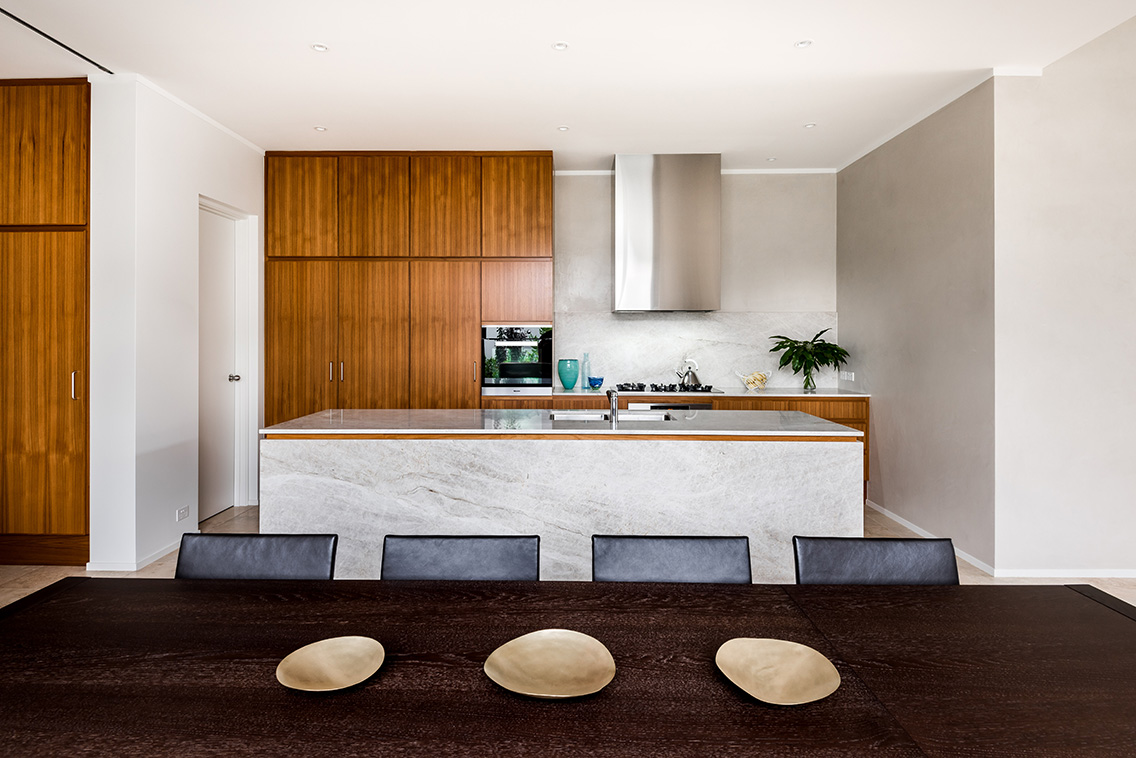
In a dental surgery, that aesthetic range is genuinely useful. Designers can specify warm cream or stone-coloured bases for practices in suburbs like Mount Lawley or Cottesloe where a residential feel suits the demographic, or cool greys and whites for clinical environments in Como or Baldivis where a calmer, more medical aesthetic reads well. Edge profiles, bookmatched veining, and integrated splashbacks in the same material allow a consistent visual language across reception, nurse stations, and operatories.
The material also photographs well, which matters for practices investing in brand rollout. A new fitout will be documented for the practice's website, social channels, and printed collateral. Recycled glass provides a distinctive backdrop that reads as premium without resorting to imported marble slabs, an important consideration for practices conscious of overseas shipment emissions.
Hygiene, Infection Control, and Long-Term Performance
The question every dental practice owner asks first is whether the surface can handle the rigours of a healthcare environment. Recycled glass countertops, particularly the cement-bound slabs common in commercial specification, perform comparably to engineered stone under clinical use. They are non-porous once sealed, tolerate hospital-grade disinfectants including quaternary ammonium and hydrogen peroxide solutions, and resist staining from common dental materials.
Resin-bound slabs offer lower porosity and higher chemical resistance out of the factory, though at the price of more visible wear over time. Cement-bound surfaces, popular with Australian designers for their matte finish and depth, require straightforward sealing at install and periodic resealing depending on use, similar to a honed natural stone. Either route is workable in a treatment room, and designers typically defer to the practice's sterilisation protocols when recommending a system.
It is worth noting that recycled glass countertops are not universally endorsed in zones subject to direct mechanical stress. Where heavy instrument trays are repeatedly dropped, or where sharps contact is likely at a poorly detailed edge, a stainless steel insert or solid surface alternative might be smarter. Good specification is about choosing the right zone for each material rather than insisting on a single finish across the whole project.
Sourcing, Lead Times, and the WA Supply Chain
Sourcing recycled glass into Western Australia has its own rhythms. Brisbane and Melbourne warehouses hold the deepest stock of local and imported slabs, with Perth projects typically shipping from interstate with a lead time of three to six weeks for stocked colours. Custom blends can take longer. For a Perth-based dental surgery commissioning a fitout through builders who are themselves juggling tight schedules, that timeline is workable but requires early engagement.
A handful of WA-based stone masons are now fabricating recycled glass slabs in-house, splicing reclaimed glass into custom terrazzo and casting slabs sized to project requirements. Working with one of these fabricators allows architects to specify colours and aggregate densities that are otherwise unavailable, and it shortens the freight pathway considerably. For practices in regional WA flying patients in from broader catchment areas, that local fabrication story can be a genuine point of difference.
Specifiers should also consider how the benchtop will arrive on site. Larger slabs are heavy and require careful cranage access, particularly in second-floor tenancies with restricted loading. Sequencing the recycled glass install after cabinetry substrate and before final plumbing is standard, but only with clear trade coordination. Designers familiar with Perth's medical tenancy market tend to manage this carefully so the practice opens on time and on budget.
Integration With Cabinetry and Joinery Detailing
A recycled glass benchtop is only as good as the cabinetry beneath it. Substrate choice matters: marine ply, moisture-resistant MDF, or steel framing all work, with designers generally selecting based on the cabinet's exposure to moisture and load. Healthcare-grade cabinetry typically uses steel frames with HPL or laminate finishes, and the heavy slab still requires careful support.
Edge detailing in recycled glass is a craft skill. Fabricators can polish, chamfer, or profile edges to match contemporary joinery language, though thinner slabs can be vulnerable to chipping if mishandled. Practical detailing includes undermount or integrated basins sized to the slab's run, drip grooves machined into the underside of overhangs, and discreet shadow gaps against walls to allow clean resealing down the track.
For dental surgeries, designers often pair the recycled glass reception benchtop with materials that offer a softer tactile counterpoint: timber veneers on cabinetry fronts, brushed brass or matte black fittings, or French oak flooring for an unexpectedly residential warmth in a treatment room. That pairing of surfaces is increasingly visible in commercial fitout photography across Australia, and it is covered in recent specification guidance on French oak flooring in humid environments like coastal Perth.
Cost Comparisons and Builder Coordination
Budget conversations are where many recycled glass specifications are won or lost. Priced against premium quartz composites, recycled glass sits at or slightly above the comparable bracket, with custom colours and aggregates climbing into higher tiers. When valued against its sustainability credentials, its documented recycled content, and its visual distinction, the premium is often easier to justify with clients.
Practical specifiers also think about offcuts. Glass slabs cast to size minimise waste, and the major Australian fabricators will usually detail cut plans that recover usable offcut for benchtops in staff rooms, tea points, and back-of-house wet areas. That recovered material can stretch a budget meaningfully when a fitout includes multiple zones, and it gives the practice a quiet story to tell about whole-of-project resourcefulness.
Communication with the head builder early saves trouble. Recycled glass needs handling protocols similar to stone, with deliverable sample sizes, accepted tolerances, and clear signage for storage on site. Practices commissioning their fitouts through a builder with prior recycled glass experience will avoid the most common pitfalls, and the project's lead architect or interior designer can usually recommend a fabricator from their own network.
Specifying recycled glass countertops in a Perth dental surgery is rarely a straightforward material swap. It is a decision that benefits from early design input, transparent product data, and a fabricator willing to collaborate on colour, finish, and detail. Practices, architects, and designers who want to look at slabs in person, swap notes on which joiners handle the work well, and weigh the trade-offs firsthand should keep an eye on thats-a-wrap, an evening where the Contemporary Wine In Design community gathers to talk through the materials shaping the next generation of WA healthcare interiors.