Why Natural Fibers Are Defining Australian Upholstery
Across Australian interiors, upholstery is moving away from a purely decorative role. Sofas, dining chairs, banquettes, and occasional seats are increasingly expected to support healthier rooms, responsible sourcing, long service lives, and a more tactile experience. Natural fibers such as wool, linen, hemp, cotton, and jute are gaining attention because they connect these practical concerns with a distinctly Australian preference for material honesty.
The shift is visible in residential interiors, hospitality venues, workplace fit-outs, and public spaces. Designers are specifying fabrics with visible slubs, woven irregularities, softened colour, and a hand that becomes more appealing through use. These surfaces bring warmth to restrained architectural schemes while giving furniture a sense of permanence.
For a broader view of the projects, people, and products shaping the local design conversation, Contemporary’s design coverage offers useful context. Within that conversation, upholstery has become a small but revealing indicator of how Australian designers are balancing comfort, aesthetics, environmental responsibility, and performance.
Material Honesty In The Interior
Natural fibers appeal to designers because they communicate their origins. Linen can retain a subtle irregularity from the flax plant, wool carries a soft resilience, and hemp often has a dry, slightly textured appearance. Rather than hiding these qualities behind a uniform finish, contemporary upholstery celebrates them as evidence of a material’s character.
This visual language suits the Australian approach to interiors, where natural light, timber, stone, rammed earth, and handcrafted objects frequently work together. A linen-covered lounge can soften a hard architectural volume without appearing overly formal. A wool textile can add depth to a pale palette while remaining quiet enough for a gallery, studio, or coastal home.
Texture also changes how a piece is experienced at close range. The touch of a fabric, the way it catches afternoon light, and the subtle variation between woven threads all contribute to a room’s atmosphere. These details are especially valuable in minimal spaces, where fewer materials must carry more sensory weight.
Performance Beyond Green Claims
Natural does not automatically mean sustainable, and responsible specification requires more than choosing a plant or animal-based fiber. Designers must consider cultivation, water use, processing, dyes, transport, backing materials, finishes, and the likely lifespan of the upholstered item. A poorly made natural textile may have a weaker environmental profile than a durable synthetic fabric that remains in use for decades.
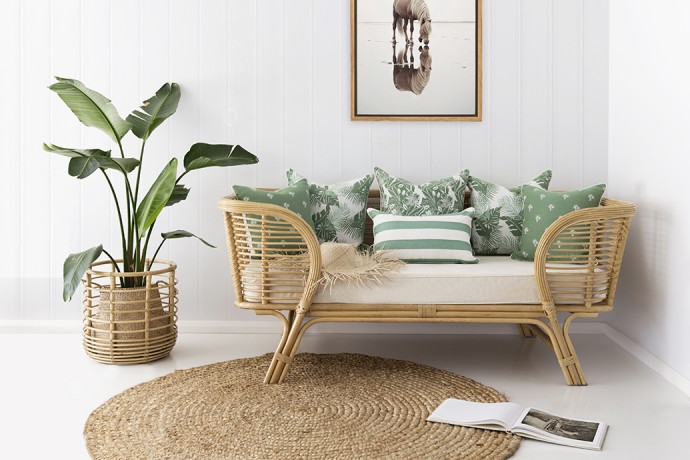
Performance is therefore central to the current interest. Wool is naturally resilient, has useful moisture-regulating properties, and can recover from compression. Linen is valued for breathability and its relaxed appearance, while hemp offers strength and a distinctive texture. Cotton remains versatile, though its environmental impact varies significantly according to farming and manufacturing practices.
The most thoughtful projects match a fiber to its setting. A delicate linen may suit a low-use occasional chair, while a tightly woven wool blend may be more appropriate for a family sofa or commercial waiting area. Upholstery rub counts, seam construction, colourfastness, stain resistance, and maintenance instructions still matter, regardless of how appealing a textile’s origin story may be.
A Distinctly Australian Material Vocabulary
Australia’s design culture has long drawn from the landscape, but the current interest in natural upholstery is less about literal imitation than about creating a grounded interior experience. Sandy neutrals, eucalyptus greens, ochres, charcoal, and mineral tones are often paired with tactile fabrics that recall dry grasses, bark, wool fleeces, or weathered stone without becoming themed.
The country’s varied climate also influences these choices. Breathable textiles can feel appropriate in warm interiors, while wool provides comfort across seasonal changes. In Perth and other cities with strong sunlight, a fabric’s fading resistance is essential, particularly when upholstery sits close to large windows or shaded outdoor living areas.
Local makers and smaller textile studios add another dimension. Their work may involve limited runs, regional materials, hand weaving, natural dyeing, or collaborations with furniture designers. These approaches create a stronger relationship between object and maker, which is increasingly important to clients seeking pieces with provenance rather than interchangeable interiors.
Australian hospitality and workplace projects are helping extend this language beyond the home. Upholstered booths, acoustic panels, stools, and lounge settings can make commercial spaces feel more generous and less transactional. In these environments, textured natural fabrics help balance the visual hardness of concrete, glass, metal, and polished stone.
| Fiber | Key qualities | Specification considerations | Suitable applications |
|---|---|---|---|
| Wool | Resilient, warm, naturally tactile, good recovery | Check weave density, pilling resistance, and cleaning requirements | Sofas, lounge chairs, hospitality seating |
| Linen | Breathable, relaxed, softly textured | Can crease and wear visibly; assess lightfastness | Residential seating, cushions, occasional chairs |
| Hemp | Strong, textured, durable | Often blended; review finish, hand, and availability | High-use seating, cushions, contemporary furniture |
| Cotton | Versatile, comfortable, widely available | Performance varies; may need blends or protective treatments | Domestic upholstery, loose covers, soft furnishings |
| Jute | Coarse, expressive, plant-based texture | Less suited to direct-contact seating unless specially woven | Panels, accents, cushions, decorative upholstery |
| Recycled natural blends | Can reduce virgin material demand | Confirm fibre content, durability, and end-of-life options | Contract interiors and design-led residential work |
Designing For Touch And Longevity
The return to natural fibers is closely connected to a desire for interiors that feel lived in. A perfectly smooth, stain-resistant surface can be practical, yet it may lack the warmth that encourages people to settle into a room. By contrast, a nubby weave or softly brushed wool creates an immediate sense of comfort and invites physical contact.
This does not mean every interior needs a rustic appearance. Natural fibers can be refined, architectural, and highly contemporary. A tightly tailored wool chair in deep rust, olive, or ink can appear formal and precise. A linen-covered modular sofa can support a restrained, sculptural composition when its proportions and detailing are carefully resolved.
Ageing is part of the appeal. Many natural fabrics develop a patina through gradual softening, compression, and subtle shifts in tone. Designers are beginning to frame these changes as part of an object’s life rather than as defects to be eliminated. That attitude supports longer ownership and makes replacement less central to the design cycle.
Care remains part of the design. Removable covers, accessible repair seams, replaceable cushions, and robust internal frames can extend the useful life of upholstered furniture. Specifying a beautiful textile without considering cleaning, re-covering, or eventual disassembly leaves sustainability at the level of appearance.
Circular Thinking In Fabric Selection
A circular approach asks what happens before, during, and after a piece of furniture is used. Natural fibers may be renewable or biodegradable under certain conditions, but upholstery is rarely made from a single material. Foam, glues, synthetic threads, fire-retardant treatments, metal fasteners, and blended cloths can make separation difficult.
Designers are responding by looking for mono-material construction where feasible, avoiding unnecessary bonded layers, and working with upholsterers who can repair rather than discard. Some projects use loose covers or mechanically fixed textiles, allowing the outer fabric to be replaced while the frame remains in service. Others prioritise locally produced fabrics to reduce transport and support regional manufacturing.
Certification can help, though it should not replace investigation. Labels relating to organic agriculture, animal welfare, recycled content, chemical management, or chain of custody each address different parts of a product’s story. The strongest specifications combine documentation with practical questions about availability, lead times, maintenance, and future reupholstery.
This broader view places furniture within a building’s life cycle. A chair that can be repaired, re-covered, and passed between occupants may have greater value than one marketed as sustainable but designed for short-term appeal. Natural textiles contribute most effectively when they form part of that longer strategy.
Choosing Fibers With Intention
The best upholstery decisions begin with use rather than trend. A busy family living room, a quiet reading corner, a restaurant banquette, and a hotel lobby place different demands on fabric. Designers should assess traffic, sunlight, contact, cleaning routines, expected ownership, and the emotional character the room needs.
A useful specification process can include:
- Match the fiber and weave to the intensity of use, rather than selecting by colour alone.
- Request full material information, including blends, backing, finishes, dyes, and manufacturing location.
- Test large samples in the actual room to assess texture, scale, light response, and colour shift.
- Prioritise repairable construction, removable covers, and replaceable components where appropriate.
- Confirm cleaning instructions and choose a local upholsterer who can support future maintenance.
Sampling is particularly important with natural textiles because their irregularities are part of their appeal and their performance. A small swatch may conceal pattern repeat, seam behaviour, or the way a loose weave changes across a large seat. Viewing fabric in morning and afternoon light can also reveal whether a colour is likely to remain comfortable over time.
For professionals, these choices offer an opportunity to tell a richer project story. Material selection can connect an interior to local makers, responsible manufacturing, and the tactile qualities that visitors remember. For clients, it clarifies that sustainability is expressed through durability, care, and attachment as much as through a fiber label.
The conversation extends beyond finished projects through gatherings that bring architects, designers, suppliers, and makers together. Events such as Wine In Design create space for these material discussions to move from specification documents into the wider culture of Australian design.
Natural upholstery is gaining ground because it answers several design needs at once: it brings sensory depth, supports a calmer palette, offers credible pathways to responsible sourcing, and can age with dignity. Its success depends on informed choices rather than blanket preference. When fiber, construction, setting, and care are considered together, an upholstered object can become more than a soft surface—it can be a durable part of the architecture and a record of how the interior was made.
Explore the latest Australian interiors, material innovations, and design conversations through Contemporary, and follow the makers and projects giving natural fibers a more thoughtful place in everyday spaces.