The Latest Trends in Australian Kitchen Cabinetry: From Matte to Timber
Kitchen cabinetry has become one of the defining elements of Australian residential interiors. It sets the visual rhythm of an open-plan room, shapes how people move through the home, and determines whether a kitchen feels crisp, tactile, discreet or expressive. Across Perth and the wider Australian design scene, designers are treating joinery as architecture in miniature rather than background storage.
The latest work moves between quiet finishes and richly grained materials. Fingerprint-resistant laminates, fluted doors, natural timber veneers, mineral colours and concealed appliances are appearing alongside more considered details: shadow gaps, integrated handles, curved ends and carefully framed views. The result is a kitchen that feels composed but still connected to everyday life.
For project coverage, product stories and the ideas influencing Australian interiors, Contemporary offers a useful lens on the relationship between design, material and place. That relationship is especially visible in cabinetry, where local conditions and Australian habits have encouraged a practical, relaxed approach to luxury.
Matte finishes create a quieter backdrop
Matte cabinetry remains a strong choice for contemporary kitchens because it absorbs light rather than reflecting it sharply. This gives large banks of storage a soft, monolithic appearance and helps an open-plan kitchen sit comfortably beside living and dining areas. In smaller homes, low-sheen doors can also reduce visual noise, especially when upper cabinets are kept to a minimum.
The finish has developed beyond simple flat white. Warm grey, putty, mushroom, olive, clay and charcoal are being used to create depth without overwhelming the room. These colours work particularly well with stone benchtops, brushed metal tapware and timber flooring, allowing the cabinetry to read as part of a broader material palette.
Technological improvements have made matte laminates more practical for busy households. Anti-fingerprint surfaces are increasingly important on dark cabinetry, while textured laminates can provide a subtle grain that adds tactility without the maintenance demands of timber. Designers are also specifying low-sheen two-pack polyurethane where a seamless, highly tailored finish is required.
Timber brings warmth and variation
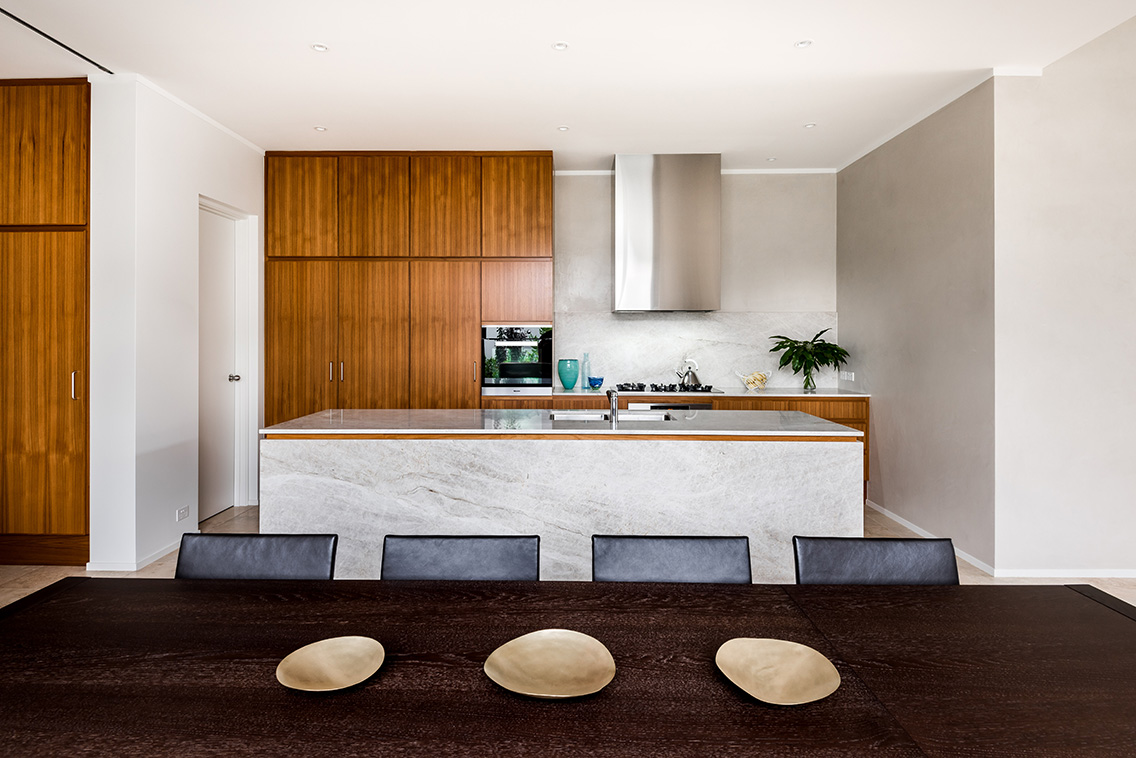
Timber cabinetry offers a counterpoint to the controlled uniformity of matte finishes. Oak, American walnut, blackbutt, spotted gum and Tasmanian oak each bring a different scale of grain and tonal character. In Western Australian homes, locally familiar timbers can establish a stronger connection to landscape, while carefully selected veneers provide consistency across broad door fronts.
The current preference is for timber to be used with restraint. A full timber kitchen can be striking, but many projects combine a timber island with painted or laminate perimeter cabinetry. This arrangement gives the island the presence of furniture while keeping the overall room balanced. Timber can also appear as open shelving, appliance housing, recessed panels or a framed breakfast nook.
Veneer is particularly suited to contemporary joinery because it can deliver natural variation across a large run while using material efficiently. Bookmatched panels, expressed edge details and vertical grain are being used to celebrate the construction of the cabinetry. A clear or lightly tinted finish is often preferred, preserving the material’s texture rather than disguising it beneath a heavy colour.
In regional projects, material choices frequently reinforce a sense of locality. The use of earth, stone and timber in a Margaret River setting can be seen in this rammed-earth winery project, where the broader architectural language demonstrates how natural materials can carry atmosphere and identity. Kitchen joinery benefits from the same discipline: fewer materials, selected with greater intention.
How the main cabinetry finishes compare
The best finish depends on the room’s natural light, the level of use and the visual relationship between the kitchen and adjacent spaces. A family kitchen may need highly resilient doors and easy cleaning, while an entertaining space might prioritise grain, colour and sculptural form. There is no single universal solution, but the following comparison clarifies the strengths of each approach.
| Cabinetry finish | Visual character | Practical strengths | Points to consider |
|---|---|---|---|
| Matte laminate | Soft, quiet and contemporary | Durable, easy to maintain and available in many colours | Dark finishes may show dust or marks without an anti-fingerprint treatment |
| Timber veneer | Warm, natural and tactile | Adds variation, depth and a furniture-like quality | Grain matching and consistent finishing require careful fabrication |
| Two-pack polyurethane | Seamless and highly tailored | Broad colour choice, including custom tones | Can be more vulnerable to impact than robust laminates |
| Textured laminate | Subtle grain with a refined surface | Offers durability with added tactility | The pattern should be coordinated with stone and flooring |
| Natural solid timber | Expressive and substantial | Can be repaired, refinished and aged gracefully | May move with changes in humidity and requires considered detailing |
| Metallic or laminate accent | Graphic and distinctive | Adds contrast to islands, niches or appliance panels | Best used selectively to avoid visual fatigue |
Combining finishes is often more effective than selecting one finish for every surface. A matte perimeter, timber island and stone splashback can create a layered composition, while a single colour used across doors and panels can make a compact kitchen appear larger. The key is to control the number of competing textures.
Joinery is becoming more architectural
Contemporary kitchen design is increasingly concerned with mass, proportion and concealment. Tall cabinetry is being used to form a strong architectural wall, concealing refrigerators, ovens, coffee stations and pantry storage behind matching doors. This approach gives the room a calmer appearance and allows the island or dining area to become the visual focus.
Handleless cabinetry continues to evolve. Rather than relying exclusively on push-to-open mechanisms, designers are specifying recessed finger pulls, shadow-line rails and slim integrated profiles. These details preserve a clean frontage while offering a more reliable tactile experience. Handles have not disappeared, though; sculptural pulls in timber, bronze or stainless steel can introduce a deliberate jewellery-like accent.
Curves are also entering kitchen layouts, particularly at island ends and freestanding pantry units. A softened corner can improve circulation in a narrow plan and make a large island feel less imposing. Curved veneer, ribbed panels and rounded stone edges require specialist fabrication, but they create a sense of craft that standard rectangular forms often lack.
Storage planning is becoming more specific as well. Deep drawers are replacing some lower cupboards, internal dividers are being tailored to cookware, and appliance garages are hiding small appliances when they are not in use. Good cabinetry now supports a room’s visual calm through its internal organisation, not just its external appearance.
Colour moves towards minerals and nature
The Australian kitchen palette is shifting away from stark contrast and towards tones drawn from the landscape. Sand, limestone, eucalyptus, rust, ochre, smoke and deep green are appearing in cabinetry, often softened by timber and natural stone. These colours can make a kitchen feel grounded without committing to the intensity of a highly saturated hue.
Green cabinetry has been particularly versatile. Muted sage suits light-filled coastal interiors, while forest and bottle green can anchor a more dramatic scheme. Blue-grey remains useful for kitchens that need coolness without the hardness of pure white. Terracotta and dusty red are being used in smaller doses, bringing warmth to islands, niches and open shelving.
Colour blocking is another way to introduce personality. A contrasting island can define the centre of an open-plan room, while a darker bank of tall units can frame a doorway or connect the kitchen to a hallway. Designers are also matching cabinetry to walls, creating a tonal envelope that makes storage feel integrated rather than added on.
For homes with strong views or abundant daylight, restrained colour often performs better than a busy pattern. A quiet mineral tone allows the landscape, artwork and furniture to remain visible. In darker rooms, a warmer cabinet colour can help offset limited natural light and create a more enveloping atmosphere.
The details that make cabinetry last
Longevity begins with the substrate, hardware and edge treatment as much as the visible finish. Moisture-resistant board, durable hinges and quality drawer runners support the daily demands of an Australian kitchen. Soft-close hardware is now expected, but the best projects go further by specifying components that can be adjusted or replaced over time.
Edge profiles have a noticeable effect on the final result. A fine square edge creates precision, while a radiused edge is gentler and more resistant to chipping. Timber edging can add warmth to a laminate door, and a dark edge detail can sharpen a pale scheme. These small choices should be resolved early because they influence how the cabinetry meets stone, splashbacks and walls.
Sustainability is also becoming part of the cabinetry conversation. Responsible timber sourcing, low-emission boards, durable finishes and repairable hardware can reduce the environmental cost of a renovation. Selecting a finish that will remain appealing for many years is one of the most effective forms of design restraint; replacement should not be the default response to a passing trend.
The wider design community has a role in sharing these ideas. Events such as Wine in Design create opportunities for architects, makers, suppliers and designers to exchange practical knowledge, including the material decisions that shape residential and commercial interiors. Those conversations help move cabinetry beyond surface styling into a more informed design discipline.
Recommendations for a balanced kitchen scheme
A considered cabinetry palette usually comes from a clear hierarchy rather than a long list of finishes. These principles can help connect appearance, performance and the character of the home:
- Use one dominant cabinetry finish and one supporting material, such as matte laminate with a timber island.
- Test colour and sheen in the actual kitchen, where daylight, artificial lighting and surrounding surfaces will alter their appearance.
- Prioritise drawer storage, concealed appliance zones and adjustable internal fittings before adding decorative features.
- Select timber veneer, stone and hardware samples together so grain, undertones and reflectivity work as a single composition.
- Choose durable, repairable products and timeless detailing for high-use areas, reserving experimental colour or texture for elements that can be changed more easily.
Designing for the way kitchens are lived in
The strongest Australian kitchens balance visual clarity with evidence of use. A perfectly blank bench may look compelling in a photograph, but a successful room also accommodates school bags, shared meals, weekend cooking and spontaneous gatherings. Cabinetry needs to support those routines while maintaining a coherent architectural presence.
Matte surfaces offer composure, timber adds warmth, and mineral colours connect interiors to the Australian landscape. Used together with careful proportions and practical storage, they can produce kitchens that feel current without being disposable. The most memorable spaces are likely to be those where every panel, reveal and material transition has a reason to exist.
Explore the latest Australian interiors, connect with the local design community and follow the material stories shaping contemporary practice through Contemporary’s editorial coverage and events.