The Best Australian-Made Pendant Lights for a Dining Room
A dining pendant does more than illuminate a table. It establishes the room’s visual centre, softens the transition between kitchen and living areas, and shapes how a long Australian evening feels once the sun has gone down. The right fitting can make everyday meals, weekend entertaining and late conversations feel deliberate without appearing over-designed.
Australian lighting studios offer a particularly strong range of pendant lights for dining rooms, from hand-blown glass and spun metal to woven fibres, timber and sculptural ceramic. For homes in Perth, Sydney, Melbourne, Brisbane and Adelaide, the best choice balances atmosphere with practical concerns such as ceiling height, glare, heat, cleaning and the requirements of local electrical installation.
What Makes A Pendant Australian-Made
The phrase “Australian-made” can describe several different levels of local production. Some brands design in Australia and manufacture overseas, while others fabricate, finish, assemble or handcraft their lights locally. A pendant made in a small Melbourne workshop may involve Australian design, locally sourced components and specialist glazing, while another Australian brand may produce its shade offshore and complete the electrical assembly here.
For buyers, clear provenance matters. Look for information about where the shade, canopy, cord and electrical components are made, as well as whether the studio works with local glassblowers, ceramicists, metalworkers or textile producers. This detail adds meaning to a purchase and makes it easier to understand lead times, repair options and the real value of a handmade fitting.
Australian design also tends to respond well to local interiors. There is a preference for honest materials, warm minimalism and objects that can sit comfortably alongside natural stone, timber joinery, terrazzo and recycled brick. A locally produced pendant often feels considered without becoming overly formal.
Finding The Right Scale For The Table
A pendant should relate to the dining table rather than compete with it. Over a rectangular table, a linear fitting or a cluster of two or three smaller shades can distribute light evenly. A single generous pendant works well above a round table, particularly when its form echoes the table’s geometry.
As a broad guide, a single pendant can be around one-half to two-thirds of the table’s width, while a group should occupy enough length to feel connected to the furniture below. Hang the lowest part of the fitting roughly 750 to 900 millimetres above the tabletop, then adjust according to sightlines, shade depth and the height of the people using the room. The fitting should frame conversation rather than interrupt it.
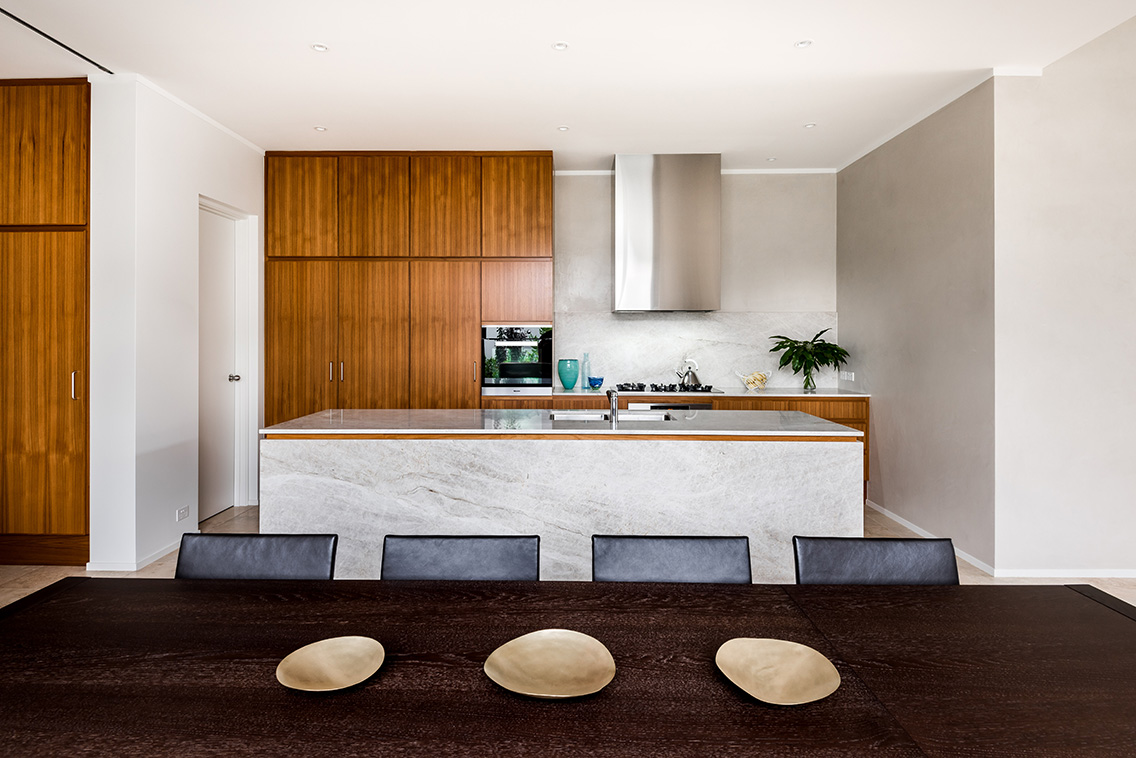
Compact Australian homes demand extra care. In Perth apartments and terrace houses, dining areas are often part of an open-plan kitchen-living space, with limited separation between the table, island and sofa. The approach used in this Northbridge apartment demonstrates why visual lightness and disciplined proportions can be more useful than simply choosing the smallest object available.
Materials That Suit Australian Interiors
Glass is a versatile choice for a dining room because it gives presence without blocking views across the table. Opal or frosted glass creates a soft, diffused glow, while clear glass exposes the globe and works best when the lamp itself is attractive. Hand-blown glass may include small variations, bubbles or tonal shifts that make each pendant distinct.
Metal shades provide stronger visual definition and direct light downwards. Powder-coated steel can introduce colour, brass adds warmth, and aluminium is useful for a lighter industrial expression. In coastal areas such as Fremantle or along the NSW coast, finishes should be selected with cleaning and humidity in mind. Brass may develop a patina, while painted surfaces need protection from abrasive products.
Woven pendants in rattan, cane, paper fibre or Australian-grown timber bring texture to rooms with hard surfaces. They are particularly effective above pale oak tables, polished concrete floors and neutral upholstery. However, woven shades can cast patterned shadows, so check how the light behaves at night rather than judging the pendant only in a showroom.
Creating Comfortable Light
A beautiful pendant can still fail if it produces glare. Dining rooms need enough brightness for serving food and reading faces, but a bare globe at eye level can make the room tiring. Choose a shade that conceals the brightest part of the lamp from normal seated positions, or use a dimmable LED with a warm colour temperature around 2700K to 3000K.
A high colour rendering index is valuable in a dining setting. Look for LEDs with a CRI of 90 or above where possible, as this helps food, timber, ceramics and skin tones appear more natural. Dimming is equally important in Australian homes, where the same room may be used for breakfast, homework, work-from-home tasks and evening entertaining.
The pendant should work with the rest of the lighting plan. Recessed downlights can provide general illumination, wall lights can add a low background glow, and under-cabinet lighting can prevent a kitchen connected to the dining area from becoming visually flat. A pendant then acts as the room’s intimate layer rather than carrying every lighting task alone.
Australian Designers Worth Knowing
Local studios approach the pendant in distinctly different ways. Some focus on blown glass and subtle colour, others on engineered metal, timber craft, woven forms or architectural modular systems. The strongest pieces tend to be recognisable without relying on a loud logo, making them suitable for both contemporary renovations and older Australian homes.
Melbourne and Sydney have dense networks of lighting designers, fabricators and independent makers, while Perth’s design community often brings a strong material connection to coastal light, native landscapes and relaxed indoor-outdoor living. Brisbane and the Gold Coast favour fittings that can hold their own in bright interiors, while Adelaide’s craft tradition supports an appreciation for ceramics, glass and carefully made objects.
Industry events provide a useful way to understand these differences in person. The Wine In Design exhibitors directory is a helpful place to discover studios, makers and design businesses connected with the Australian architecture and interiors community. Seeing a fitting lit in a real setting is often more informative than viewing a small product image online.
Installation, Safety And Longevity
Electrical work in Australia must be carried out by a licensed electrician. A pendant is connected to the household’s 230–240V supply, and installation may require checking the ceiling structure, replacing an existing junction box or adding suitable support for a heavier glass or ceramic fitting. Never assume that a decorative ceiling rose can safely carry the weight of the shade.
Look for products with appropriate Australian compliance information, including the Regulatory Compliance Mark where relevant, and ask the supplier for installation instructions. Electrical equipment should meet applicable Australian and New Zealand standards, including requirements associated with luminaires. A reputable maker should be able to provide clear specifications for wattage, lamp type, dimming compatibility and maximum weight.
Long-term maintenance is part of the purchase decision. Glass shades may need periodic removal for washing, woven materials require gentle dusting, and open metal reflectors can show fingerprints. In rental properties, a plug-in or track-mounted solution may be more practical, although permanent hardwiring generally gives a cleaner architectural result in an owned home.
Comparing Australian-Made Pendant Styles
The most suitable pendant depends on the shape of the room, the table material and the desired mood. The following comparison separates common locally made approaches by their visual character and practical strengths.
| Pendant style | Best suited to | Main strengths | Points to check |
|---|---|---|---|
| Hand-blown glass | Round tables and refined interiors | Soft glow, visual lightness, individual character | Weight, fragility and replacement availability |
| Powder-coated metal | Contemporary, coastal and industrial rooms | Strong colour, directed light, easy cleaning | Potential glare and a more directional beam |
| Woven fibre | Warm, relaxed and textural interiors | Interesting shadows, natural materiality, low visual weight | Dust, moisture and shade distortion |
| Timber pendant | Minimal, Scandinavian and earthy rooms | Warmth, acoustic softness and tactile detail | Timber finish, ceiling clearance and cleaning |
| Ceramic pendant | Layered, craft-focused interiors | Sculptural presence and rich surface texture | Heavier construction and variation between pieces |
| Multi-drop cluster | Large tables and open-plan spaces | Flexible composition and broad coverage | Cord management, junction capacity and balance |
When comparing products, calculate the complete installed cost rather than looking only at the shade price. Include the canopy, lamps, dimmer compatibility, delivery, electrician’s fee and any customisation. Australian-made products may cost more than imported mass-market fittings, but local production can provide better access to replacement parts, custom sizing and direct communication with the maker.
For Perth buyers, freight and lead times deserve particular attention. A handmade pendant may take several weeks, especially when a studio is producing a custom finish or coordinating specialist work. Confirm whether the quoted price includes GST, how the item is packaged, and what happens if glass arrives damaged. These practical details can prevent an otherwise exciting purchase from becoming a renovation delay.
A well-chosen Australian pendant becomes part of the home’s daily rhythm. It should look composed in daylight, produce flattering light after dark and feel proportionate when the room is full of people. Choose a maker whose materials and process suit your interior, confirm the electrical requirements before ordering, and invest in professional installation.
For design professionals, students and enthusiasts, local lighting is also a way to support the broader Australian creative economy. Follow the work of independent studios, attend architecture and design gatherings, and experience the people behind the objects at upcoming design events. The most memorable dining rooms are shaped by fittings that carry both practical intelligence and a clear sense of place.