Australian-Made Outdoor Cushions for Perth’s Harsh Sun
Outdoor seating in Perth has a particular set of demands. Long, dry summers, strong afternoon sun, coastal air and the everyday habit of moving life outdoors can turn an ordinary cushion into a faded, flattened liability within a season. A beautiful fabric still needs to perform when it is exposed to Scarborough glare, Fremantle sea breezes or a north-facing terrace in Cottesloe.
The best Australian-made outdoor cushions combine UV-stable textiles, resilient inserts, thoughtful construction and a design language suited to Australian homes. They should feel considered enough for a landscaped courtyard, yet practical enough for a family verandah. Local manufacturing can also make custom sizing, replacement covers and upholstery repairs easier to arrange.
Why Perth Sun Tests Outdoor Textiles
Perth receives intense sunlight for much of the year, with UV exposure that is especially punishing on dark, saturated colours. The top surface of a cushion may fade first, while seams and piping show stress as the fabric expands and contracts through hot days and cooler nights. A cushion positioned beside a swimming pool or rendered wall can experience even greater heat.
Look for solution-dyed acrylic, solution-dyed polyester or another fabric where the colour is integrated into the fibre rather than applied only to the surface. This construction generally offers better colourfastness than standard printed cotton. Ask the maker for a lightfastness rating or a clear outdoor-use specification instead of relying on terms such as “fade resistant” without supporting information.
Perth’s coastal suburbs add salt and airborne grit to the equation. Covers should be removable, washable and secured with a robust zip, while the inner should dry quickly after rain or pool splashes. Even in a dry climate, winter storms and sudden downpours make water management important.
What Makes Australian-Made Worth Considering
Australian production can be valuable when a cushion needs to fit an unusual bench, built-in daybed or curved outdoor setting. Local workshops are often more willing to make a 620-millimetre-wide seat pad, match a particular bolster or alter the thickness of an insert than an imported, fixed-size range. This flexibility is particularly useful in architect-designed homes where outdoor furniture follows the geometry of the building.
There is also a practical advantage in dealing with a domestic maker when covers eventually need replacing. Rather than discarding the entire cushion, owners may be able to order new covers, repair a zip or change the foam. That longer view suits the broader Australian preference for durable, repairable furnishings rather than seasonal décor.
The label “Australian made” should still be checked carefully. It may refer to sewing, design, fabric production or final assembly, while the foam, thread and textile may come from several countries. Reputable businesses explain where each stage occurs. The Australian Made logo, a manufacturer’s material information and a direct conversation with the workshop can help clarify the claim.
Fabrics That Keep Their Colour
Acrylic outdoor fabric remains one of the strongest choices for Perth conditions because it resists fading, mildew and moisture while retaining a relatively soft hand. Textured acrylics can bring the visual warmth of linen or a woven interior textile without the same vulnerability. They work well on covered patios, poolside lounges and dining chairs that need a little softness.
High-performance polyester can be a sensible alternative, particularly when it has a tested UV rating and a tight, stable weave. It is often available in a wider range of colours and can offer good abrasion resistance for busy households. Olefin, sometimes sold as polypropylene, is another fibre worth investigating for its resistance to moisture and fading, although the finish and quality vary between manufacturers.
Colour choice affects longevity and heat. Charcoal, navy and black absorb more heat and may feel uncomfortable on a western-facing deck, even when the fabric itself is durable. Sand, eucalyptus, stone, rust and muted blue-grey shades are easier to live with in strong sunlight and sit naturally alongside Australian hardwood, limestone and pale render.
Inserts, Seams and Construction Details
The cover fabric receives most of the attention, but the insert determines whether a cushion remains supportive. Standard domestic foam can hold moisture and deteriorate outdoors, especially when a cover is left damp. Reticulated or quick-dry foam allows water to pass through more freely and is better suited to exposed seating, provided the cushion can drain from beneath.
For a covered alfresco area, a high-resilience foam wrapped in a breathable barrier may be appropriate. Loose-fill polyester fibre can create a relaxed, sink-in profile, though it needs regular plumping and may compress sooner on a frequently used bench. A good Australian maker will recommend an insert according to exposure, drainage, seat depth and the way the cushion will be used.
Construction details deserve equal scrutiny. Double-stitched seams, UV-resistant thread, reinforced corners and covered zips all extend service life. Piping gives a tailored appearance but should be made from compatible outdoor material; a cotton cord hidden inside a weatherproof cover can become a weak point. For large seat pads, internal ties or discreet grip panels help prevent sliding in Perth’s regular sea breezes.
Australian Makers and Custom Options
One useful route is to commission cushions from a local outdoor upholstery studio rather than search only for a packaged retail set. Perth upholsterers can often source contract-grade outdoor cloth, cut replacement foam and create covers for built-in seating. This is especially helpful for homes in Mount Lawley, Subiaco and West Leederville, where older verandahs and renovated terraces often have dimensions that do not match mass-produced furniture.
Australian manufacturers and sewing workshops also offer a stronger path to tailored colour and scale. Look for businesses that publish their place of manufacture and show finished outdoor installations rather than relying solely on lifestyle images. A studio that regularly works with marine, hospitality or poolside projects is likely to understand drainage, abrasion and sun exposure better than a general soft-furnishing retailer.
The local market includes imported cushions designed by Australian brands, Australian-designed fabric collections and products sewn domestically from imported cloth. These are different propositions, and each may be suitable depending on priorities. If domestic manufacture is central to the purchase, request a written explanation of where the cover, insert and finishing work are made.
Styling Outdoor Cushions for Australian Homes
Outdoor cushions are most successful when they connect the architecture to the garden rather than compete with both. On a Perth patio, a restrained base of chalk, olive, clay or warm grey can echo limestone paving, recycled brick and native planting. A smaller number of patterned cushions can then add energy without making the setting feel visually busy.
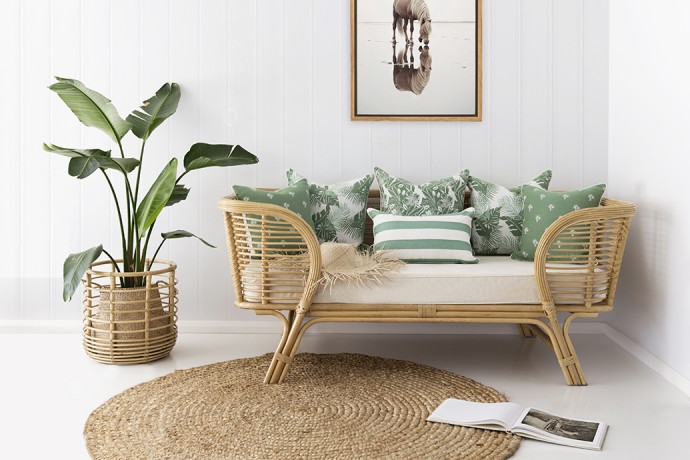
Australian design often benefits from texture over excessive decoration. A heavy basket weave, subtle stripe or irregular slub can bring depth to a simple outdoor sofa. Designers working with timber, concrete and metal may choose a single strong tonal family, then vary scale through lumbar cushions, square back cushions and one longer bolster.
For homes close to the coast, avoid treating outdoor cushions as permanent indoor accessories. Choose forms that can be lifted easily and stored in a ventilated box or cupboard when the space is unused. A bench with a generous seat pad may be more practical than a collection of small loose cushions that blow across the terrace during a fresh Fremantle afternoon.
Care, Storage and Everyday Performance
Even the most durable outdoor cushion benefits from routine care. Brush away sand and leaves before they work into the weave, wipe spills promptly and wash covers according to the maker’s instructions. Mild soap and cool water are generally safer than bleach, harsh detergents or high-pressure cleaning, which can damage finishes and seams.
Allow cushions to dry completely before stacking or storing them. A ventilated storage bench is preferable to a sealed plastic container, where trapped humidity can encourage mildew. In Perth’s wet winter period, bring cushions under cover during extended rain and avoid placing damp pads directly on non-porous floors.
A shade sail, pergola or retractable awning can extend the life of every textile in an outdoor room. This is also where broader material choices matter: a considered palette of durable finishes, such as those discussed in this low-VOC paint guide, helps create a healthier and more coherent connection between interior and exterior spaces.
Buying with Longevity in Mind
Price should be assessed against construction, replaceability and the amount of time the cushion will spend in direct sunlight. A cheaper cushion may be adequate for a shaded balcony, while a premium, locally made cover is more economical for a poolside daybed that would otherwise need replacing every year. Ask for a fabric sample and leave it outdoors for several weeks before committing to a large custom order where possible.
Measurements are equally important. Record the full width, depth and thickness of the seat, including any taper or curve, and allow room for seams and overhang. Photograph the furniture and note whether the base drains freely. These details help a maker recommend the right density and prevent the common problem of a custom cushion that looks attractive but shifts or pools at the corners.
The strongest choices balance performance with a sense of place. A locally sewn cushion in a hard-wearing Australian fabric can support small manufacturing businesses, suit the proportions of the home and remain useful through several furniture changes. For further design and product coverage across Western Australia, explore Contemporary’s design stories alongside local makers and showrooms.
Choose outdoor cushions with verified UV performance, removable covers, quick-drying construction and a transparent manufacturing story. Prioritise fabrics and colours that suit Perth’s light, then protect them with shade, ventilation and regular care. When a custom cushion is made to fit the space and repair remains possible, outdoor comfort becomes a lasting part of the architecture rather than a short-lived seasonal purchase.
For a complementary material detail, consider how upholstery sits alongside hardware and joinery; this Australian brass tapware feature offers a useful reference for evaluating finish, local production and ageing. Support makers who provide clear specifications, thoughtful construction and replacement options, and make the outdoor room part of the home’s long-term design story.