The furniture maker reviving traditional joinery in WA
In a Perth workshop filled with timber, hand tools and the quiet rhythm of making, a furniture maker is bringing traditional joinery techniques back into everyday design. The work is grounded in Western Australian materials and contemporary living, yet its logic belongs to a much older tradition: build carefully, avoid unnecessary hardware and allow the structure to remain visible. Learn more about How A Landscape Designer Created A Child Friendly Pool Area With No Sharp Edges.
This approach offers a considered alternative to disposable furniture. Each piece is designed to be repaired, refinished and lived with for years, gaining character rather than becoming obsolete. Tables, stools, cabinets and occasional pieces are treated as functional objects, but also as evidence of the maker’s hand.
The practice sits comfortably within WA’s growing design culture, where architects, interior designers, craftspeople and material specialists are reconsidering how objects are produced. It reflects a renewed interest in local fabrication, natural finishes and the value of slow, deliberate work.
A practice shaped by timber and place
Western Australia presents a distinctive material landscape for furniture makers. Jarrah remains closely associated with the state, while sheoak, marri and recycled timbers offer different grain patterns, densities and colour variations. Each species responds differently to cutting, sanding, steam and changing humidity, making material knowledge essential.
The maker’s process begins with selection rather than production. Boards are assessed for their grain, stability and potential defects before a design is finalised. Knots, mineral streaks and small irregularities are not automatically removed; they can become part of the composition when the timber is structurally sound.
This sensitivity to place also affects the scale of the work. A Perth home, with its strong sunlight, open-plan rooms and connection to gardens or courtyards, calls for furniture that feels substantial without appearing heavy. The resulting pieces often have a quiet architectural quality, with clear proportions and details that reward close attention.
Traditional joinery provides the foundation for this restraint. Mortise-and-tenon joints, dovetails, housed shelves and wedged connections can create strength without relying on visible screws or excessive adhesives. These methods require patience, but they also make the construction legible.
Why joinery still matters
Joinery is sometimes described as an old-fashioned skill, yet its principles remain relevant to contemporary furniture. A well-made joint distributes pressure, accommodates movement and allows separate components to work together as a stable whole. The result is furniture that can withstand daily use without losing its integrity.
Timber is a living material even after it has been milled. It expands and contracts as moisture levels change, and a design that ignores this movement may eventually split, warp or loosen. Traditional techniques developed through observation over generations, offering practical solutions to the behaviour of solid wood.
The maker’s work demonstrates that craftsmanship does not require nostalgic styling. Clean-lined cabinets and modern dining tables can incorporate exposed tenons or carefully shaped dovetails without looking historical. The joinery may be subtle, but it gives the object a structural confidence that surface decoration cannot provide.
This philosophy extends to repair. When a component can be removed, adjusted or replaced, the entire piece has a longer useful life. A loose chair joint becomes a maintenance task rather than a reason to discard the chair, and a refinished tabletop can continue to carry the marks of family life.
From drawing to hand-cut detail
Every commission begins with a conversation about use. The size of a dining table depends on how people gather around it; a cabinet must account for the objects it will store; a bench needs to feel comfortable at the moment of arrival and after years of repeated use. Aesthetic decisions follow these practical questions.
Sketches and measured drawings are developed alongside timber studies. The maker may test a corner detail at full scale, adjust a leg profile or produce a sample joint before beginning the final piece. This slower sequence reduces waste and gives the client an opportunity to understand how the furniture will be assembled.
Machines still have a role in the workshop. Accurate milling, thicknessing and cutting allow the maker to prepare components efficiently, while hand tools refine the areas where precision and touch matter most. A finely tuned plane can leave a surface with a softness that is difficult to replicate through sanding alone.
The transition between machine and handwork is where much of the character emerges. Chisels clean the shoulders of a joint, marking knives establish crisp lines and wooden mallets bring components together with controlled force. These actions are functional, but they also leave subtle evidence of the process.
The furniture maker’s approach can be read alongside the wider work celebrated by Contemporary ambassadors, whose practices show how Australian design is increasingly shaped by material intelligence, local knowledge and direct engagement with making.
Comparing approaches to furniture making
The difference between traditional joinery and mass-produced construction is not simply visual. It affects how an object is designed, assembled, maintained and understood over time. The following distinctions help explain why the maker’s work appeals to clients seeking a more enduring relationship with furniture.
| Consideration | Traditional joinery furniture | Mass-produced furniture |
|---|---|---|
| Material selection | Boards chosen for grain, stability and character | Materials selected for consistency and cost |
| Assembly | Interlocking joints, careful fitting and selective adhesive | Screws, dowels, brackets or automated fastening |
| Production | Small-batch or one-off making | Repeated manufacture at industrial scale |
| Repair | Components can often be adjusted or replaced | Repairs may be difficult or uneconomical |
| Surface finish | Hand-applied oils, waxes or low-build coatings | Factory-applied lacquer, laminate or synthetic finish |
| Lifespan | Designed to age, maintain and remain in use | Often replaced when damaged or stylistically outdated |
| Relationship to place | May use local timber and respond to local conditions | Usually follows a standardised global supply chain |
This comparison does not suggest that every factory-made object is poorly designed. Industrial production can provide affordability and access, while engineered boards and modern coatings have legitimate applications. The distinction lies in the priorities: the workshop piece gives greater weight to longevity, repairability and individual response.
For designers, that difference creates useful possibilities. A custom console can be sized precisely to an entrance, a dining table can accommodate an irregular room and a built-in cabinet can be designed around existing architecture. Furniture becomes part of the spatial composition rather than an item placed after the project is complete.
Making furniture for contemporary interiors
The strongest pieces from this practice are not intended to dominate a room. Their proportions, grain and joinery provide a steady visual presence, allowing textiles, artworks and architectural details to sit alongside them. In a restrained interior, the quality of a timber edge or the alignment of a drawer can become a point of focus.
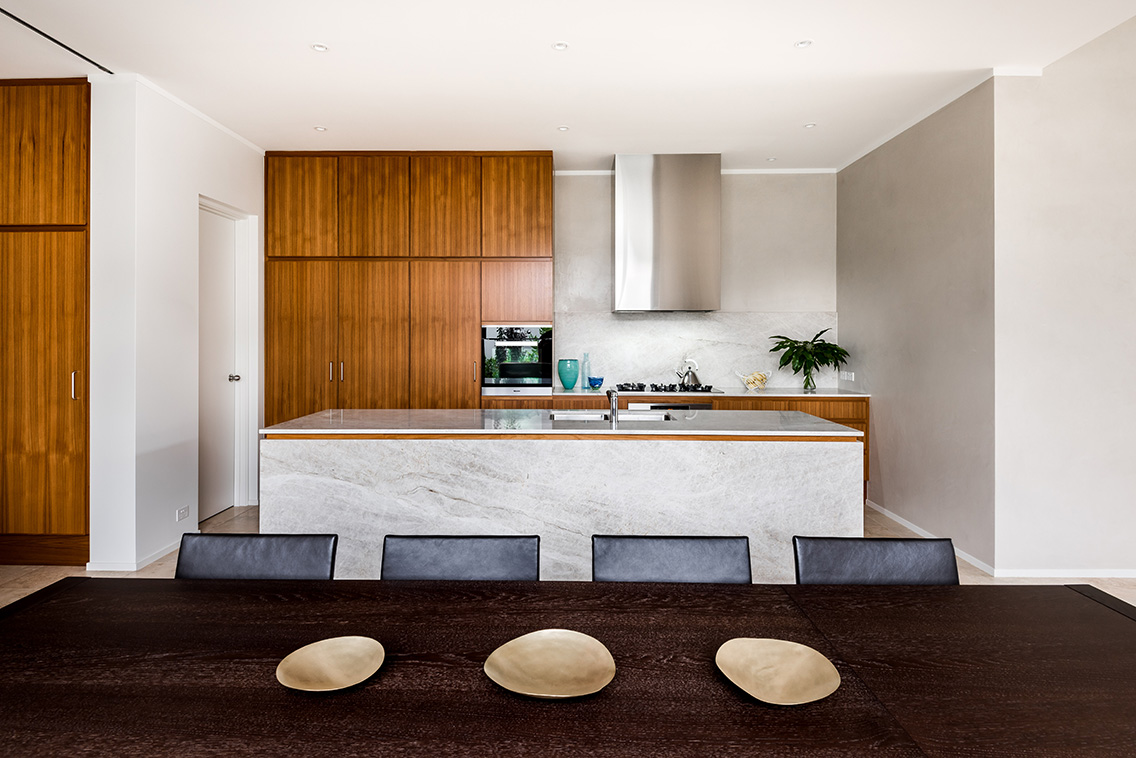
This is particularly relevant in kitchens and dining areas, where furniture must balance appearance with heavy use. A solid timber table needs enough visual weight to feel stable, but its edges and supports should remain comfortable. Cabinetry benefits from carefully considered hardware, clearances and internal fittings as much as from a beautiful exterior.
Lighting also changes how timber is perceived. Warm illumination can reveal the depth of a natural oil finish, while a sharper light may emphasise texture and joinery lines. For spaces where a handcrafted table forms the centre of activity, guidance on selecting pendant lights can help create a setting that supports the furniture rather than flattening its material qualities.
The same attention to detail applies beyond the dining room. A timber stool can bring warmth to a tiled bathroom, a low bench can define an entry without obstructing movement, and a carefully proportioned side table can soften the harder surfaces of a commercial interior. The maker’s work is adaptable because its character comes from construction rather than a fixed decorative style.
The value of a slower object
A handmade piece asks its owner to notice more. The weight of a drawer, the resistance of a hinge and the way light moves across a planed surface all become part of the experience. These details are easy to overlook when furniture is treated as background, yet they shape how a room feels in daily use.
The work also creates a more transparent relationship between designer, maker and client. Questions about timber origin, finish maintenance and expected ageing can be addressed before the piece enters the home. That exchange helps establish realistic expectations and often leads to decisions that improve the design.
For students and emerging designers, the workshop offers a reminder that material experimentation is inseparable from technical understanding. A beautiful sketch is only the beginning. The success of a chair, cabinet or table depends on grain direction, tolerances, movement and the relationship between every component.
The maker’s revival of traditional joinery in WA is therefore not a retreat into the past. It is a forward-looking response to waste, short product cycles and increasingly anonymous interiors. By combining heritage techniques with contemporary proportions, the practice gives old knowledge a useful place in present-day Australian design.
Principles worth carrying into a project
Anyone commissioning or specifying handcrafted furniture can make the process more rewarding by focusing on the relationship between object, material and use.
- Choose a timber species for its structural and visual qualities, not simply its colour.
- Ask how the furniture will be repaired, refinished or adjusted over time.
- Consider the room’s proportions, circulation and natural light before finalising dimensions.
- Treat joinery as part of the design language, even when it remains understated.
- Allow natural grain variation and signs of making to contribute to the finished character.
The most compelling outcome is furniture that becomes more meaningful through use. Scratches can be repaired, surfaces can be renewed and joints can be maintained, while the original decisions remain visible beneath the changes. This is the quiet strength of well-made timber furniture: it supports everyday life while retaining a clear connection to the person, place and process behind it.
Across Western Australia, that connection is helping traditional craft find a contemporary audience. Explore the makers, projects and ideas shaping the region’s design culture through Contemporary, and follow the conversation at its next Wine In Design gathering.