Porcelain paving brings a sandstone sensibility outdoors
A new line of porcelain paving slabs is bringing the warm, layered appearance of natural sandstone to patios, terraces and public spaces. Designed to echo the mineral variation, soft striations and sun-washed tones of quarried stone, the range offers a more consistent alternative for projects that need the visual character of sandstone with the practical performance of porcelain.
For Australian homes and commercial settings, the appeal is easy to understand. Outdoor areas are used throughout the year, from shaded Perth courtyards to Brisbane entertaining terraces and Melbourne balconies exposed to changing weather. A sandstone-look surface can establish a grounded, architectural mood while supporting the everyday demands of dining, entertaining and coastal living.
A quieter take on outdoor stone
The collection is built around the visual language of sandstone rather than a highly polished interpretation of it. Colours appear in muted families of cream, chalk, beige, taupe and soft grey, with subtle tonal shifts across each slab. Fine linear markings and cloudy mineral effects help avoid the repetition that can make some manufactured surfaces look overly uniform.
That restraint suits the current movement towards calm, tactile exteriors. Instead of treating paving as a background material, designers are using it to connect architecture with gardens, courtyards and landscape edges. A sandstone-effect porcelain tile can sit comfortably beside rendered walls, recycled brick, timber screens, concrete and dark metalwork.
Large-format slabs are particularly effective when the intention is to create a continuous visual field. Fewer joints can make a compact courtyard feel more generous, while smaller modules may be better suited to heritage homes, narrow side paths or spaces that need careful falls and drainage. The choice of format becomes part of the design language rather than a purely technical decision.
Porcelain performance for Australian conditions
Natural sandstone has an unmistakable presence, yet it can require ongoing care depending on its density, finish and location. Porcelain paving offers a different maintenance profile. It is generally resistant to staining, does not need the same sealing routine as many stone products and can be cleaned with ordinary methods recommended by the supplier.
This matters in Australian homes where alfresco areas often sit directly beside kitchens, swimming pools and barbecue zones. Red wine, cooking oils, sunscreen and leaf litter can all become part of the daily life of an outdoor surface. In Perth, airborne dust and strong summer sun are familiar considerations; in Sydney and Brisbane, humidity, rain and organic growth may influence cleaning and drainage decisions.
The finish still needs to be selected with care. External paving should be assessed for slip resistance, particularly around pools, outdoor showers and areas that receive regular rain. Buyers and specifiers should request the relevant test information, including the product’s classification under AS 4586 where applicable, rather than relying on appearance alone.
Installation is equally important. The substrate, falls, drainage strategy and jointing system all affect how a paved area performs over time. Australian installers commonly refer to AS 3958.1 for guidance on ceramic tiling, while the final specification should account for the site, intended use and manufacturer requirements. A beautiful slab cannot compensate for inadequate preparation.
From beach shack to urban courtyard
The natural sandstone expression has particular resonance in Western Australia, where pale coastal geology, weathered limestone and warm native landscapes often influence residential design. Around Fremantle, Cottesloe and Margaret River, a sandy neutral palette can reinforce the relationship between a building and its setting without turning the exterior into a literal coastal theme.
In Dunsborough, where compact holiday houses need to work hard for both owners and guests, an adaptable outdoor surface can extend a small footprint. The material conversation explored in this Dunsborough beach shack reflects a broader design priority: every threshold, terrace and transition needs to contribute to how a home is used.
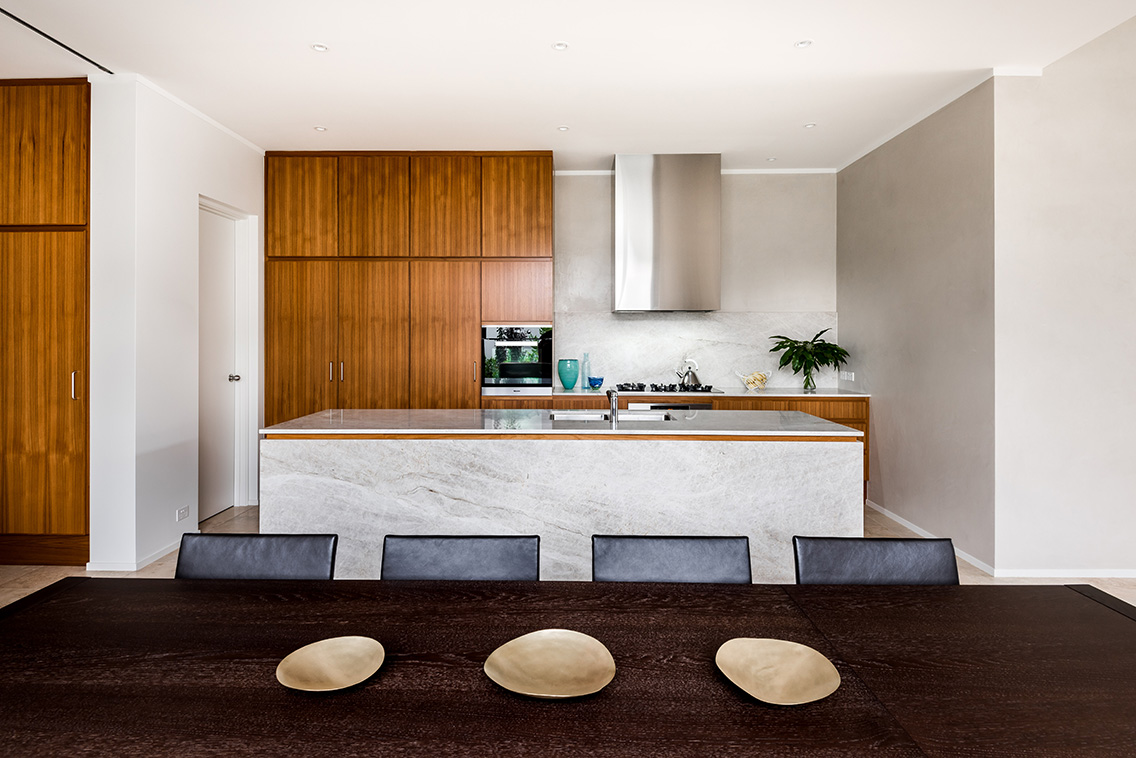
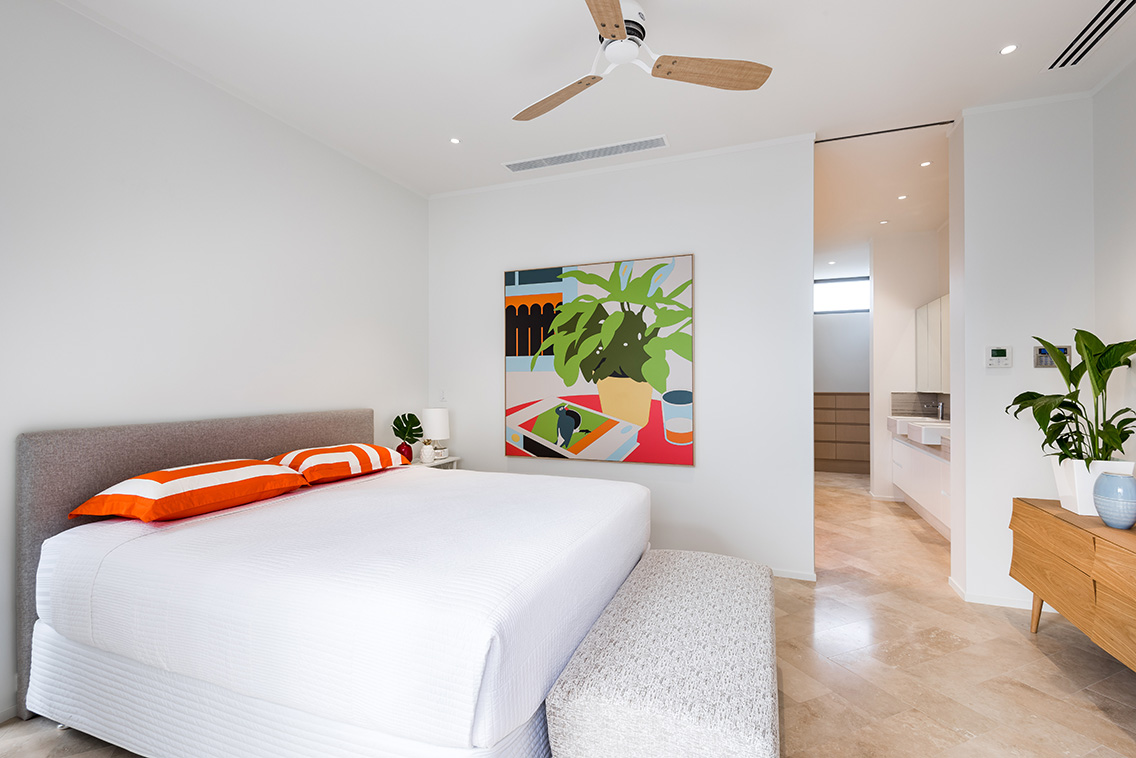
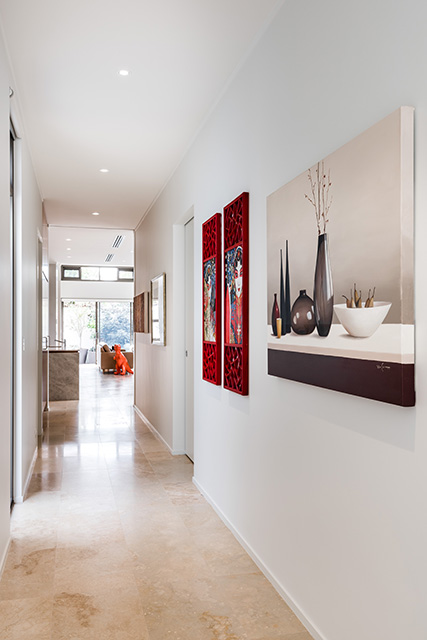
The paving can continue from an internal living area to an alfresco zone, provided the specification and installation suit the transition. This creates a sense of continuity between rooms and landscape, especially when the slab tone is coordinated with cabinetry, joinery or wall finishes. In smaller Perth courtyards, the same approach can make the exterior feel like an additional room rather than a leftover strip around the house.
At larger properties, the range can be used to define separate outdoor functions without introducing a collection of competing materials. A single surface may connect a dining terrace to a pool deck, garden path or firepit area, with planting and furniture providing the visual changes.
A practical choice for designers and developers
The sandstone appearance is suited to more than detached houses. Apartment developments, hospitality venues, restaurants and workplace courtyards all benefit from an outdoor finish that feels established while meeting contemporary performance expectations. In dense urban projects, porcelain paving can help create a refined landscape response around entries, communal gardens and rooftop terraces.
For commercial applications, consistency across batches, predictable sizing and a broad range of formats can simplify procurement. Rectified edges may support narrow, regular joints, while textured finishes add depth under strong sunlight. The right balance depends on the project: an understated surface may be ideal for a gallery or hotel, while a busier pattern could better conceal marks in a high-traffic café setting.
The Australian market also brings practical questions around availability, lead times and replacement stock. A designer specifying a particular colour for a multi-stage development should confirm whether matching slabs will remain accessible and whether the product is stocked locally. Perth projects can face different delivery considerations from those in Melbourne or Sydney, especially when large quantities or unusual formats are involved.
Residential clients should also consider local approvals and shared-property requirements. In strata settings, changes to balconies, terraces or common areas may require body corporate approval. Pool surrounds must coordinate with compliant barriers and access provisions under relevant state and territory rules, including the requirements that apply to pool fencing in Western Australia. Product selection should sit within a broader site and safety assessment.
Designing with warmth, not imitation
The success of a sandstone-look slab depends on how it is used. Pairing it with too many rustic references can make a project feel themed, while a restrained palette allows the surface to read as contemporary. Brushed aluminium, slimline steel, pale timber, sculptural planting and low-profile outdoor furniture can bring out its architectural qualities.
In landscape design, the slabs can be framed by gravel, lawn, native groundcovers or bands of planting. Australian species with silvery foliage and fine texture can reinforce the mineral tones without competing with them. In Perth, waterwise planting and permeable landscape zones are useful companions to a hardscape material, particularly as local projects respond to hot summers and responsible water use.
The paving also offers a way to soften urban developments. On a rooftop terrace, sandy tones can reduce the visual hardness of concrete and masonry. In a restaurant courtyard, the surface can establish a relaxed setting without the maintenance expectations associated with untreated stone. For retail or workplace projects, it can provide a durable transition between interior finishes and planted outdoor rooms.
Contemporary Wine In Design offers a fitting context for this kind of material conversation, bringing architects, designers, makers and the wider local industry together. Those interested in attending or following the event can find details through the event invitation, where product ideas meet the people and projects shaping Australian design culture.
A sandstone-inspired porcelain range is ultimately valuable because it balances atmosphere with everyday function. It acknowledges the enduring appeal of natural stone while responding to the practical realities of contemporary construction, from maintenance and supply to safety and climate. Used thoughtfully, it can give an outdoor room the softness of a familiar landscape material and the precision expected of a new architectural product.
Explore the collection with the full project context in mind: test samples in natural light, review technical data, confirm installation requirements and consider how the paving will meet planting, drainage and adjoining materials. For architects, designers, builders and homeowners planning an Australian outdoor space, this new surface offers a composed foundation for living, gathering and connecting with the landscape.