A Kitchen Island Reimagines Recycled Plastic and Marble Dust
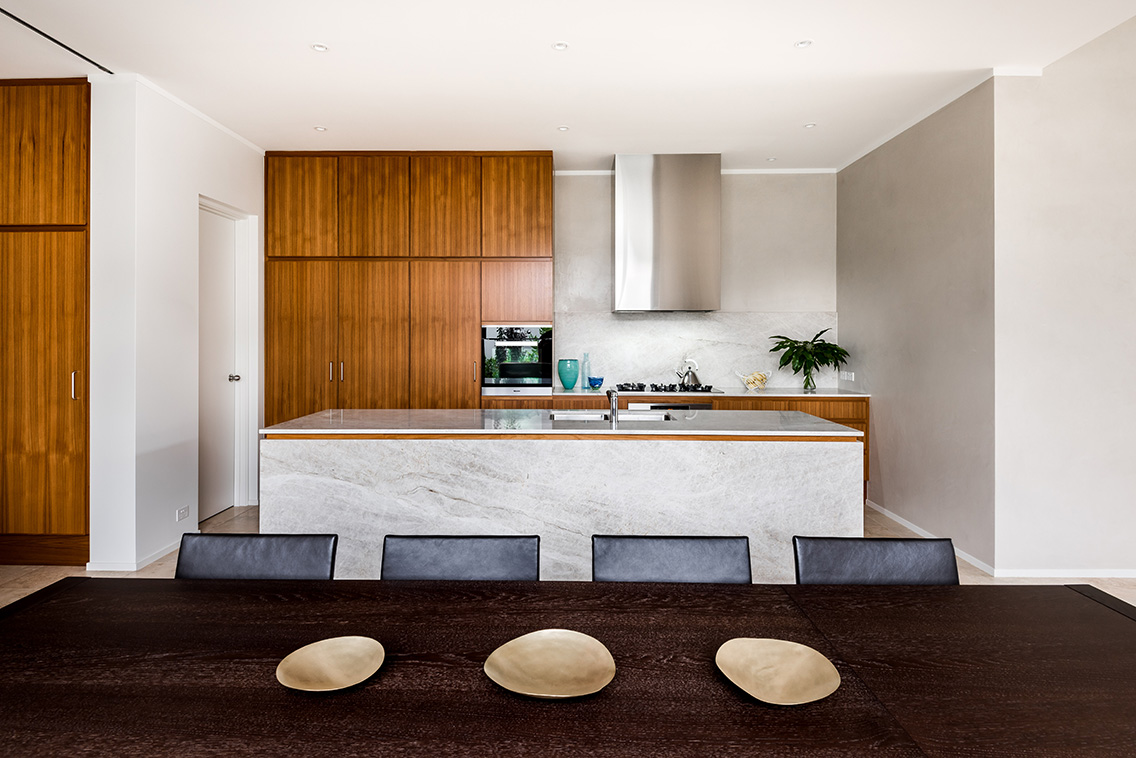
The kitchen island has become a piece of architecture in its own right. It defines circulation, gathers people, conceals appliances and gives a room its visual centre. A new island design made from recycled plastic and marble dust brings that furniture-like presence into a material conversation about waste, durability and the future of domestic interiors.
The product belongs to a growing category of low-impact surfaces that sit between joinery and sculpture. Its composite body combines post-consumer plastic with finely milled marble dust, producing a softly mottled finish with the visual depth of terrazzo and the resilience expected from a hardworking kitchen element. For Australian homes, where kitchens often open directly onto living and outdoor areas, that balance between performance and character is especially relevant.
A material with a visible history
The island is formed from a dense composite rather than a conventional slab fixed to a timber or metal frame. Recycled plastic acts as the binding component, while marble dust provides weight, texture and a pale mineral quality. Depending on the colour mix, the surface can read as chalky white, warm grey, sand or a deeper charcoal scattered with fragments.
That visual variation is part of the appeal. Instead of imitating a flawless block of natural stone, the finish records the making process. Small flecks and shifts in tone give the benchtop a quiet irregularity, allowing it to sit comfortably beside timber cabinetry, brushed stainless steel or painted laminate. The result feels considered without becoming precious.
For designers, the material also creates an opportunity to specify a monolithic island without the visual heaviness of a traditional stone mass. The edges can be rounded, softened or sharply profiled, and the same composite may be carried down the sides in a waterfall configuration. In a compact Perth apartment or a renovated Fremantle terrace, that continuity can make the room feel more resolved.
Designed for the Australian kitchen
Australian kitchens tend to work hard. They are preparation areas, dining tables, homework stations and informal meeting points, often with a direct relationship to an alfresco zone. A kitchen island must accommodate that mixed use, from chopping and serving to sitting with a coffee while the afternoon sea breeze moves through the house.
The recycled-plastic and marble-dust surface is intended to handle regular contact with food, cookware and cleaning products, provided it is fabricated and sealed according to the supplier’s instructions. Its non-porous finish can be easier to maintain than some natural stones, while the lack of a repeating printed pattern gives scratches or small marks less visual dominance.
Local conditions still matter. Perth’s bright sunlight, dry heat and summer entertaining culture place different demands on materials than a shaded inner-city apartment in Melbourne. Designers specifying the island near a large north- or west-facing window will need to confirm colour stability, heat tolerance and the performance of any sealant. A surface that performs well indoors may require more careful positioning beside a barbecue or outdoor opening.
The island’s dimensions can also be tailored to the way Australian households live. A generous overhang supports stools and casual meals, while integrated shelves provide space for cookbooks, ceramics or a wine collection. In smaller homes, a narrower peninsula version could offer the same sculptural impact without interrupting the working triangle.
Circular design needs clear specifications
Using recycled content is meaningful only when the material story is transparent. The product should be accompanied by information about the percentage and source of recycled plastic, the type of marble waste used, the manufacturing process and the expected service life. These details allow architects, builders and homeowners to compare an attractive finish with its actual environmental performance.
There is also an important distinction between recycled and recyclable. A composite that combines plastic, mineral dust, pigments and binders may divert waste from landfill at the beginning of its life, but it may not be straightforward to separate or recycle later. That does not cancel its value, though it does place emphasis on repair, longevity and responsible deconstruction.
A durable island can remain in a home through several kitchen renovations if its carcass, plumbing and appliances are designed for access. Replaceable hardware, repairable edges and a take-back scheme would strengthen the product’s circular credentials. These are practical questions worth raising early, before the island is locked into a joinery package.
For the Australian market, documentation will be particularly important as sustainability claims become more common in residential specifications. Interior designers and builders need clear information on fire performance, food-contact suitability, structural support, installation tolerances and cleaning requirements. A strong environmental narrative should be matched by equally strong technical data.
The details that shape its use
The island’s appearance is only one part of the proposition. Its success will depend on how well the material meets everyday demands and how intelligently the surrounding joinery is resolved. A beautifully cast surface can still feel awkward if power points, seating clearance or appliance access have been treated as afterthoughts.
Design features worth specifying
- Integrated drawers for knives, cookware and frequently used utensils
- A softened edge profile that is comfortable against hips and elbows
- Concealed power access for small appliances and phone charging
- A deep overhang that allows stools without compromising circulation
A restrained palette gives the recycled composite room to speak. Warm white or limestone tones can echo Western Australia’s coastal architecture, while olive, rust and deep blue introduce colour without relying on a high-gloss finish. Designers may also use the island as the one expressive element in an otherwise quiet kitchen of timber veneer and honed metal.
The tactile quality deserves attention, too. A honed surface will feel softer and more mineral under the hand, while a satin finish can provide a little more visual depth. The join between the island top and its supporting cabinetry should be carefully detailed so the piece reads as a coherent object rather than a standard cabinet with an unusual benchtop.
Practical checks before ordering
- Confirm stain, heat and UV performance for the intended location
- Request samples in both direct and indirect natural light
- Check the island’s weight against the floor and cabinetry structure
- Ask how repairs, refinishing and eventual removal are managed
Fabrication is likely to be a significant part of the cost. Oversized pieces may require specialist handling, and access through narrow hallways, lifts or staircases should be measured before production begins. This is familiar territory for local tradies, but an unusual composite island may need more coordination than a conventional stone installation.
A strong fit for design-led spaces
The island has the visual authority to sit within a broad range of interiors. In a pared-back coastal home, its pale aggregate can reinforce a palette of timber, linen and travertine. In a city apartment, a darker version can anchor glossy cabinetry and stainless-steel appliances. In a hospitality setting, repeated islands could create a recognisable material language across a café, wine bar or boutique accommodation project.
Its strongest role may be in homes that resist the idea of a kitchen as a separate utility room. When the island is visible from the lounge, entry or dining area, it needs to operate as furniture as much as equipment. The rounded corners, continuous surface and evidence of recycled content give it a presence that can carry across open-plan spaces.
That quality is well suited to the Australian preference for informal gathering. A Perth renovation might use the island as a breakfast bar in the morning and a serving counter for a summer dinner in the evening. In a regional home, it could become a robust work surface for preserving, baking and entertaining, with the material’s flecked finish helping to disguise the traces of regular use.
The product also arrives at a moment when Australian designers are reconsidering what counts as luxury. Rather than depending on rare stone or flawless uniformity, a premium kitchen can express value through material intelligence, local fabrication and a long service life. Recycled plastic and marble dust make that proposition visible without turning the island into a didactic object.
From product launch to local conversation
The most compelling aspect of the island is its ability to connect material innovation with the social life of design. It is easy to discuss recycled content in abstract terms; it is more engaging to see the material become a place where people prepare food, share a drink and gather at the end of the day.
That conversation has a natural place within Western Australia’s design community, where architects, interior designers, makers and suppliers regularly overlap. Product launches are increasingly valuable when they offer samples, fabrication knowledge and honest discussion about limitations rather than presenting sustainability as a polished slogan. A composite island can become a useful case study in that setting.
Events such as Contemporary Wine In Design create an informal setting for those exchanges, bringing the professional network together around design work and new ideas. The wider Wine in Design program gives the product a fitting context: a material designed for gathering, discussed among the people shaping the spaces where gathering happens.
For students and emerging designers, the island also demonstrates how a familiar domestic object can become a testing ground for new manufacturing methods. Its value lies in the intersection of detail and debate: how it is made, how it ages, how it is installed and whether its recycled content contributes to a better long-term outcome.
The next step is to move the product from image to specification. Review the technical sheet, request a finish sample and speak with the fabricator about edge profiles, support, sealing and end-of-life pathways. For studios, builders and homeowners ready to explore a kitchen island with a more considered material story, event registration is a useful way to join the local design conversation and encounter the ideas shaping Australian interiors.