Designing a native-plant courtyard for Perth's Mediterranean climate
Perth sits within one of only five Mediterranean climate zones worldwide, blessed with long, sun-warmed summers and mild, damp winters. The rhythm is distinctive: months of almost no rainfall between November and April, followed by cool fronts that deliver most of the year's precipitation in a few wet weeks. This pattern, forged over millions of years, shapes every plant that thrives here, from the towering jarrah and karri forests of the Darling Scarp to the tuart woodlands along the coast.
Native species have evolved alongside this climate and the sandy, limestone-rich soils of the Swan Coastal Plain. Choosing them is both a practical and a poetic act, conserving water, supporting local wildlife, and creating a garden that feels unmistakably West Australian. A courtyard planted with species from the region hums with honeyeaters, wrens, and native bees, offering movement and life well beyond what any ornamental import can provide.
Perth homeowners have long treated the courtyard as an outdoor room, a place for arvo drinks, weekend barbies, and quiet evenings under the stars. With thoughtful design, a native courtyard offers all the lushness of a traditional garden while using a fraction of the water.
Reading your site before planting
Every successful courtyard garden begins with honest observation. Note where the afternoon summer sun beats down and which corners stay shaded. North-facing walls in Perth radiate stored heat well into the evening, creating oven-like microclimates that scorch delicate foliage. South-facing areas can be surprisingly cool even in February. Walls, fences, and neighbouring buildings all sculpt the light.
Soil is the next layer to understand. Much of Perth sits on ancient sand dunes over Tamala limestone, with pockets of heavier clay in the foothills. Sandy soil drains quickly, which natives love, but it holds very little nutrition. A simple pH test confirms the typically alkaline conditions, which suit most WA species perfectly. Adding compost and a thick layer of mulch before planting helps build resilience.
Don't overlook the wind. The Fremantle Doctor, that famous afternoon sea breeze, cools coastal suburbs from Scarborough to Cottesloe but can shred soft foliage. Inland suburbs like Mount Lawley catch less of this relief, so structural windbreaks become essential. A solid fence with a permeable top section, or a layered planting of taller shrubs, can turn a punishing gust into a gentle whisper.
Selecting native species for tight footprints
A courtyard demands plants that earn their place. Compact cultivars of Western Australian favourites fit beautifully. Dwarf banksias, such as Banksia 'Birthday Candles' or 'Coastal Cushion', bring the iconic cylindrical flower spikes down to a metre or so. Grevilleas, with their spidery blooms and bird-attracting habit, perform reliably in pots and narrow beds, particularly varieties like Grevillea 'Superb' and the ground-hugging G. 'Mt Tamboritha'.
Kangaroo paw deserves a starring role. Anigozanthos hybrids like 'Big Red' or the yellow 'Bush Gold' thrive in well-drained soil and produce flowers from spring through summer that look striking in slanting late light. For ground level, hardenbergia and native violets carpet the soil, while a well-placed grass tree, Xanthorrhoea preissii, anchors a corner with sculptural drama. Layer these heights so the eye moves from groundcovers through mid-tier shrubs to a small feature tree.
Don't overlook edible natives. Midyim berries, finger limes grafted onto dwarf rootstocks, and native mint bushes bring culinary curiosity and thrive in the same conditions as ornamentals. Choosing species that flower at different times ensures there is always something in bloom, supporting pollinators from the first winter rains through the dry months.
Building the floor plan of your garden
Think of the courtyard as you would any interior room, with clear zones for sitting, moving, and looking. A central paved area, wide enough for a small table and four chairs, gives the space a focal point. Radiating out from this hub, beds of varying widths create rhythm and depth. Curved edges soften the geometry, while straight lines suit contemporary architecture and narrow side courtyards.
Materials matter as much as plants. Locally quarried limestone, with its warm cream and gold tones, anchors a courtyard to the surrounding landscape. Decomposed granite and stabilised gravel provide a relaxed underfoot surface suited to coastal or bushland gardens. Large-format porcelain pavers in muted greys echo the colours of the Perth sky and pair easily with the silvers and greens of native foliage. Allow space for plants to soften the edges.
Vertical layers extend the garden upward. A wall-mounted espaliered fruit tree, a living screen of climbing hardenbergia, or a simple wire trellis for native peas can transform a blank fence into a living tapestry. In tight side courtyards, mirrored screens double the apparent depth and bounce light back into shadier plantings. The aim is a garden that feels generous, regardless of actual footprint.
Hardscape materials with a local story
Materials with a Western Australian provenance give a courtyard a sense of place. Tamala limestone, the same stone used to build many of Fremantle's historic walls, can be sourced from local quarries and cut into pavers. Its honeyed warmth reads beautifully against silver foliage like Eucalyptus pulverulenta or westringia. Rammed earth walls, made from soil excavated on site, regulate temperature naturally.
Timber brings softness and warmth. Jarrah, sourced from old structures or certified operations, is dense and durable, ageing to a deep silver grey when left untreated. For decking and seating, consider salvaged jarrah or plantation-grown alternatives. Weathered steel edging develops a rust patina that ties back to the red pindan soils further up the coast, creating a subtle dialogue between regions.
Permeability is a quiet hero. Permeable paving allows winter rain to soak into the soil beneath, replenishing groundwater and reducing runoff into local drains. Many Perth councils encourage permeable surfaces, and rebates are sometimes available through Water Corporation WA. Pairing permeable paths with generous planting beds creates a system where stormwater becomes an asset rather than a problem.
Smart irrigation for dry summers
Establishing natives requires more water than maintaining them, but careful irrigation from the start saves effort for years. Drip lines laid beneath a thick layer of mulch deliver water directly to the root zone. A simple battery-operated timer takes the guesswork out of summer watering. Watering deeply two or three times a week during establishment, then tapering back, encourages deep root systems that survive heatwaves.
Mulch is non-negotiable. A coarse bark or leafy mulch, applied seventy millimetres thick, keeps soil temperatures down, suppresses weeds, and slows evaporation. As it breaks down, it feeds the soil and supports the beneficial microbes natives rely on. Avoid fine woodchips that compact and shed water, and steer clear of pea gravel in planting beds.
After the first summer, established natives often need little supplementary water. Observing the plants tells you when they are thirsty, with slight wilting signalling the moment for a soak. This responsive approach saves water and produces tougher plants, deeply attuned to the rhythms of the Perth climate.
Linking indoor and outdoor spaces
The best courtyards feel like a continuation of the home. Wide sliding doors dissolve the boundary between kitchen and garden, allowing the cook to chat with friends around the outdoor table. Aligning a sightline from the kitchen window to a striking plant or sculpture makes the home feel larger.
Furniture choices reinforce this sense of connection. A weathered timber dining table paired with slimline metal chairs echoes the materials of the garden while providing comfortable seating for long summer arvos. Layering in a vintage piece, such as a pair of inherited armchairs reupholstered in outdoor fabric, brings character. Many designers now treat outdoor rooms with the same care as interiors, and outdoor furniture styling can be surprisingly rewarding.
Consider the entry threshold as well. A well-designed drop zone just inside the door, where bags, shoes, and sun hats can be set aside, keeps the garden free of clutter. Borrowing ideas from compact family entries, a bench with storage and a tray for keys transforms a chaotic entry into a calm transition. The same logic works outside, where a shaded bench near the door becomes a place to pause, kick off thongs, and slip into garden mode.
Adding sculptural and artistic touches
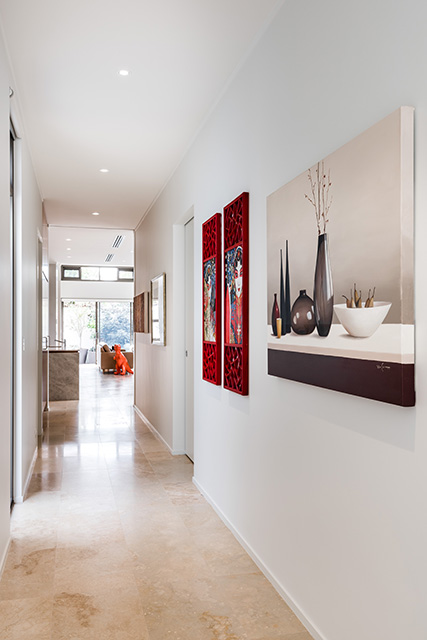
Plants alone rarely complete a courtyard. A well-chosen piece of art or sculpture gives the eye somewhere to rest and adds personality. Artists working in constrained settings, such as public foyer mosaics, demonstrate how a single piece can transform everyday spaces. A hand-thrown ceramic bowl, a found object weathered by years at the beach, or a piece of salvaged limestone carved with a simple motif can all become a focal point.
Lighting extends the courtyard's usefulness into the evening. Warm, low-level LEDs tucked into planting beds, along paths, or washing across a textured wall create depth and atmosphere. Solar lights have improved dramatically and work reliably in Perth's abundant sunshine, though hardwired systems remain the gold standard. Thoughtful illumination extends the season of enjoyment, allowing the courtyard to glow softly through the cooler months.
Sound is the final layer many gardeners forget. A simple water bowl, kept fresh and shallow, attracts birds and produces a gentle trickle that masks neighbouring noise. Rustling grasses, such as Lomandra or poa species, add a soft whisper when the breeze picks up. These layers complete the sensory experience of a Perth courtyard, transforming it from a planted space into a living one.
Practical recommendations for a thriving native courtyard
- Begin with a soil test and a week of observation before selecting plants, mapping sun, shade, and wind patterns
- Group plants by water needs, placing thirstier species where runoff from paving can reach them
- Lay drip irrigation beneath mulch before planting rather than retrofitting later, and invest in a simple timer
- Apply a coarse local mulch seventy millimetres thick, topping it up annually
- Reserve a generous portion of the budget for one or two mature feature plants, such as a grass tree or established jarrah
To see native-plant design ideas in action and meet the architects, landscape designers, and makers shaping Perth's built environment, join us at Contemporary Wine In Design, the annual gathering that brings the local architecture and design community together for an evening of conversation and discovery. Subscribe to Contemporary for ongoing coverage of residential projects, product launches, and profiles of the people behind Western Australia's most thoughtful spaces.