How to layer rugs for a warmer, textured Perth living room
There's something quietly Australian about throwing a second rug over the first. Maybe it comes from a long habit of patching and mending, of layering a doona over a woollen blanket when the cold change rolls in. In contemporary Perth interiors, the practice has moved beyond improvised comfort into a sophisticated design move, one that brings visual depth, tactile richness, and a grounded warmth to the airy, light-filled living spaces that define the modern coastal home.
Perth designers have long understood that a single rug rarely does the work of anchoring a generous, open-plan room. Ceilings are high, sliding doors spill onto alfresco areas, and the light through those big west-facing windows tends to wash everything pale. Layering rugs answers that challenge with substance. A broad flatweave on the bottom, with something smaller and more characterful on top, holds the seating group together, softens acoustics, and creates the kind of textured ground plane that makes a room feel finished.
Whether you're renovating a character cottage in Fremantle, settling into a new build in Alkimos, or refreshing a family home in Mount Lawley, the principles are the same. It's about proportions, palette, and a willingness to let materials talk to one another. Below is a working method refined by local designers and stylists, with notes on the rugs, fibres, and arrangements that tend to feel right in a Western Australian setting.
Why layering works in Perth's climate
The Mediterranean climate of the southwest corner of Australia shapes almost every interior decision in Perth. Mild winters, dry summers, and that penetrating low afternoon sun make rooms behave differently from their eastern-state counterparts. A single rug, no matter how beautiful, often looks too thin under the volume of glass common in contemporary homes. Two rugs give the eye somewhere to rest, and bring texture and warmth to spaces that might otherwise feel airy to the point of cool.
Layering also handles the seasonal shift from inside to outside. As the weather warms and the bi-folds slide back, the lower rug carries the eye toward the patio while a smaller, patterned topper anchors the conversation grouping. Designers working on coastal projects around Cottesloe and Scarborough often use this trick to draw the living room out toward the deck without losing focus on the sofa.
There's also a thermal logic. A flatwoven base rug over polished concrete or wide-board timber adds insulation underfoot during the cooler months, while a textured topper provides the cosy finish that makes the room feel lived-in. The combined effect is practical but never utilitarian.
Choosing the base rug
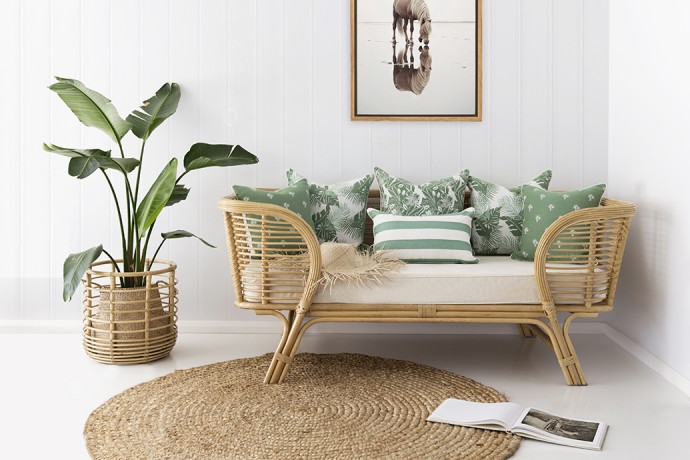
The bottom layer should disappear a little. Its job is to define the footprint of the room, ideally running under the front legs of every major piece of seating, and to offer a calm field for the topper to play against. In Perth homes with open-plan layouts, this often means a 3m x 4m or larger base. Designers lean toward natural fibres such as jute, sisal, or a wool-sisal blend, partly for the matte texture, partly because they sit well with both coastal palettes and the timbers typical of WA residential builds.
Colour matters more here than pattern. A warm oat, a bleached flax, or a soft greige tends to read as a continuation of the floor rather than a competing element. If the room already has a strong wall colour or a feature pendant, say an ochre linen drape or a piece of local art sourced from the Artifactory, the base rug should pick up one of those undertones rather than introduce a third conversation.
For homes that lean minimalist or coastal, a flatwoven dhurrie or a kilim in a quiet natural palette works beautifully. For something a bit warmer, a chunky hand-loomed wool rug in a creamy ivory grounds the room without ever shouting. The point is restraint, so the topper can take centre stage.
The topper takes the lead
If the base is the calm field, the topper is the sentence. This is where pattern, character, and personality arrive. A vintage Persian or Turkish rug, an antique Berber, or a contemporary piece in a bolder weave can all work, provided the proportions are right. As a rule of thumb, the topper should be roughly two-thirds the length of the base and offset slightly so its edges don't align with the base's edges. The asymmetry is what creates the layered, lived-in look Perth designers favour.
Shape also matters. Rectangles on rectangles look fine, but a round or runner-shaped topper over a rectangular base introduces a lovely counterpoint, particularly in front of a curved sofa or under a round coffee table. Some of the most successful layered rooms in WA homes use a cowhide, a small circular tufted rug, or an older hand-knotted piece that the owner collected years ago.
The trick is to choose one element of contrast - colour, scale, or texture - and let it lead. A soft vintage pattern over a textured solid tends to read more confidently than two strong patterns competing.
Working with Perth's light and material palette
Perth light is a design tool in its own right. The afternoon sun turns everything golden around 4pm in summer, while winter brings a softer, cooler glow that can flatten warm tones if they aren't chosen carefully. A layered rug arrangement should account for both.
Homes with polished concrete floors, a popular choice in newer WA builds from Yanchep to Baldivis, benefit enormously from a wool base layer. Wool absorbs sound, softens the echo that concrete tends to create, and brings warmth that balances the cooler floor. A second rug in a richer texture, perhaps a shearling or a high-pile woollen piece, adds the plush quality that concrete alone lacks.
Timber floors, particularly the wide-bladed spotted gum or blackbutt favoured across Perth renovations, pair beautifully with a sisal or jute base and a softer wool topper. The grain of the timber, the weave of the base, and the pile of the topper create a three-texture conversation that feels grounded and unmistakably Australian. Pairing these with locally made brass tapware, such as the Australian-made brass tapware range recently launched by an Adelaide-based maker, ties the whole interior together with the kind of considered detail Perth designers increasingly look for.
There's also the everyday reality of sand. West Australians track the beach in on bare feet more often than most, and layered rugs handle this better than a single light rug ever could. A smaller topper can be rotated seasonally, hiding the worst-wear zone when guests arrive.
Mixing fibres without overcrowding
The instinct when layering is to match. Resist it. Mixing fibres is what gives the arrangement its depth. A flatwoven jute beneath a tufted wool beneath a small cowhide, all in a similar warm palette, can feel like three layers of the same story. Throw in a kilim with a different weave structure, and the room sings.
Common pairings that work in Perth homes include a chunky wool over a flatwoven sisal, a vintage Turkish rug over a modern jute, or a hide over a hand-knotted piece. The contrast in how each material catches the light is what creates visual texture, particularly in rooms with big north-facing windows. Wool reflects softly, jute glows, silk shimmers, and hide brings a matte depth.
Keep scale in mind. If the base rug has a tight, even weave, the topper can be looser and more relaxed. If the base is heavily textured, the topper should be quieter, allowing each surface its moment. Two heavily patterned rugs tend to fight; two differently textured rugs in the same palette tend to harmonise.
Placement in open-plan living areas
Open-plan is the default in most new Perth homes, changing how rugs work. Rather than defining one zone, layered rugs carry the eye through the space, helping living, dining, and entry areas feel connected yet distinct. A common mistake is treating the rug as an island in the centre. The rugs should ground the seating, with the front legs of the sofa on the base and the topper reaching just beyond the coffee table.
In rooms that flow into a dining area, designers often continue the base rug into the dining zone, then layer a smaller topper under the dining table to soften the transition. A linen-covered table over a patterned rug over a jute base can feel rich without ever tipping into clutter.
In apartments around Subiaco or the CBD, where floor space is tighter and ceilings lower, smaller-scale layering works best. A medium base rug with a small sheepskin or hide layered off-centre adds texture without making the room feel crowded. The principle is the same as in a larger home: the rugs should follow the furniture, not the other way around.
Mistakes worth skipping
A few choices reliably flatten a layered scheme. The first is symmetry. Aligning the topper perfectly in the centre of the base looks too deliberate and loses the relaxed character Perth interiors are known for. Slight off-centring, a rotation of fifteen or twenty degrees, or pushing the topper closer to the sofa leg creates the casual feel that makes the arrangement look effortless.
The second is colour fatigue. Two rugs in nearly identical tones disappear into one another, robbing the room of contrast. Choose a topper that's noticeably different in either hue or value - a deep rust over a soft oat, a charcoal over a bleached flax - and the layering reads clearly even from across the room.
Finally, avoid layering rugs of the same weight. Two flatweaves together feel thin and slightly underdone. Two high-pile rugs feel heavy and visually congested. The sweet spot is contrast: one flat, one textured; one matte, one lustrous; one contemporary, one vintage. That contrast is what gives layered rugs their quiet authority in a Perth living room.
The rug arrangement sits at the heart of how a Perth living room feels underfoot, but it's only one part of a broader design conversation across Western Australia. From product launches to industry gatherings, there's a steady rhythm of events worth watching. If you're keen to meet the designers, makers, and architects shaping contemporary Australian interiors, you can register for the wrap party as part of the upcoming Contemporary Wine In Design showcase - one of the most relaxed ways to catch up with the local scene.