Native Plants In Interior Design That Feel At Home
Bringing native plants indoors can give a room a stronger sense of place. In Western Australia, the landscape offers an especially rich palette: sculptural grass trees, silvery eucalyptus, delicate kangaroo paws, hardy succulents, and trailing coastal species all carry distinctive forms that can influence an interior without turning it into a themed display.
The most successful schemes treat indoor greenery as part of the architecture. Planting can soften a hard edge, draw attention to a window, divide an open-plan room, or introduce contrast against stone, timber, metal, and textural fabrics. The aim is to create a considered relationship between the built environment and the natural world.
Native planting also supports a more local design language. Rather than copying a tropical conservatory or relying on familiar exotic houseplants, a room can reflect its climate, geology, and surrounding vegetation. That connection is valuable in homes, workplaces, hospitality venues, and public interiors alike.
Start With A Sense Of Place
Before selecting a plant, look at the character of the room and its wider setting. A Perth apartment with warm afternoon light may suit the muted tones of eucalyptus foliage, while a coastal home could draw from salt-tolerant forms, bleached grasses, and low-growing succulents. The architecture should guide the botanical palette.
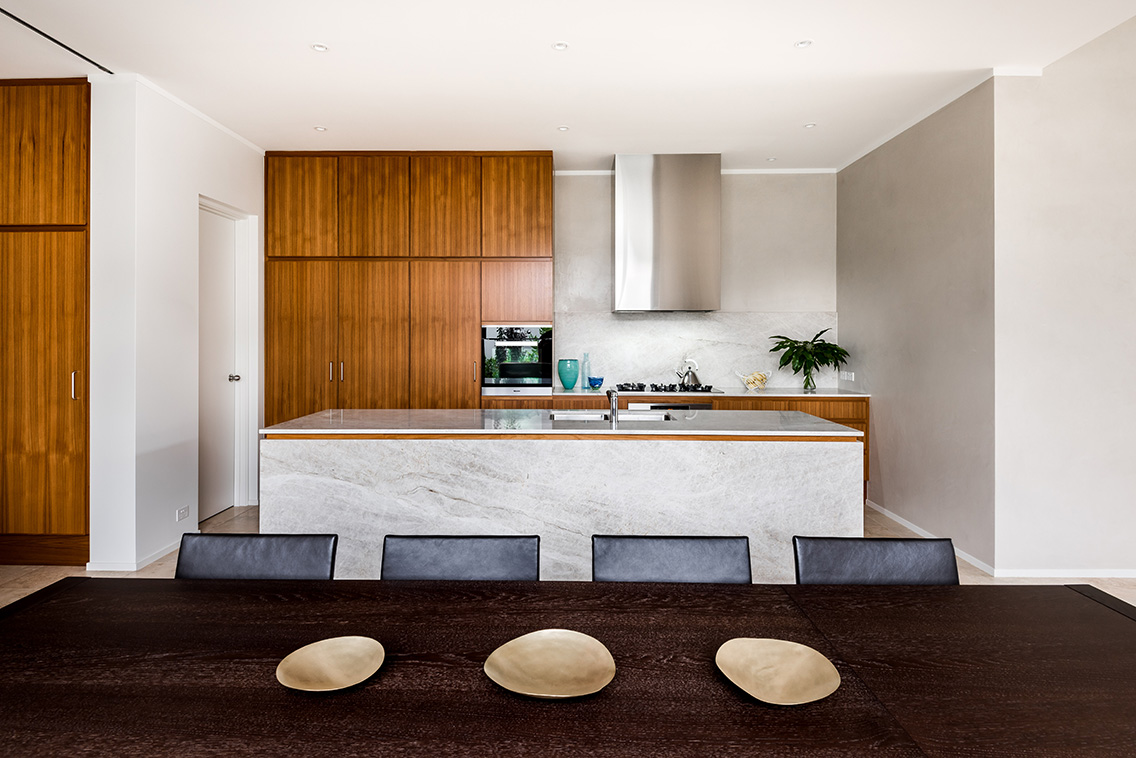
Consider the materials already present. Bushy, fine-leaved plants can balance broad expanses of concrete or plaster, while architectural species work well beside simple cabinetry and strong geometric lines. If a space contains richly grained timber, restrained foliage may be more effective than a collection of competing textures.
Scale matters as much as species. One large plant can establish a focal point in a quiet corner, while a group of smaller specimens can bring rhythm to a shelf or joinery niche. Repetition is useful when it feels deliberate: use a related leaf shape, pot colour, or tonal family to connect separate areas of the interior.
Build A Native Plant Palette
A successful indoor planting scheme usually includes variation in height, silhouette, and density. Upright forms create vertical emphasis; spreading foliage softens furniture edges; compact plants bring detail to desks, bathrooms, and ledges. Combining these roles creates a layered composition instead of a random collection of pots.
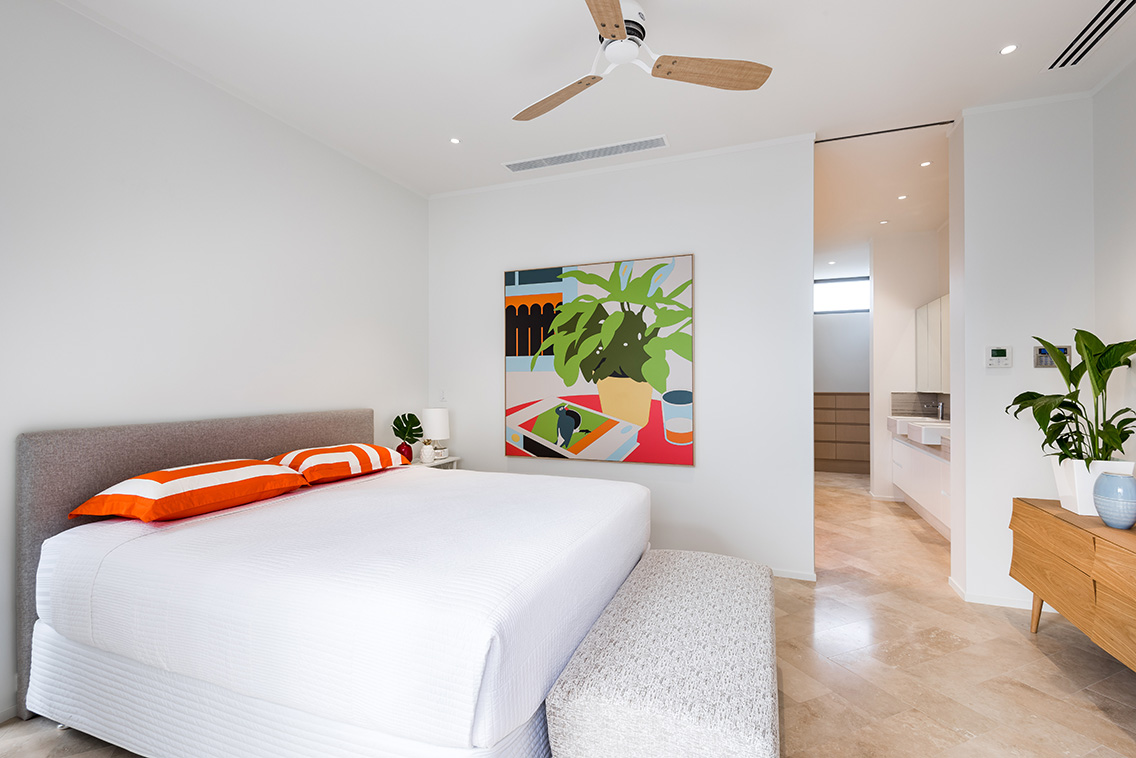
Colour can remain subtle. Grey-green, blue-green, olive, and dusty silver foliage sit comfortably with neutral interiors and allow material finishes to remain visible. Flowering natives can introduce more vivid accents, especially when their tones echo artwork, upholstery, or ceramics. Kangaroo paw, for example, can add an occasional note of red, yellow, orange, or pink without overwhelming a restrained scheme.
Dried native stems are another option where living plants are impractical. Banksia, paperbark, eucalyptus, and grass tree foliage can provide sculptural interest in a vase for months when carefully prepared. Use them sparingly and keep arrangements loose so they retain a connection to their natural form rather than appearing overly formal.
Work With Light And Microclimate
Indoor plant selection should begin with the conditions available rather than an idealised image of a room. Observe how sunlight moves across the space, whether glazing creates intense heat, and how close the plant will sit to heating or cooling vents. A species that thrives in bright filtered light may struggle in a dark hallway, while a dry interior can quickly damage moisture-loving foliage.
South-facing rooms, shaded courtyards, and offices with artificial lighting each call for different strategies. Some native plants are well suited to bright interiors, but many still need access to outdoor conditions for long-term health. Where possible, rotate plants between indoor and sheltered outdoor locations, allowing them to recover and receive stronger natural light.
Air movement and humidity also affect plant performance. Bathrooms can offer useful moisture, although poor ventilation may encourage fungal problems. Open-plan rooms with good circulation are often easier to manage than tightly enclosed corners. A plant’s care requirements should be considered alongside the room’s daily use, not treated as an afterthought.
Choose Containers As Architectural Elements
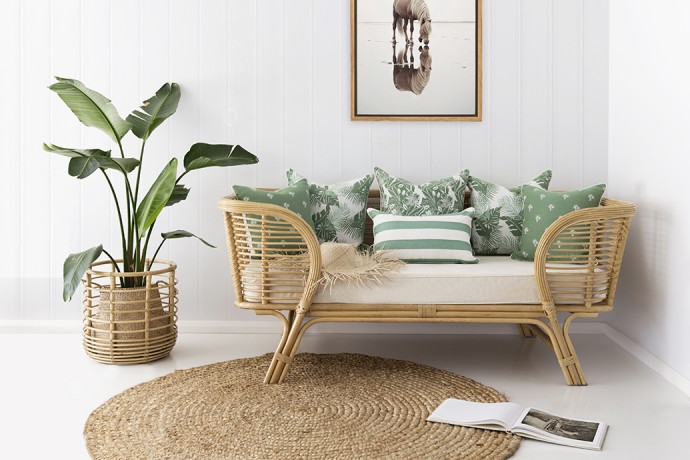
The pot is part of the interior composition. Terracotta can introduce warmth and a handmade quality, while powder-coated metal creates a sharper, more contemporary expression. Stone, concrete, woven fibre, and glazed ceramic each bring different weight and surface character. Matching every container can look controlled, but combining related finishes often creates greater depth.
Use planter size to establish visual hierarchy. A large vessel can anchor a living room or reception area, while a sequence of smaller containers can reinforce a kitchen shelf or bathroom vanity. Raised planters are useful when floor space is limited, and built-in troughs can integrate planting into joinery, stair landings, or room dividers.
Drainage and maintenance need to be resolved at the design stage. Place saucers or concealed liners beneath pots, protect timber and stone from standing water, and make sure heavy containers can be moved safely. For commercial interiors, specify durable vessels and accessible planting zones so cleaning and replacement do not disrupt the space.
Match Species To Interior Conditions
The following guide offers a starting point for pairing common native plant characters with suitable interior applications. Exact performance will depend on species, light levels, pot size, ventilation, and local availability.
| Plant character | Interior qualities | Suitable locations | Design approach |
|---|---|---|---|
| Fine-leaved eucalyptus | Silvery colour and airy texture | Bright living rooms, foyers, offices | Use as a restrained focal point beside warm timber or pale stone |
| Kangaroo paw | Strong colour and upright flowers | Well-lit shelves, entry spaces, hospitality settings | Repeat one flower tone through art or textiles |
| Native grasses | Movement and soft linear form | Large planters, windows, room dividers | Group in simple vessels to soften hard architectural lines |
| Banksia | Sculptural silhouette and tactile seed heads | Dining rooms, consoles, reception desks | Use as a feature stem or dried arrangement |
| Coastal succulents | Strong geometry and low maintenance | Sunny kitchens, bathrooms, balconies connected to interiors | Pair with textured ceramics and mineral surfaces |
| Bird’s nest fern and similar shade-tolerant forms | Lush volume and broad foliage | Filtered-light rooms and sheltered corners | Balance angular furniture with a softer mass |
Plant names should be checked with a local nursery or horticultural specialist before purchase. Some species sold as indoor plants may need more sunlight, airflow, or seasonal care than their marketing suggests. A healthy plant that suits the room will always contribute more than a fashionable specimen struggling in the wrong position.
Connect Planting With The Design Community
Native planting becomes more meaningful when it is considered alongside local making and architecture. A ceramicist’s hand-built vessel, a timber planter designed by a furniture maker, or a metalworker’s custom frame can give the botanical element a clear relationship to its surroundings. These details help the scheme feel authored rather than assembled from unrelated objects.
For commercial projects, plant displays can also support a broader identity. A restaurant might use local species to echo a regional menu, while a studio could pair indoor planting with artwork and furniture from nearby practitioners. Exploring the work of contemporary exhibitors can reveal material ideas that extend beyond the pot itself and strengthen the connection between landscape, object, and interior.
This approach is particularly relevant in Western Australia, where design practice is closely connected to a distinctive environment. Profiles of local design ambassadors can offer further insight into how architects, makers, and designers interpret place through materials, craft, and spatial experience. Native plants become one part of that larger conversation rather than a decorative overlay.
Keep The Arrangement Calm And Intentional
The strongest compositions leave room for the plants to breathe. Avoid filling every available surface, particularly in small rooms where dense planting can make circulation feel narrow. One carefully placed specimen beside a chair or beneath a skylight may have more impact than several small plants scattered across the room.
Think about views and movement. A tall plant can frame a doorway or obscure an unattractive service zone, while a low planter can guide people through a workplace without creating a visual barrier. In hospitality and retail settings, keep sightlines, cleaning routes, accessibility, and fire safety in mind when positioning large containers.
A simple maintenance routine protects the design investment. Remove damaged leaves, wipe dust from broad foliage, monitor drainage, and prune plants before they become awkwardly large for their location. Replace specimens that repeatedly fail rather than forcing an unsuitable plant to survive. Good care keeps the interior scheme fresh and makes its relationship with nature feel genuine.
Practical Ways To Refine The Scheme
- Select two or three foliage tones that relate to the room’s timber, stone, paint, or textiles.
- Use one dominant plant form, one supporting texture, and a small number of accent flowers or stems.
- Place large specimens where they can be seen from several viewpoints without blocking circulation.
- Choose containers with drainage, stable bases, and finishes that complement the surrounding materials.
- Build a care schedule around real light, watering, pruning, and access conditions.
Let The Landscape Shape The Room
Native plants can do more than add colour to an interior. They can clarify a room’s scale, express regional character, soften construction materials, and create a slower visual rhythm. Their presence is most convincing when the selection, vessel, placement, and maintenance have been considered as part of the overall design.
Begin with one room and observe what it needs. A sunlit corner, a bare entry console, or an open-plan threshold may provide the right starting point. From there, develop a restrained palette of Australian foliage, natural materials, and locally made objects that allows the architecture to remain visible.
Bring native planting into your next residential, workplace, or hospitality scheme with the same care given to lighting, furniture, and finishes. Let the species respond to the room, let the containers belong to the material palette, and let the landscape provide a quiet signature throughout the interior.