Smart Lighting In A Renovated Double-Brick Dalkeith Home
A renovated double-brick home in Dalkeith offers a useful lens on the relationship between old construction and new technology. The substantial masonry, generous rooms and established garden belong to a familiar Perth architectural story, while a carefully planned lighting system brings the house into contemporary life. Here, smart lighting is less about novelty than about making everyday routines feel intuitive.
The best results come when technology supports the character of the home rather than competing with it. Warm illumination can draw out brick, timber and stone; discreet controls can preserve clean walls; and automated scenes can respond to the sharp Western Australian sun, evening entertaining and the practical demands of family life. For design professionals and homeowners alike, the project shows how a renovation can be both grounded and quietly advanced.
Reading The Existing House
Double-brick construction is a defining condition in many older Perth homes. It gives interiors a sense of permanence, moderates temperature and creates deep reveals around windows and doors. It can also make renovation work more involved. Running new cabling through solid walls is rarely as simple as chasing a partition, so the lighting concept needs to be developed alongside the electrical and architectural plans.
In Dalkeith, where established homes often sit on generous blocks near the Swan River, the renovation brief may involve a careful balance between openness and privacy. Large windows connect living spaces to gardens, but they also admit intense afternoon glare. A considered scheme therefore needs to work across daylight conditions, from the bright, high contrast of a Perth summer to the softer light of winter afternoons.
Retaining original proportions is equally important. Rather than filling every ceiling with downlights, the design can use a combination of wall washing, concealed linear lighting, pendants and carefully positioned task fittings. This approach gives the masonry interiors depth and keeps the ceiling plane calm.
Shaping Light For Perth Conditions
Perth’s light is unusually clear, and its west-facing exposure can be particularly demanding. A room that feels beautifully sunlit in the morning may become visually harsh by late afternoon. Automated blinds, dimmable fittings and layered illumination can work together to soften that transition without turning the house into a sealed environment.
Colour temperature has a practical role in this setting. Warm-white sources around 2700K to 3000K can make evening spaces feel comfortable, especially where the palette includes limestone, oak, warm metals or earthy textiles. Cooler light may be useful in a utility space or study, but excessive blue-white illumination can flatten finishes and feel disconnected from the relaxed character often associated with Perth homes.
Outdoor lighting also needs restraint. A low-glare path light can make the movement from house to garden safer, while subtle uplighting can reveal a mature tree or textured boundary wall. Keeping fittings shielded and carefully aimed respects neighbours and the night sky, an increasingly relevant consideration in suburban Western Australia.
The project’s broader context sits within an active local design culture. Platforms such as Contemporary document the architects, makers and interiors shaping that culture, providing a valuable reference point for understanding how regional climate and material choices influence Australian design.
Building A Smart Lighting Layer
Smart lighting can mean several different things, from app-controlled lamps to a fully integrated system connected to blinds, security and climate control. In a substantial renovation, the most reliable solution is usually planned infrastructure rather than a collection of wireless globes. A centralised or hybrid system can provide consistent dimming, predictable scenes and manual controls that remain easy to use.
Hard-wired keypads are particularly valuable in a family home. A single button beside the bed might turn off the main lights, close selected blinds and leave a low-level path light active. At the entry, a “welcome” scene can provide gentle illumination without switching on every fitting. These actions should be legible to guests and residents alike, with physical controls available even when a phone is elsewhere.
The electrician and lighting designer need to coordinate early, especially in double-brick construction. Cable routes, switch locations, transformer access and ceiling cavities all affect the final result. Australian electrical work must comply with relevant standards and be carried out by a licensed electrician, while connected devices should be selected with local support and replacement availability in mind.
A smart system also benefits from manual fallbacks. If the internet drops out, the essential lights should still operate. Local processing, stable wired connections and a clear handover for the owners can prevent the technology from becoming a source of friction.
Creating Layers For Daily Life
The strength of the Dalkeith scheme lies in treating the home as a series of changing activities rather than a set of rooms with identical illumination. Ambient light establishes a comfortable base, task lighting supports cooking or reading, and accent light gives architecture and objects a visual focus. Each layer can be controlled independently or combined into scenes.
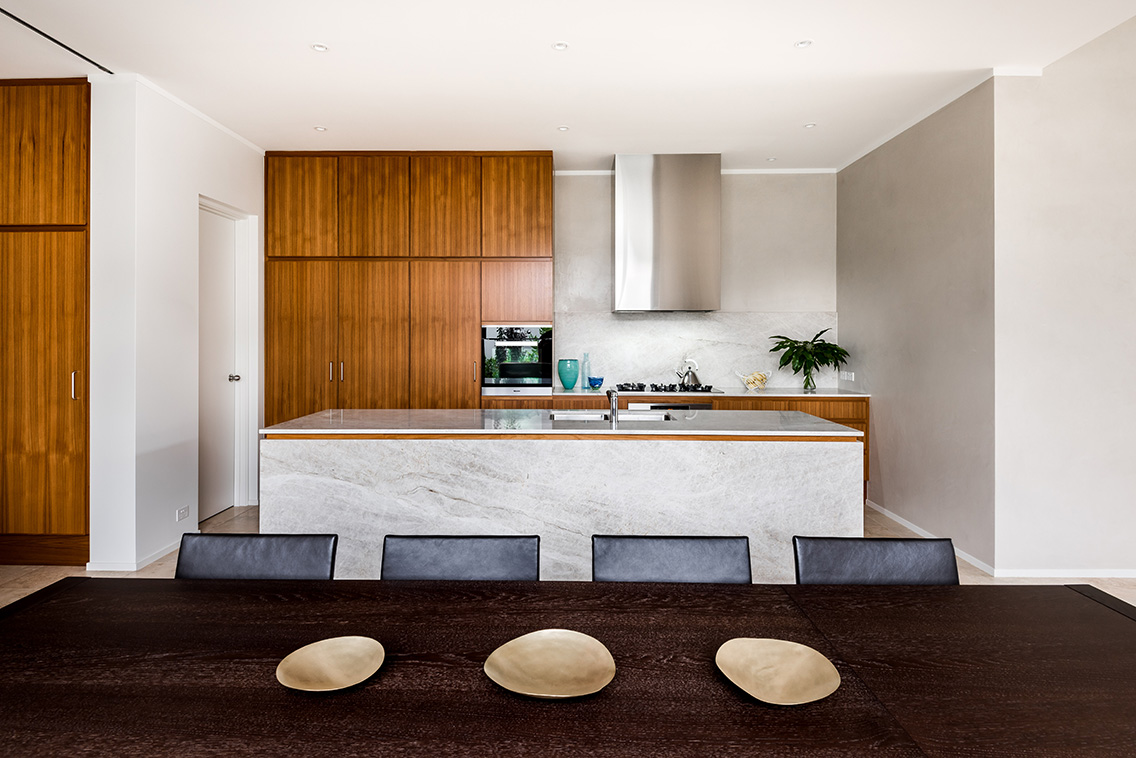
In the kitchen, pendant lights over an island need to provide useful illumination without obstructing sightlines across the room. Their scale, suspension height and beam spread should relate to the benchtop and surrounding joinery. A practical guide to pendant lighting choices can help clarify those decisions before fittings are specified.
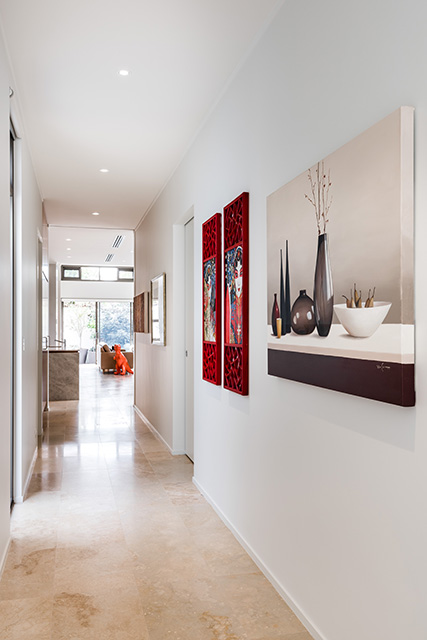
The entertaining scene might lower the general lighting, leave the pendants at a softer level and highlight artwork or a dining table. A cooking scene can increase task light while keeping adjacent living areas calm. In a corridor, low-level illumination may provide enough guidance at night without the abruptness of a fully lit ceiling.
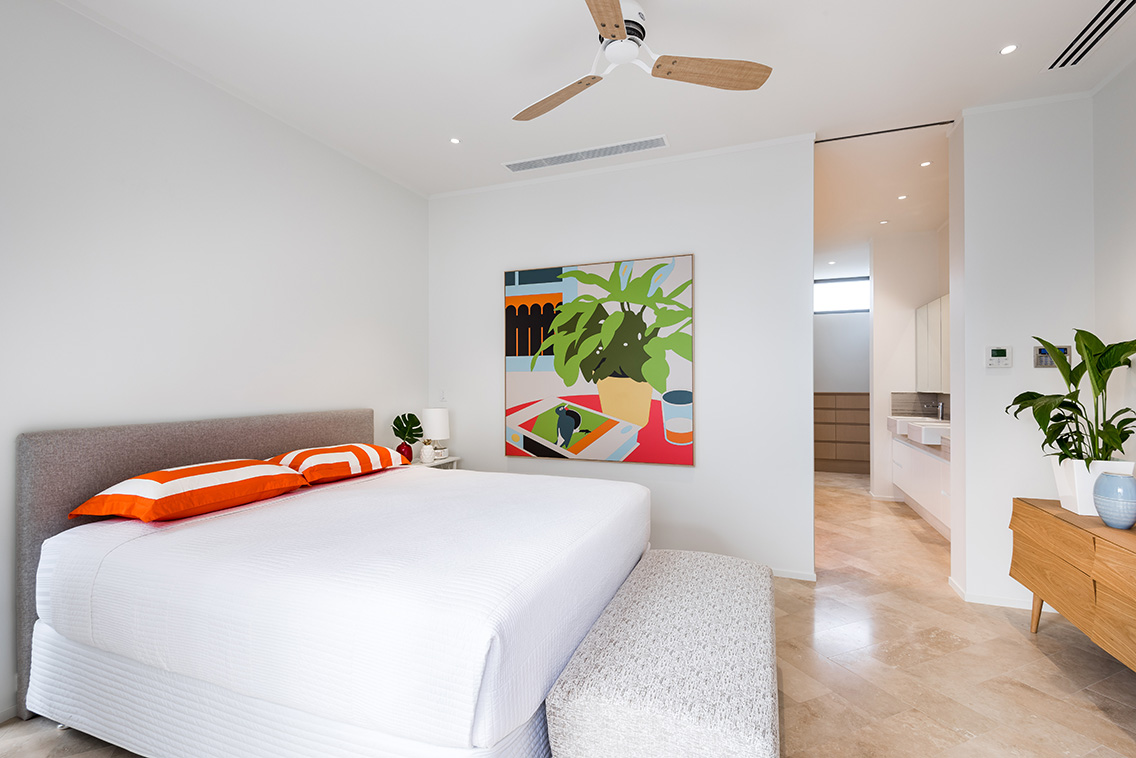
Bedrooms and bathrooms benefit from the same sensitivity. A bathroom mirror needs even vertical light for grooming, while a late-night scene should avoid exposing tired eyes to maximum brightness. In bedrooms, concealed under-bed or skirting-level lighting can offer orientation without disturbing a sleeping partner.
Protecting Material And Architectural Character
Lighting has a direct effect on how renovation materials are perceived. A narrow beam can exaggerate the texture of a rough wall, while a wide wash can make a brick surface appear softer and more continuous. The distinction matters in a double-brick home, where the construction itself may become part of the interior identity.
Joinery lighting should be concealed wherever possible. Recessed channels beneath shelves, inside wardrobes or beneath overhead cabinets can make storage easier to use while keeping the fittings visually quiet. Small apertures and high-quality diffusers help avoid the dotted, glittering effect produced by poorly concealed LED tape.
Artwork and collected objects need their own consideration. Adjustable fittings with good colour rendering can reveal subtle differences in paint, timber and fabric, while excessive brightness can cause glare on glass and polished stone. A renovation with a restrained material palette benefits from lighting that reveals detail gradually rather than announcing every surface at once.
The same principle applies to heritage references. Even when a home is extensively updated, its original massing or masonry can hold memory. A discreet wall wash may acknowledge that history more effectively than a row of decorative fittings competing for attention.
Making Technology Feel Effortless
The most successful smart homes are often the ones where the technology disappears. Residents should not need to remember which application controls the kitchen, whether a scene has loaded or how to reset a fitting. Clear labels, consistent switch logic and a modest number of scenes make the system easier to live with.
Energy use is another practical benefit. LEDs already consume less power than older halogen sources, and occupancy sensors can prevent lights being left on in laundries, wardrobes and bathrooms. Daylight sensors may reduce output near windows, though they need careful calibration in Perth’s bright conditions so that the room does not fluctuate distractingly.
Maintenance should be considered from the outset. LED drivers need accessible locations, replacement lamps should be available in Australia, and control equipment should have a documented backup. A beautifully integrated system can become difficult if a failed component requires opening a wall or contacting an overseas supplier.
Privacy and security also belong in the discussion. Connected lighting, blinds and cameras should be configured with strong passwords, updated firmware and sensible permissions. The aim is a home that feels responsive and secure without turning ordinary domestic routines into a stream of alerts.
| Lighting approach | Best use in the home | Smart control benefit | Design consideration |
|---|---|---|---|
| Recessed downlights | General ambient illumination | Dimming and scene control | Avoid repetitive grids and glare |
| Wall washing | Brick, artwork and textured surfaces | Scheduled evening accents | Position fittings to prevent hotspots |
| Pendant lighting | Kitchen islands and dining areas | Adjustable levels for work and entertaining | Coordinate scale, height and sightlines |
| Concealed LED strips | Joinery, stairs and circulation areas | Low-level night scenes | Provide access to drivers and components |
| Outdoor low-glare fittings | Paths, gardens and entries | Timers, sensors and arrival scenes | Protect neighbours and preserve dark skies |
A Dalkeith renovation demonstrates that smart lighting is most convincing when it begins with architecture. The double-brick shell, Perth’s changing daylight and the rituals of domestic life provide the real brief; sensors, dimmers and controls simply help the home respond with greater precision.
For Australian projects, that balance is increasingly important. Homeowners are becoming more aware of energy use and connected systems, while designers are expected to deliver comfort without sacrificing material character. When the infrastructure is resolved early and the controls remain intuitive, smart lighting can extend the life of an older home rather than making it feel technologically overworked.
Explore more Australian interiors, architecture and product stories through Contemporary, and follow its local design community through Contemporary Wine In Design for thoughtful conversations, new work and connections across Western Australia.