A Book Launch Finds Its Place in Perth’s Design Community
On a clear evening in Fremantle, a local bookstore became a temporary salon for architects, interior designers, students and curious readers. The occasion was the launch of a new design book, but the atmosphere felt less like a conventional author appearance and more like an informal gathering of the Western Australian design community.
Shelves of art, architecture and interiors formed the backdrop as guests moved between the book display and a small speaking area near the front of the shop. There were familiar conversations about residential projects, material suppliers and upcoming exhibitions, alongside the quieter pleasure of discovering a publication that could sit comfortably on a studio desk or a living-room coffee table.
The launch offered a useful reminder of the role independent bookshops play in Australian design culture. They provide a physical meeting point for ideas that often circulate digitally, giving books the chance to be handled, discussed and considered in relation to the people and places around them.
For Perth’s design audience, the evening also reflected a growing appetite for local stories. The book’s focus on making, place and lived experience resonated with a city where new apartment buildings, adaptive-reuse projects and carefully considered homes are reshaping the relationship between architecture and everyday life.
A Bookshop Becomes A Meeting Place
The event was held at New Edition Books in Fremantle, a setting well suited to a publication concerned with the connection between design and culture. Its compact rooms encouraged guests to browse rather than stand in a formal audience formation. Books were stacked on tables, displayed face-out on temporary plinths and placed beside small cards describing the evening’s speakers.
That informality was important. Australian design launches can easily become highly polished industry occasions, particularly when held in galleries, showrooms or hospitality venues. Here, the bookstore retained its ordinary rhythm. Customers continued to browse fiction and art books, while the launch audience gathered around them. The result was an event with a public quality rather than a closed professional atmosphere.
The Fremantle location added another layer. The port city’s long association with independent retail, cultural venues and creative practice made it a natural host for a conversation about Australian interiors. It also brought together people from different parts of Perth, including designers based in the inner suburbs, architecture students travelling from Bentley and makers working across the metropolitan area.
The Publication At The Centre
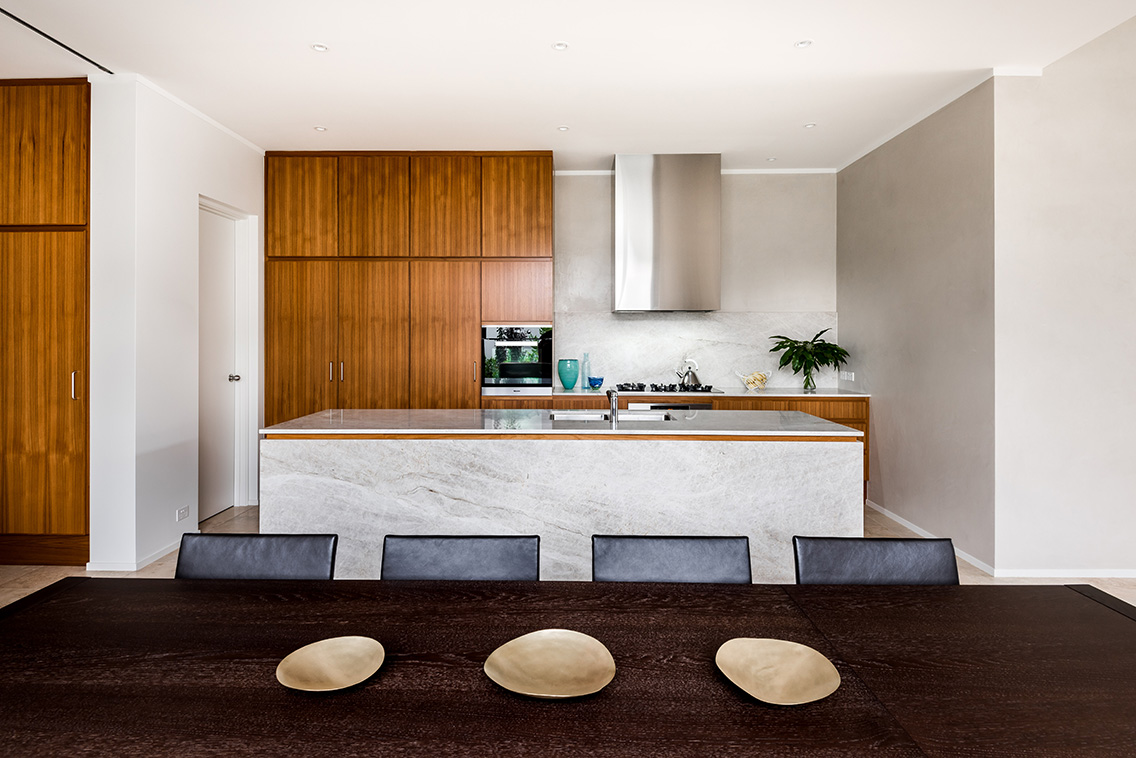
The new book, Material Ground: Australian Spaces and the Art of Making, brings together residential interiors, small commercial projects and essays on craft. Its editorial approach favours close observation over glossy spectacle. Kitchens, joinery, thresholds, gardens and textured surfaces receive as much attention as complete rooms, allowing the reader to understand how design decisions accumulate over time.
During the launch conversation, the speakers returned to the importance of local conditions. Western Australian light, limestone, timber, recycled brick and robust exterior materials were discussed as practical and cultural influences rather than decorative signatures. The book’s examples extend beyond Perth, yet its strongest passages feel relevant to the state’s particular climate and building traditions.
The publication also acknowledges the realities of the local market. Construction costs, long lead times and limited access to specialist trades can influence a project as strongly as a designer’s initial concept. That perspective gives the book value for practitioners and students who are learning to connect an ambitious visual language with procurement, maintenance and budget.
Photography carries much of the story. Images of shaded courtyards, hand-finished surfaces and modest details encourage a slower reading of the projects. Instead of presenting interiors as isolated compositions, the photographs show how spaces operate through weather, occupation and changing light.
Conversations Beyond The Launch
The formal discussion was brief enough to leave room for conversation. The author spoke about the research process, while a Perth-based interior designer and a furniture maker offered responses from practice. Their exchange moved between publishing, material knowledge and the difficulty of representing a project once it has become familiar to its occupants.
One particularly engaging thread concerned the difference between a photographed interior and a lived one. A project may appear resolved in an editorial image, yet its success is often measured through less visible qualities: whether a room supports a busy family, whether a workplace can change with its team or whether a material ages with dignity. These observations gave the evening a grounded tone.
The audience contributed its own local references. There was discussion of Perth’s heat, the need for shade and cross-ventilation, and the renewed interest in renovation rather than demolition. Several guests compared the book’s case studies with work emerging in Fremantle, Northbridge, Subiaco and regional towns where modest interventions can have a significant impact.
The event also sat within a wider calendar of professional gatherings. For a sense of how the state’s design network comes together in a more formal setting, the WA design dinner offers a useful point of comparison, while the bookstore launch showed the value of a smaller, discussion-led format.
What The Evening Revealed
The launch demonstrated that a design book can function as a social object. It creates a reason for people to meet, but it also gives the gathering a shared reference point. Conversations were more specific because guests could point to a project, an image or a passage and build from there.
This matters in a city where professional networks can feel dispersed. Perth’s geography means a studio in West Perth, a workshop in Osborne Park and a practice in Fremantle may be part of the same creative scene while rarely occupying the same room. A bookstore event creates a low-pressure opportunity to reconnect.
| Element | Book launch format | Larger industry gathering |
|---|---|---|
| Setting | Independent bookstore with public access | Venue, gallery, hotel or event space |
| Main focus | Publication, ideas and conversation | Networking, recognition and presentations |
| Audience | Readers, students, makers and practitioners | Primarily industry professionals and guests |
| Atmosphere | Informal, intimate and browse-friendly | More structured and programmed |
| Local value | Supports bookselling and accessible design culture | Builds visibility for the wider profession |
The audience mix was one of the strongest features of the evening. Students could speak with established practitioners without the pressure of a formal portfolio review. Emerging makers found potential collaborators. Readers who do not work in the industry could participate through a shared interest in homes, objects and public space.
That breadth reflects the way design is understood in Australia. It is a professional discipline, yet it is also part of the national conversation about housing, climate, craft and identity. A well-produced book can bring those discussions into reach without reducing them to trend reports or product promotion.
Local Design In A Wider Context
Australian design publishing has become increasingly attentive to regional character. Sydney and Melbourne still dominate many national conversations, yet Perth’s distance from the eastern capitals has encouraged a strong sense of self-reliance. Local practices often work with the state’s distinctive landscape, mining history, coastal climate and material resources in ways that resist easy comparison.
The launch gave that perspective a visible platform. The book’s Perth references were not treated as niche content or an afterthought. They formed part of a wider argument that Australian design is made up of many overlapping conditions, from dense urban infill to rural hospitality projects and coastal homes designed for intense sun and wind.
There was also a clear interest in the relationship between design and making. Perth has a lively community of ceramicists, timber workers, textile artists and metal fabricators, and their contribution to the built environment is becoming easier to trace. Custom joinery, locally made lighting and crafted objects add depth to interiors that might otherwise be defined only by architectural form.
This emphasis feels timely as the local industry responds to supply pressures and environmental concerns. Designers are reconsidering imported finishes, specifying durable products and exploring ways to retain existing structures. A book that records these choices becomes a document of professional practice as well as a source of visual inspiration.
Why Physical Launches Still Matter
Digital publishing has expanded access to design journalism, project photography and independent criticism. It has also made it possible for Australian practices to reach audiences well beyond the country. Yet the bookstore launch demonstrated what online platforms cannot fully reproduce: the sensory and social experience of encountering a publication in a room with the people who made it relevant.
The weight of the book, the quality of its paper and the scale of its images all contributed to the evening. Guests could compare editions, turn back to details and discuss the relationship between text and photography. Those small acts created a more attentive form of engagement than a quick scroll through a screen.
Physical events also make room for unexpected connections. A conversation about a painted joinery detail can lead to an exchange about a supplier. A student’s response to a housing project can prompt a practitioner to reconsider an assumption. These moments may not appear in an event program, yet they are often the most enduring outcomes.
For Perth’s creative sector, regular gatherings help sustain that exchange. Contemporary’s own program of events reflects the continuing appetite for encounters that connect architecture, interiors, objects, wine and the people shaping the local design scene.
A Shared Record Of The Design Scene
By the end of the evening, the bookstore had returned to something close to its usual arrangement, though the launch copies had begun to disappear from the display. A handful of guests remained near the doorway, continuing conversations that had started during the panel. The event’s success was visible in that lingering energy rather than in any formal measure of attendance.
The book will travel beyond Fremantle, finding its way into studios, libraries and homes across Australia. Its value will develop through repeated use: as a reference during a materials discussion, a prompt for students, or a way to explain an idea to a client. In that sense, the launch was the beginning of the book’s public life rather than its endpoint.
It also offered a portrait of a design community that is confident without being closed. Architects, interior designers, makers, writers and readers shared the same space, with the bookstore acting as an accessible bridge between professional culture and everyday curiosity. That combination is valuable in a city continuing to define its architectural identity.
Support the independent places that keep design conversation active: visit a local bookshop, seek out Australian design publications and attend the talks, exhibitions and gatherings that bring the industry into the open. A new book becomes part of the community when it is read, discussed and carried forward into the next project.