Behind the Design of a Minimalist Wedding Venue on the Swan River
Along the Swan River foreshore, a wedding venue has to do more than provide a beautiful backdrop. It must work through Perth’s bright summer glare, sudden winter rain, riverside breezes and the practical demands of a busy reception. The most successful spaces understand that elegance is built through proportion, material restraint and careful planning rather than decoration layered over the top.
This minimalist wedding venue takes its cues from the landscape around it. Its architecture frames the river without competing with it, while a restrained palette gives ceremonies, dinners and photographs room to breathe. The result is a place that feels distinctly Western Australian: relaxed but highly considered, informal in spirit and capable of hosting a polished city wedding.
Reading The Foreshore As A Design Brief
The site’s greatest asset is also its strongest design constraint. The Swan River changes throughout the day, shifting from silvery grey in the morning to a richer blue as the sun drops behind the western suburbs. Rather than treating the view as a fixed picture, the venue is arranged to capture a sequence of outlooks: an arrival framed by planting, a ceremony facing the water and a reception space that opens towards the evening light.
This approach avoids the familiar temptation to make every wall transparent. Selective openings create rhythm and intimacy, allowing guests to focus on a particular stand of paperbarks, a sweep of grass or the broad river horizon. Low, horizontal lines sit comfortably within the foreshore setting, while deep overhangs temper the strong Perth sun and give outdoor areas a sense of enclosure.
The landscape strategy is deliberately quiet. Native grasses, low shrubs and pale gravel establish a soft threshold between architecture and public space. Planting needs to tolerate heat, wind and periods of limited rainfall, so the palette favours species that feel at home in the Swan Coastal Plain rather than fragile ornamental varieties. It is a garden designed to look composed in photographs while remaining practical through a long wedding season.
A Palette Shaped By Perth Light
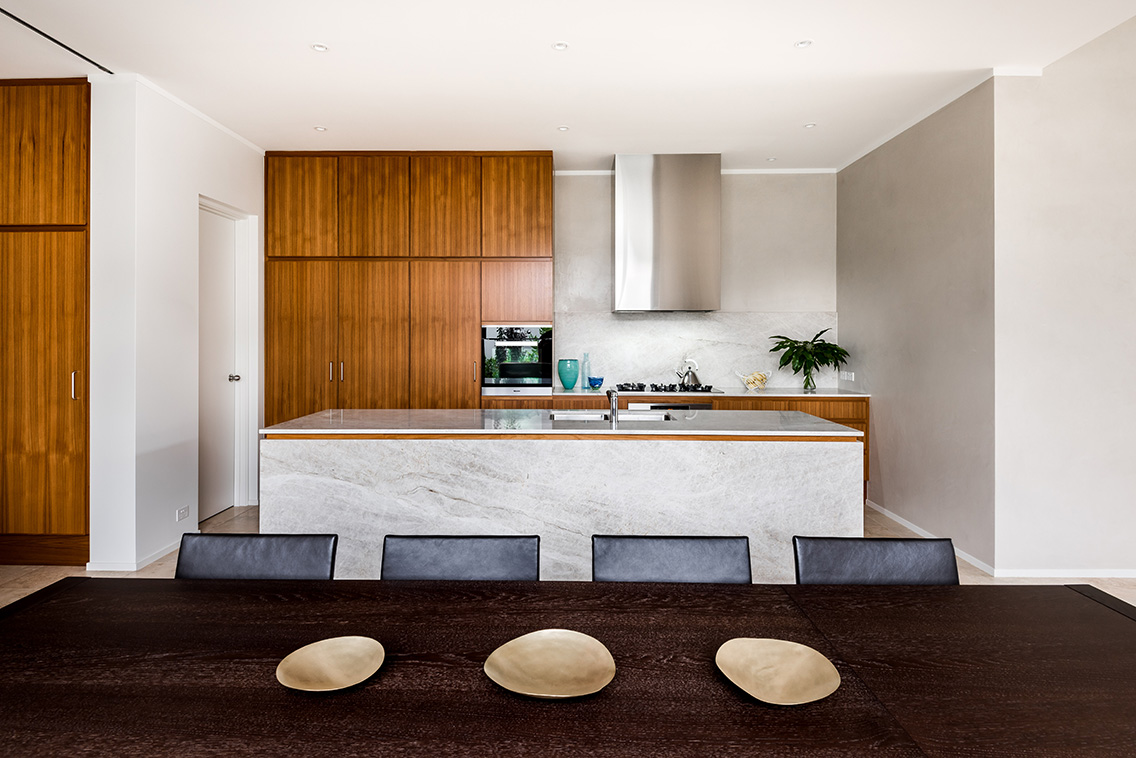
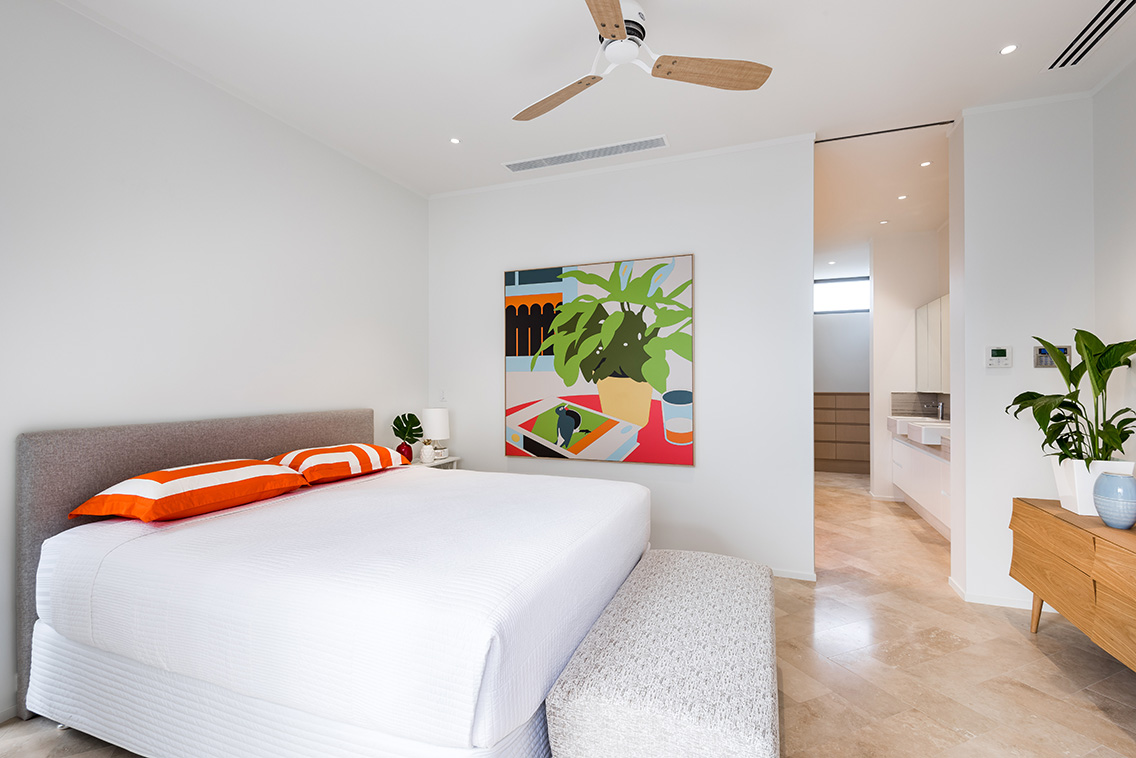
Minimalism can easily become cold when it relies too heavily on white walls, polished concrete and hard-edged furniture. Here, warmth comes from a more nuanced selection of materials: honed limestone tones, pale timber, tactile plaster and brushed metal details that catch the light without producing glare. The surfaces are calm, but they are never blank.
Perth’s intense daylight makes texture particularly important. A matte finish absorbs and softens the sun, while subtle variations in stone and timber reveal themselves as the day progresses. At dusk, concealed lighting washes walls and ceiling planes with a low, amber glow. The venue does not need a dramatic chandelier when the architecture itself can provide the atmosphere.
The material choices also acknowledge the expectations of the Australian wedding market. Couples may want a clean editorial look for the ceremony, a generous dinner layout and a dance floor that can carry the energy late into the evening. Durable surfaces, discreet storage and furniture that can be rearranged allow the venue to move between these modes without losing its visual clarity.
A considered electrical strategy is essential to this flexibility. Lighting, sound, catering equipment and outdoor heating all need to be planned early, especially in an existing building where new infrastructure can affect ceilings, walls and joinery. The detailed account of a Nedlands electrical rewire offers a useful reminder that beautiful interiors depend on the systems concealed behind them.
Making Arrival Feel Unhurried
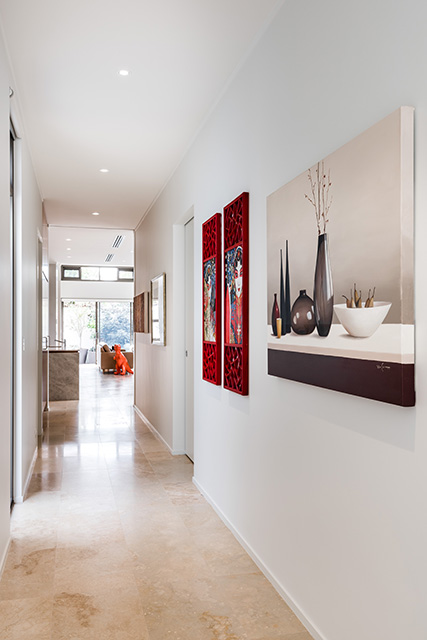
The first few minutes shape how guests understand a venue. Instead of a grand foyer, the arrival sequence is deliberately gradual. Visitors move from the street through a shaded forecourt, past planting and textured walls, before the river appears. This compression and release makes the outlook feel discovered rather than simply displayed.
That sequence suits the way many Perth celebrations unfold. Guests often arrive by car from across the metropolitan area, with family travelling from regional WA or interstate. Clear wayfinding, accessible drop-off points and a generous coat and bag area matter as much as the visual impact of the entrance. A venue can feel serene because the operational details have been resolved before the first guest arrives.
Inside, circulation is organised around a central shared space. The ceremony area can be dressed with a few sculptural arrangements, then cleared quickly for drinks and dinner. Service routes remain discreet, keeping staff movement separate from the guest experience. This is especially valuable for weddings where the same room needs to transform between the afternoon ceremony and the evening reception.
The planning also supports different cultural and family traditions. A long communal table can accommodate a formal dinner, while smaller groupings allow for a more relaxed Western Australian celebration. Flexible spaces make room for speeches, tea ceremonies, live music or a late-night dessert station without forcing every event into the same template.
Designing For Heat, Wind And Weather
A riverside venue needs a stronger environmental response than its photographs might suggest. Perth summers can be dry and intensely hot, while the afternoon Fremantle Doctor brings a reliable coastal breeze that can be welcome for guests but disruptive for candles, table settings and outdoor ceremonies. Covered terraces, operable screens and carefully positioned planting help manage these conditions without closing the venue off.
Shade is treated as an architectural element rather than an accessory. Broad canopies protect guests during the hottest part of the day, and openings are oriented to encourage cross-ventilation when conditions allow. At the same time, enclosed areas are insulated and acoustically controlled so that speeches remain clear and music does not spill unnecessarily towards nearby residents.
Winter planning is equally important. Perth’s cooler months can bring sudden showers, making a fully outdoor wedding a risky proposition. The venue provides sheltered connections between spaces, generous thresholds and a wet-weather plan that feels like a considered alternative rather than a compromise. Guests can move from ceremony to drinks without crossing exposed paths or creating a bottleneck at the doorway.
Local approvals and environmental responsibilities shape the project as well. Building near the river requires attention to drainage, flood considerations, accessibility and the protection of foreshore vegetation. A sensitive design acknowledges the cultural significance of the Swan River and the continuing connection of Whadjuk Noongar people to the place. That awareness should inform interpretation, landscape decisions and the way the venue speaks about its setting.
Keeping The Atmosphere Personal
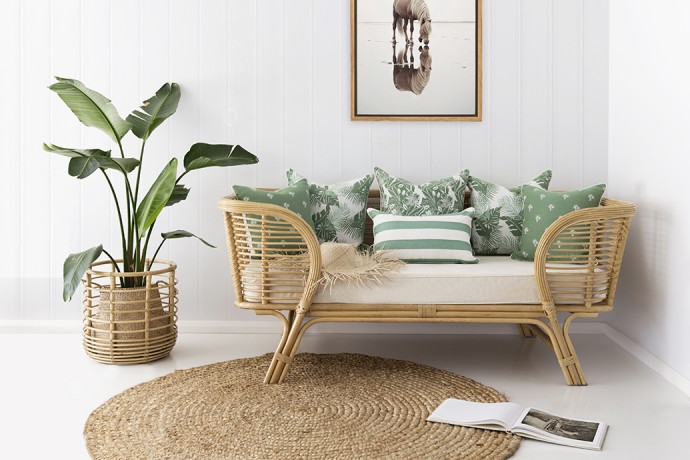
The discipline of minimalism creates a useful backdrop for personal details. Rather than prescribing a single wedding style, the venue offers a neutral but characterful framework for florists, stylists, photographers and couples to interpret. A few sculptural branches may suit a contemporary ceremony, while linen, seasonal foliage and handmade ceramics can bring a softer, more informal mood.
This is where restraint becomes generous. Without visual clutter, small gestures become legible: a handwritten place card, a particular glass, the shape of a bouquet or the grain of a timber table. Photographers can move between wide architectural compositions and close details without competing backgrounds. The space remains recognisable in images while each celebration feels distinct.
The venue also benefits from a distinctly Australian attitude to formality. A Perth wedding may include a polished dinner but still make room for bare feet on the lawn, a relaxed bar service or guests moving between indoor and outdoor spaces. The architecture supports that ease through robust materials, generous thresholds and furniture that feels comfortable rather than overly precious.
For designers and makers, the project sits within a wider local conversation about how people live, gather and entertain. Contemporary’s design coverage offers a broader view of the Australian projects, products and practices shaping that conversation, from residential architecture to hospitality interiors and public spaces.
Design Moves Worth Carrying Forward
The project demonstrates that a minimalist venue is not defined by an absence of objects. It is defined by the quality of relationships between site, structure, light, landscape and use. Every element earns its place, whether it is a shaded threshold, a concealed service door or a wall positioned to turn the river into a changing backdrop.
For anyone developing a wedding venue, hospitality project or adaptable event space in Australia, several principles are especially useful:
- Begin with the site’s climate, outlook and movement patterns before choosing finishes or furniture.
- Use a restrained palette with enough texture to respond to strong natural light and evening illumination.
- Separate guest circulation from service routes so operational demands remain invisible during an event.
- Plan for heat, wind and sudden rain as part of the experience, not as technical problems added later.
- Create flexible rooms that can move from ceremony to dining, dancing and relaxed outdoor gathering.
The strongest detail may be the least visible one: a junction that drains cleanly, a lighting circuit that allows several atmospheres, or a storage wall that keeps the room calm between events. These decisions give the venue longevity and make minimalism feel effortless.
A riverside wedding space should leave guests with more than a memorable photograph. It should make the setting feel closer, the sequence of the day feel natural and the architecture almost inseparable from the celebration. Explore more Australian design stories through Contemporary, and consider how thoughtful spatial planning can shape the next place where people gather, toast and mark an important moment.