The pros and cons of butcher block benchtops in a busy family kitchen
A kitchen benchtop has to absorb a remarkable amount of daily life. It becomes a preparation surface, homework desk, serving station, charging zone and gathering point, often within the same hour. For families, the choice of material is therefore less about appearance in isolation and more about how gracefully a surface responds to use.
Butcher block benchtops bring warmth, tactility and a distinctly domestic character to this environment. Made from joined timber strips or larger solid-wood sections, they soften cabinetry and introduce a natural grain that can sit comfortably within contemporary, heritage and coastal interiors. Their appeal is immediate, though their performance depends on maintenance and the way the kitchen is used.
In Western Australian homes, where relaxed indoor-outdoor living can bring sand, moisture and strong sunlight into the kitchen, material selection deserves careful thought. Timber can age beautifully, but it needs a considered specification and a household willing to live with small marks as part of its story.
Why timber continues to appeal
The strongest argument for a wood kitchen counter is visual and tactile. Timber adds depth to a room filled with hard surfaces, reflecting light differently across its grain and offering a softer edge beneath the hand. Even a restrained oak, ash or blackbutt palette can make a new kitchen feel established rather than overly clinical.
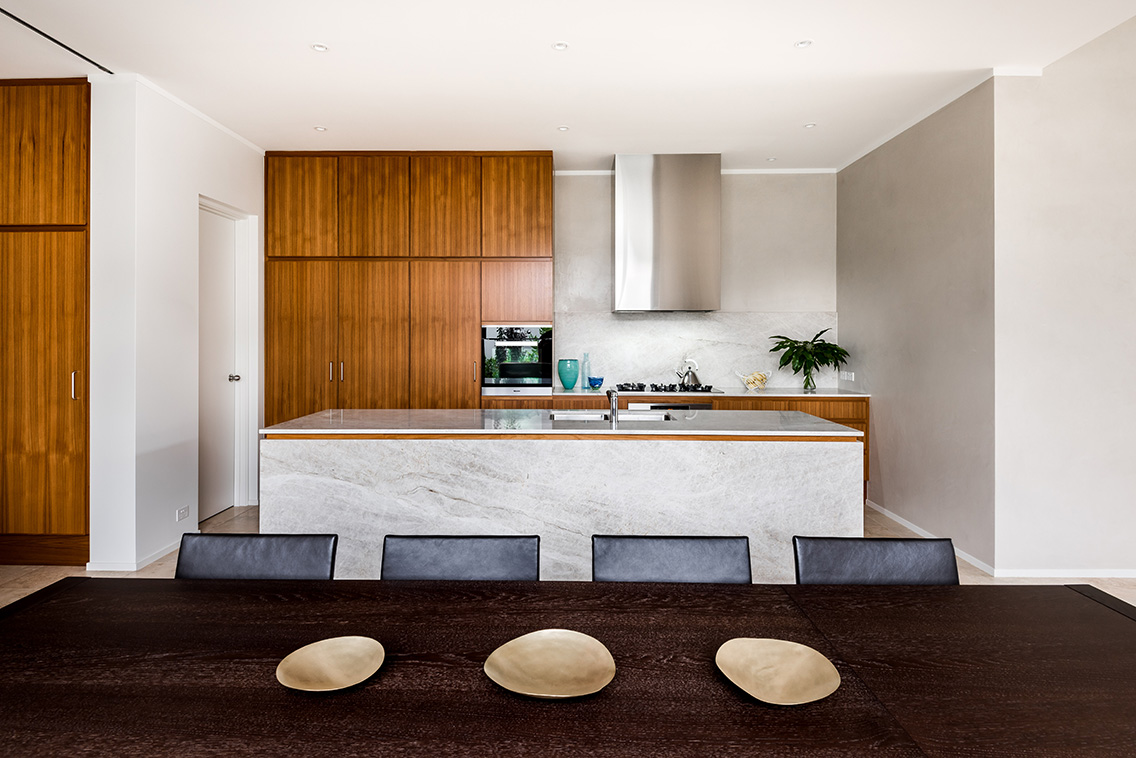
A butcher block surface also works across a wide range of design languages. Pale timber can complement white joinery and brushed metal, while darker walnut or spotted gum can anchor a space with pale stone, terracotta or coloured cabinetry. In a Federation-era renovation, the material can bridge old and new details with particular ease, as seen in this Subiaco home transformation, where warmth and material continuity help preserve a sense of domestic character.
Unlike a printed laminate or a uniform engineered surface, solid timber has a visual variation that makes it feel individual. Grain direction, knots and subtle tonal shifts mean the island becomes a crafted element rather than simply another plane. That sense of authenticity is valuable in a family kitchen, where the room is expected to feel welcoming as well as efficient.
The practical benefits of a solid wood surface
Timber is comparatively forgiving when an active kitchen inevitably receives a few dents or scratches. A dropped saucepan may leave a mark, but the damage is often less visually severe than a chip in a brittle edge or a crack through a large slab. Small imperfections can be sanded back during refinishing, allowing the benchtop to be renewed rather than replaced.
The material is also comfortable to work around. Wood does not feel as cold as stone in winter, and its slight visual softness can make an island more inviting for children and adults sitting nearby. For households that prepare food together, this everyday tactility contributes to the atmosphere of the room as much as its formal design.
Another benefit is adaptability. A carpenter can cut and shape timber for integrated draining grooves, curved ends, chopping zones or unusual wall conditions. If the kitchen layout changes later, a solid timber component may be easier to modify than a large stone slab. That flexibility can be useful in older Australian houses, where walls are rarely perfectly straight and joinery often needs to respond to existing conditions.
Where the material asks for care
The principal disadvantage is that a timber benchtop is not maintenance-free. It needs a suitable finish, regular attention around sinks and dishwashers, and prompt cleaning when water, oil or acidic ingredients are left sitting on the surface. End grain and joints are particularly vulnerable to moisture if they are poorly sealed or repeatedly neglected.
The finish determines much of the experience. Penetrating oils can preserve a natural, low-sheen appearance and make local touch-ups relatively straightforward, but they generally require periodic reapplication. Hardwax oils offer a more resilient finish with a tactile feel, while polyurethane and other film finishes can provide stronger moisture protection but may be harder to repair invisibly if they are damaged.
Heat and sharp objects require discipline too. A timber counter should not be treated as a trivet, and hot cookware can scorch the surface or compromise its coating. Knives will leave cuts if used directly on the benchtop, although some owners intentionally include a dedicated chopping section. This can be practical, provided food hygiene and regular resealing are taken seriously.
How it compares with other benchtop materials
The right choice depends on the balance between warmth, resilience, upkeep and budget. Timber is often selected for atmosphere, while stone, porcelain and solid-surface products may appeal to households seeking greater resistance to heat, staining or moisture. A mixed-material kitchen can provide a useful middle ground, placing timber on an island and a more robust surface near the cooktop and sink.
The following comparison considers broad tendencies rather than fixed rules. Product quality, installation, edge detailing and maintenance can significantly change real-world performance.
| Material | Strengths | Limitations | Family kitchen considerations |
|---|---|---|---|
| Butcher block timber | Warm appearance, repairable, comfortable, adaptable | Needs sealing, can mark and stain | Best with clear routines and prompt spill management |
| Natural stone | Distinctive, durable, strong resale appeal | Can be porous, heavy and costly | Check slab sensitivity to acids and staining |
| Engineered quartz | Consistent appearance, low routine maintenance | Can chip, less heat tolerant than expected | Use trivets and protect exposed edges |
| Porcelain or sintered stone | Strong heat and stain resistance, contemporary finish | Installation can be complex; edges may be vulnerable | Suitable for high-use zones when expertly fabricated |
| Laminate | Broad range of colours, economical, easy to replace | Less repairable; seams and edges can suffer | Practical for budget-conscious renovations |
| Stainless steel | Hygienic, heat tolerant, commercial durability | Shows scratches and fingerprints, industrial character | Effective around cooking and cleaning zones |
A hybrid approach can be especially successful. Timber may define the breakfast bar or island where people gather, while porcelain, stainless steel or stone handles the demanding area behind the cooktop. This arrangement gives the room a warmer focal point without asking one material to perform every task.
Designing for children, spills and constant use
A family-friendly timber benchtop begins with detailing. Rounded or softened edges are kinder to small bodies and reduce the visual impact of minor knocks. A generous overhang should be supported properly, particularly if stools will be pulled up to the island. Seams should be positioned away from the wettest areas, and the joinery beneath the counter must allow for timber’s natural movement.
Wood expands and contracts with changes in humidity, so installation cannot be treated like fitting a motionless stone slab. Fixings should allow controlled movement, while appliances and adjacent materials need suitable clearances. An experienced cabinetmaker will account for these shifts and specify the appropriate timber construction, moisture content and finish.
The wider room can also reduce pressure on the surface. A well-designed pantry, durable splashback and clearly organised waste station prevent the island from becoming the default location for every messy task. Commercial and hospitality interiors often demonstrate how material character and robust planning can coexist; the Swan District tasting room offers a useful example of how warmth, gathering and practical circulation can be organised around a strong central element.
Choosing species, finish and construction
Species selection affects colour, hardness, movement and maintenance. Australian hardwoods such as blackbutt, jarrah and spotted gum can connect a kitchen to its local setting while providing a durable surface when properly finished. Oak remains popular for its calm grain and broad compatibility with painted cabinetry, while walnut creates a richer, more furniture-like impression.
Edge-grain butcher block is made from smaller timber pieces arranged with their edges facing upward. It has a recognisable striped or checkered appearance and can be a resilient choice for food preparation. Face-grain panels show longer grain lines and may create a quieter, more continuous look. Neither construction removes the need for sealing, and both should be evaluated for moisture exposure and expected use.
Finish samples should be tested in the actual light of the kitchen rather than chosen from a small catalogue chip. Oil can deepen the colour of timber, while some water-based coatings preserve a paler appearance. Ask the fabricator how the finish will respond to stains, how often it should be renewed and whether repairs can be blended into the surrounding area.
Habits that preserve the surface
Good daily habits make a larger difference than occasional intensive care. Wipe spills soon after they occur, especially around the sink, and use separate boards for raw meat and general preparation. Keep trivets, drying mats and a few absorbent cloths within reach rather than treating them as decorative accessories stored in a distant cupboard.
- Seal all faces and edges before installation, including cut-outs and exposed end grain.
- Use trivets beneath hot cookware and chopping boards beneath knives.
- Dry the area around sinks, taps and dishwashers after heavy use.
- Recoat according to the finish manufacturer’s schedule, not only when the timber looks dull.
- Sand and repair small marks early so moisture does not enter damaged areas.
Cleaning products deserve attention as well. Harsh abrasives can flatten a finish, while standing water can reach joints and create darkened patches. A mild, pH-neutral cleaner and a soft cloth are generally safer for routine care, with the exact method determined by the chosen coating.
Families should also agree on where rougher tasks happen. If children use the island for craft projects, a removable protective mat can prevent paint, glue and permanent marker from becoming part of the benchtop’s permanent record. The goal is not to keep timber untouched; it is to direct wear towards manageable, repairable areas.
Finding a balance between character and performance
The decision becomes easier when the kitchen is understood as a sequence of zones rather than a single surface. Timber is particularly persuasive where people sit, talk and prepare simple food. It may be less suitable as the sole material in a kitchen where large volumes of cooking, frequent entertaining and heavy cleaning happen every day.
There is also a difference between accepting patina and accepting poor performance. A few knife marks or a softened edge can give timber personality, but swelling around the sink indicates a detailing or maintenance problem. Choosing a high-quality fabricator and discussing the household’s routines at the design stage will help distinguish natural ageing from avoidable deterioration.
The strongest schemes give every material a clear role. Just as a public place can combine shelter, seating and artwork to support different patterns of occupation—as demonstrated by this Elizabeth Quay installation—a kitchen can use timber for connection and comfort while assigning high-risk tasks to more resilient surfaces.
For households drawn to natural materials, a butcher block benchtop can be a generous and lasting choice. Specify the timber carefully, protect the vulnerable zones and establish simple routines from the first day of use. Work with a designer, cabinetmaker or fabricator to test samples, resolve sink and appliance details, and create a surface that can accommodate both the polish and the mess of family life.