Earth Plaster Brings Depth to Perth’s Refined Interiors
In Perth’s high-end residential and hospitality spaces, material character is becoming as important as visual polish. Designers are moving beyond perfectly uniform walls towards finishes that reveal touch, movement and the subtle variations of hand-applied surfaces. Earth plaster, with its mineral texture and quiet tonal range, has emerged as one of the most compelling expressions of this shift.
Made from natural aggregates, clay, lime, pigments and other mineral binders, earth plaster can create walls that feel warm without appearing rustic. Its appeal lies in the balance between restraint and irregularity: a surface may look calm from across a room, then reveal fine marks, soft shadows and changing colour as daylight moves across it.
For Perth interiors, the material has particular relevance. The city’s strong connection to landscape, its bright coastal light and its growing appetite for tactile, environmentally considered design all support the use of natural wall finishes. Applied thoughtfully, earth plaster can give contemporary homes and commercial projects a sense of permanence and place.
Why Natural Wall Finishes Are Gaining Ground
The renewed interest in earth plaster sits within a wider move towards sensory interiors. Smooth paint and manufactured panels remain useful, but they can make a room feel visually flat when used across every surface. Textured wall treatments introduce depth without relying on bold pattern or excessive decoration.
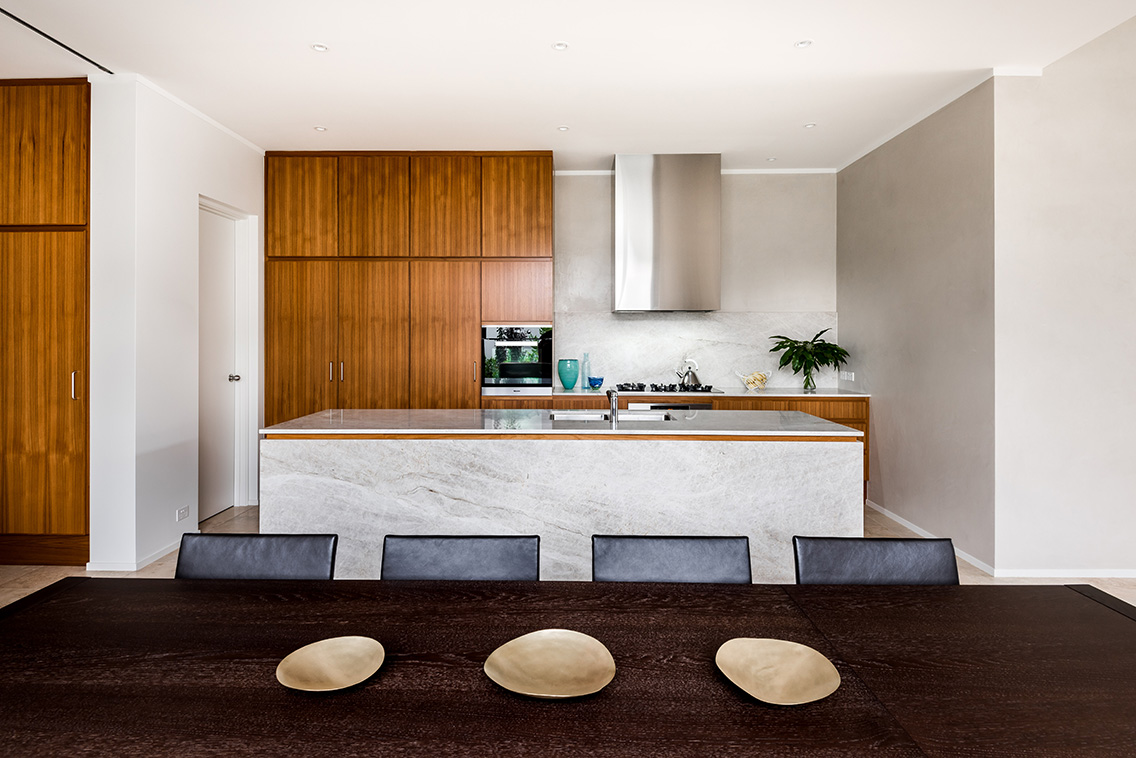
Earth plaster also works with the warmer palette now appearing across Australian interiors. Sand, chalk, ochre, clay, mushroom and muted terracotta tones complement timber, stone, linen, wool and aged metal. In a Perth home, these colours can echo the surrounding landscape while remaining sophisticated enough for a highly resolved architectural setting.
Its popularity is also connected to a growing interest in material honesty. Clients are increasingly interested in how a finish is made, what it feels like to live with and whether it will age gracefully. A hand-trowelled wall carries evidence of the craft process, giving a space an identity that is difficult to reproduce with a printed surface or standard decorative coating.
Earth Plaster In Perth’s Light
Perth’s intense sunlight makes wall colour unusually dynamic. A cool white can appear stark during the middle of the day, while a heavily pigmented finish may become overpowering in a compact room. Earth plaster offers a softer response because its natural variation scatters light across the surface rather than reflecting it evenly.
This effect is especially powerful in rooms with large windows, skylights or connections to courtyards. Subtle ridges and depressions catch the changing illumination, allowing the wall to shift from pale and airy in the morning to deeper and more atmospheric in the evening. The finish becomes part of the room’s daily rhythm rather than a static backdrop.
Designers can adjust the aggregate size, trowel movement, pigment concentration and final seal to control the result. A fine, almost polished application may suit a formal dining room or luxury retail space. A more expressive finish can bring character to a breezy coastal home, gallery-like living area or boutique hospitality interior.
The best applications tend to be selective. Earth plaster may be used across a feature wall, around a fireplace, through a curved hallway or within a built-in joinery composition. Restricting the finish to considered areas preserves its impact and allows adjacent materials to provide contrast.
Craft, Composition And Material Pairing
Earth plaster is strongest when it is integrated into the wider material language of a project. Pale oak, travertine, honed limestone and brushed brass can emphasise its warmth, while dark timber, charcoal stone and blackened steel create a more dramatic relationship. Soft furnishings in natural fibres help extend the tactile quality without making the room feel overly themed.
Its handmade quality also makes proportion important. Large uninterrupted walls can showcase the finish beautifully, particularly where a curved corner or deep reveal gives the surface architectural purpose. In smaller spaces, a limited application can frame a niche, vanity, bedhead or concealed door while keeping the composition controlled.
The edge details deserve careful attention. Junctions between plaster and stone, cabinetry or glazed surfaces need to be resolved before application begins. Shadow gaps and recessed trims can protect vulnerable edges while giving the wall finish a crisp architectural boundary. Poorly planned transitions may make an otherwise beautiful surface appear unfinished.
Lighting should be considered at the same stage. Grazing light will emphasise every variation, which may be desirable in a gallery or restaurant but too intense in a bedroom. Diffused illumination produces a gentler effect, allowing the colour and texture to support the atmosphere without dominating it.
Comparing Natural Plaster Options
The phrase “earth plaster” covers several related approaches, and the final performance depends on the specific formulation and installation method. Clay-based products are valued for their softness and natural variation, while lime plaster tends to offer a harder, more mineral surface. Venetian-style finishes can appear polished, although they are generally more refined and less visibly granular.
| Finish | Visual character | Suitable applications | Key considerations |
|---|---|---|---|
| Clay-based earth plaster | Soft, matte and gently textured | Living areas, bedrooms, studies and feature walls | Protect from persistent moisture and impact |
| Lime plaster | Mineral, layered and subtly luminous | Bathrooms, kitchens, corridors and hospitality spaces | Requires skilled preparation and curing |
| Tadelakt-style finish | Smooth, dense and water-resistant | Wet areas, vanities and sculptural surfaces | Specialist application and ongoing care |
| Microcement | Continuous, contemporary and relatively uniform | Floors, bathrooms, joinery and commercial interiors | Less organic in appearance; substrate movement matters |
| Polished mineral plaster | Refined, softly reflective and tonal | Dining rooms, retail spaces and formal interiors | More sensitive to application quality and lighting |
These categories should not be treated as interchangeable. A designer specifying a wall finish for a bathroom needs to consider vapour, splashing, ventilation and the compatibility of the substrate. A clay plaster may be ideal for a dry living space but unsuitable for an exposed shower wall without a carefully engineered system.
Samples are essential because colour cards rarely communicate the full effect. The same pigment can appear different depending on aggregate, sealant, application pressure and natural light. Full-size sample boards viewed at different times of day provide a more reliable basis for selection than a small swatch.
Performance, Maintenance And Sustainability
A high-end finish must perform as well as it looks. Earth plaster is generally durable in appropriate locations, but it is not indestructible. Furniture impacts, sharp objects, water ingress and poorly prepared substrates can lead to marks or cracking. Skilled installers will assess the wall structure, movement joints, moisture conditions and existing coatings before work begins.
Maintenance is usually straightforward. Dust can be removed with a soft brush or dry cloth, while minor marks may be addressed according to the product’s instructions. Some systems can be locally repaired, although a patch may remain visible because hand-applied surfaces develop their character through variation. This is part of the material’s appeal, provided expectations are established early.
Environmental performance is another reason the finish attracts attention. Many earth and mineral plasters contain low levels of volatile organic compounds and rely on abundant, naturally occurring ingredients. Their potential to regulate humidity can contribute to a more comfortable interior, especially when used as part of a breathable wall assembly. These benefits depend on the formulation, backing materials, transport and installation process, so broad sustainability claims should be tested against project-specific information.
Longevity matters as much as ingredient lists. A durable wall finish that can be repaired and retained over many years may have a lower overall impact than a cheaper coating that requires frequent replacement. Perth designers are increasingly considering this whole-life perspective when selecting materials for architect-designed homes, restaurants and workplaces.
Specifying The Finish With Confidence
The outcome depends heavily on the relationship between designer, plaster specialist and client. A clear brief should identify the desired texture, colour movement, sheen, edge treatment and tolerance for variation. Words such as “natural” or “organic” are too broad on their own; a physical sample and reference images create a more precise shared language.
Budgets should account for preparation, sample development, protection of adjacent surfaces and specialist labour. Earth plaster may cost more than standard paint, especially when the design includes curves, high walls, complex reveals or several test applications. Its value becomes clearer when the finish replaces additional decoration and gives an entire room a durable visual anchor.
Timing is equally important. Plaster systems may require drying or curing periods, and other trades need to understand when the surface can safely be touched. Joinery, stone and electrical details should be coordinated before application to avoid unnecessary cutting or patching.
For clients and practitioners looking to connect with Perth’s design community, Wine In Design offers a relevant setting for discovering local ideas, practices and collaborations. Conversations between architects, interior designers, makers and suppliers often reveal practical knowledge that cannot be gained from product literature alone.
Where Earth Plaster Finds Its Place
Residential projects remain a natural home for the material. It can soften the geometry of a new build, bring warmth to a minimal renovation or create a calm transition between interior and garden. In bedrooms and living rooms, low-sheen earthy surfaces support restful palettes. In entries and stairwells, texture can transform areas that might otherwise be treated as circulation zones.
Commercial interiors are also using mineral wall finishes to communicate care and distinction. Restaurants can pair them with stone counters and low lighting to create an intimate atmosphere. Wellness studios may use pale plaster to reinforce a sense of calm, while retail environments can benefit from a backdrop that gives products visual prominence without competing with them.
The finish is particularly effective in adaptive or heritage projects when used with restraint. Rather than imitating an old surface, a new earth plaster treatment can acknowledge existing masonry, timber or terrazzo while making the intervention clearly contemporary. This dialogue between old and new gives the interior greater depth.
Perth’s design community continues to shape these applications through experimentation and exchange. The Wine In Design ambassadors reflect the breadth of people contributing to the city’s architecture and interiors culture, from established practices to emerging voices and specialist makers.
Practical Principles For A Refined Result
- Use full-scale samples in the actual room, checking them in morning, afternoon and evening light.
- Select the plaster system according to moisture exposure, substrate movement and expected wear.
- Coordinate lighting, joinery, stone and electrical details before the finish is applied.
- Allow the hand-finished surface to remain visibly crafted rather than demanding perfect uniformity.
- Work with an experienced applicator who can explain preparation, curing, sealing and future repairs.
Earth plaster has earned its place in high-end Perth interiors because it offers more than a fashionable colour or texture. It brings a material presence that changes with light, supports carefully edited palettes and records the skill of the person who applies it. Used with architectural discipline, it can make a contemporary space feel grounded, generous and connected to its setting.
Explore the projects, people and material conversations shaping Western Australian design through Contemporary, and follow the local community as earth, mineral and other tactile finishes continue to redefine the character of Perth interiors.