The challenges of sourcing local stone benchtops in regional WA
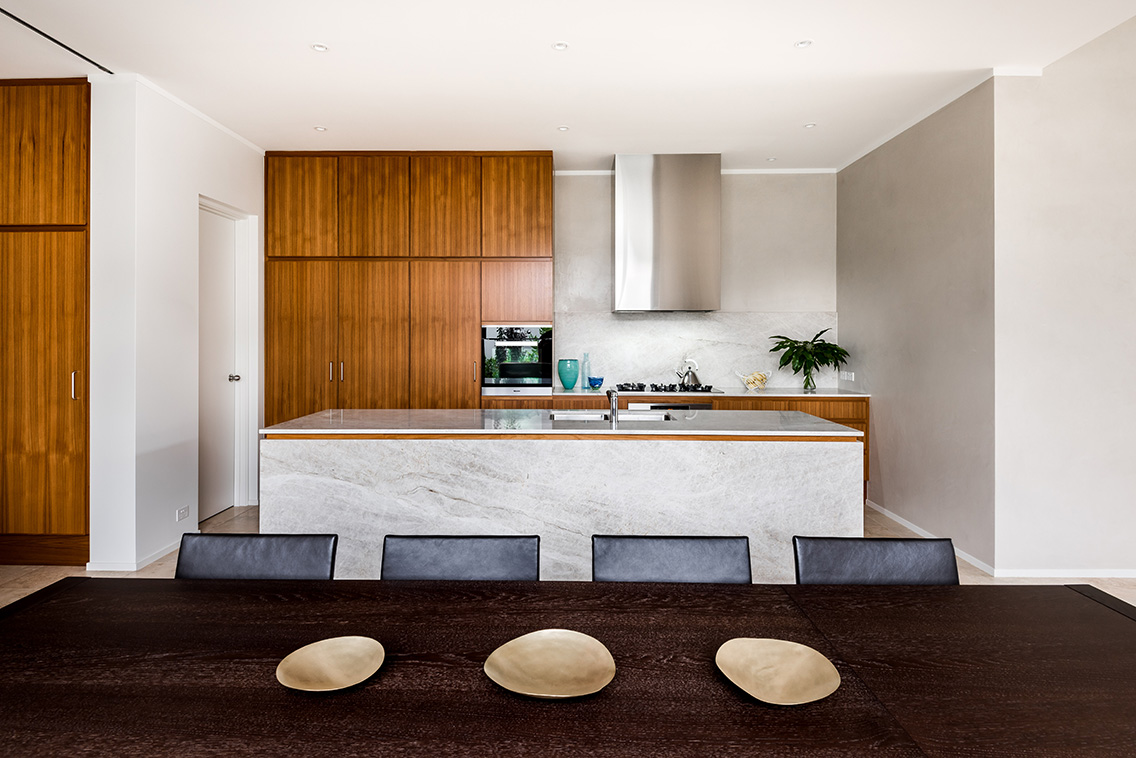
A stone benchtop can define the character of a kitchen, bathroom or hospitality fit-out. Its colour, edge profile, surface texture and relationship with cabinetry often determine whether a room feels restrained, tactile, polished or distinctly tied to place. In regional Western Australia, however, specifying and securing a locally made stone surface involves far more than selecting a slab from a sample board.
Distance, freight, fabrication capacity and the availability of skilled installers all shape the outcome. A project team may find a suitable Australian stone product, only to discover that the nearest fabricator is several hours away, the preferred finish requires specialist equipment, or transport insurance adds an unexpected cost. These constraints become especially important for architects, interior designers and homeowners working outside Perth.
The appeal of local production remains strong. It can support regional trades, reduce unnecessary handling, create more responsive communication and give a project a clearer connection to its setting. The challenge is developing a sourcing process that recognises the realities of Western Australia’s geography without compromising design intent or construction quality.
Why regional sourcing is different
Regional WA is not one uniform market. A project in Bunbury, Margaret River or Geraldton has a very different supply profile from one in Karratha, Broome, Esperance or Kalgoorlie-Boulder. Fabricators may serve several towns from one workshop, while installers travel long distances between jobs. Lead times can shift according to weather, road conditions, commercial demand and the availability of lifting equipment.
Perth remains the central hub for many stone suppliers, slab distributors and specialised workshops. That concentration provides choice, but it also means regional projects may rely on a chain of suppliers before the benchtop reaches site. Each additional stage introduces opportunities for delay, damage or miscommunication.
The term “locally made” also needs careful definition. It may refer to a benchtop fabricated in a regional workshop, a surface manufactured elsewhere in Australia and cut locally, or a natural stone quarried within the state but processed in another city. Clarifying the location of extraction, manufacture, fabrication and installation helps clients make informed decisions rather than relying on a broad local claim.
Materials, fabrication and the question of provenance
Natural stone, engineered stone alternatives, porcelain and sintered surfaces each bring different sourcing conditions. Natural granite, marble and quartzite can offer distinctive veining and geological variation, but every slab is unique and may require careful selection before fabrication. Porcelain and sintered slabs can provide strong resistance to heat, staining and ultraviolet exposure, although their large formats and thin profiles demand precise handling.
The material’s origin is only part of its story. A locally fabricated benchtop may still depend on imported or interstate slabs, resins, tooling and replacement parts. Conversely, a stone sourced from Western Australia may be cut and finished outside the region. For designers seeking a genuinely local outcome, provenance should be discussed alongside labour, processing and transport.
This approach is consistent with broader Australian design conversations, where material identity is increasingly connected to landscape and making. A recent collection of Nullarbor-inspired wool rugs demonstrates how regional references can be translated into contemporary interiors without becoming literal or decorative. Stone can be considered in a similar way: through colour, mineral structure, finish and the story of how it reaches the project.
The logistics behind a successful installation
Transport is one of the most significant pressures on regional stonework. Slabs are heavy, brittle and difficult to manoeuvre through narrow access points. A long-distance delivery needs appropriate crating, secure restraint and a clear unloading plan. On site, the team may require a crane, vacuum lifter, mechanical hoist or additional labour, particularly when the kitchen is elevated or the building is still surrounded by unfinished works.
Measurements create another point of risk. Stone should be templated only after cabinetry, walls, appliances and supporting structures are sufficiently resolved. In a remote location, a failed template can mean a second long-distance visit or a replacement piece with a substantial delay. Digital templates and remote coordination can reduce some travel, but they do not replace a physical check where walls are irregular or construction tolerances are uncertain.
Installation conditions also need to be documented early. The fabricator should know about access roads, site storage, power availability, wet areas, temporary protection and the sequence of other trades. A benchtop that arrives before the building is secure may be exposed to damage, while one delivered too late can hold up plumbing, splashbacks and final joinery work.
Cost pressures beyond the square metre
The quoted price of a stone benchtop rarely tells the whole story in a regional project. Freight, fuel levies, travel time, accommodation, lifting equipment, packaging, remote-area surcharges and return visits can all sit outside the fabrication rate. A lower-cost slab may become less economical once transport and handling are included.
Waste is another important consideration. Slab layout, cut-outs, joins and vein matching affect how much material is required. When a project is far from the supplier, ordering an additional slab as insurance may be prudent, but it can increase the cost and environmental impact. Accurate drawings and early review of the slab layout can help reduce this uncertainty.
| Sourcing factor | Perth-based project | Regional WA project | Practical response |
|---|---|---|---|
| Material selection | Broad access to suppliers and showrooms | Fewer local samples and less frequent stock movement | Confirm slab availability before final specification |
| Fabrication | Greater choice of specialist workshops | Capacity may be limited or shared across towns | Reserve production time early |
| Transport | Shorter delivery routes and more frequent runs | Longer distances, greater handling exposure | Plan crating, unloading and insurance |
| Installation | Larger pool of experienced installers | Travel and accommodation may be required | Combine site visits and document access conditions |
| Rectification | Faster replacement or rework | Delays can extend for weeks | Approve templates and edge details carefully |
| Environmental impact | Efficient supplier networks | Longer freight distances can increase emissions | Compare local fabrication, freight and material yield |
For clients working to a fixed budget, transparency is more valuable than an artificially low initial allowance. A detailed quote should identify fabrication, delivery, installation, cut-outs, joins, edge treatments, sealing, lifting and any travel-related charges. It should also state what happens if a slab arrives damaged or if site conditions differ from the approved template.
Finding capable regional fabricators
The most reliable sourcing process begins well before the cabinetry is ordered. Architects and designers can ask fabricators for examples of completed regional work, references from builders and information about the surfaces they regularly handle. A workshop experienced in standard kitchen laminates may not have the same capability with book-matched stone, waterfall ends, integrated sinks or ultra-compact porcelain.
Local building networks can be particularly valuable. Joiners, builders, kitchen studios, plumbers and interior designers often know which fabricators communicate clearly, protect finished surfaces and respond effectively when site conditions change. Industry gatherings can also reveal the relationships behind successful projects. Contemporary’s event recap reflects the value of bringing the design community together, where practical knowledge often travels through conversations as much as through formal specifications.
Digital portfolios should be treated as a starting point rather than proof of current capacity. Ask whether the images show the workshop’s own fabrication, what equipment is available locally and which parts of the process are subcontracted. It is also worth confirming insurance, workplace safety procedures, stone dust controls and compliance with current health requirements.
Designing for availability without losing character
Regional sourcing does not have to mean accepting generic finishes. It can encourage designers to work with the material’s inherent qualities and to make details more deliberate. A honed granite may provide a quiet, grounded surface; a softly textured porcelain can suit a coastal or rural setting; a restrained edge profile can reduce fabrication complexity while preserving visual refinement.
Design flexibility is useful when a preferred product becomes unavailable. Specifying a primary surface alongside two acceptable alternatives allows the project to respond to stock changes without reopening every design decision. The alternatives should be compared for thickness, substrate requirements, colour variation, UV performance, maintenance and compatibility with sinks and appliances.
Details can also be adjusted to suit regional capability. Simpler joins, accessible edge profiles and realistic slab sizes may reduce risk while still producing a considered result. This is not a retreat from design ambition. It is an understanding that a beautiful material must also be safely transported, accurately cut and properly supported.
Decisions worth making before ordering
- Confirm where the slab is quarried, manufactured, stored, fabricated and installed.
- Request a complete regional quotation that includes freight, lifting, travel and rectification allowances.
- Review a physical sample or actual slab, especially for natural stone with strong variation.
- Coordinate the final template with cabinetry, appliances, walls, plumbing and splashback details.
- Record who is responsible for damage, delays, site access and changes after approval.
A more resilient local supply chain
The difficulties surrounding regional stonework point to a broader issue in Australian design: local production depends on visibility, coordination and steady demand. When architects and clients specify regional fabricators early, those businesses can plan labour, equipment maintenance and material orders with greater confidence. When every project is treated as a last-minute purchase, even capable workshops struggle to provide consistent lead times.
Designers can help build resilience by documenting fabricators and suppliers in project records, sharing realistic timelines with clients and allowing local trades to contribute during design development. A fabricator’s advice about slab dimensions, join placement or handling may improve the design rather than limit it. The strongest outcomes usually come from treating making as part of the design process.
For clients, the local option should be evaluated across its full value rather than by purchase price alone. Regional fabrication may support employment, shorten communication lines and create accountability that is difficult to achieve through a distant supplier. It may also produce a surface with a stronger relationship to the people and places involved in the project.
Selecting a locally made stone benchtop in regional WA requires patience, accurate information and an appreciation of the distances between extraction, manufacture and installation. Begin with provenance, confirm capability, plan the logistics and keep suitable material alternatives in reserve. Then bring the fabricator, builder and designer into the conversation early, so the finished surface reflects both the ambition of the interior and the realities of making it in Western Australia. Share the project with the local design community and connect with relevant local exhibitors to keep those regional relationships moving.